Blog
Understanding how the human mind absorbs, processes, and retains information is at the core of both personal productivity and effective teaching. Whether tackling a complex programming problem under a strict deadline or trying to spark a teenager’s interest in classical antiquity during a family trip, success depends entirely on aligning our methods with natural cognitive frameworks. This comprehensive resource bridges the critical gap between adult cognitive optimization and engaging youth education. By exploring the deep biological mechanisms of focus alongside innovative pedagogical strategies, we can cultivate environments where high-level performance and enthusiastic learning thrive simultaneously.
The interplay between neurochemistry and educational psychology reveals that a well-supported brain is the fundamental prerequisite for intellectual growth at any age. In the following sections, we will explore actionable, science-backed methodologies to protect your mental energy, alongside highly effective tactics to transform static historical facts into vibrant, unforgettable learning experiences for the next generation.
Optimizing Cognitive Function and Sustained Focus
Achieving peak mental performance requires significantly more than sheer willpower. The human brain operates under strict biological constraints, and ignoring these physiological realities inevitably leads to burnout, brain fog, and diminished output. Just as a professional athlete meticulously manages their diet, hydration, and physical recovery, knowledge workers must carefully curate their mental environments to sustain high cognitive performance throughout the day.
The Biological Foundations of Concentration
Before turning to advanced productivity hacks, it is essential to address the brain’s fundamental physiological needs. For instance, even mild dehydration actively impairs executive function and processing speed. A lack of adequate water intake can actually lead to a temporary reduction in gray matter volume, making complex problem-solving and critical thinking feel exponentially harder. The brain physically shrinks away from the skull, triggering fatigue signaling that immediately kills focus. Once the physiological baseline is secured through proper hydration and nutrition, targeted supplementation can offer an additional cognitive edge. For highly logical, working-memory-intensive tasks like software coding, specific nootropic supplements have shown significant promise in supporting neurotransmitter synthesis, thereby smoothing the neurological transition into sustained flow states without the crash associated with excessive caffeine.
The Architecture of Deep Work
The modern digital work environment is heavily biased toward constant connectivity, creating a systemic barrier to meaningful, uninterrupted progress. Structuring four hours of daily deep work requires deliberate architectural planning to prevent severe mental fatigue. One of the most pervasive and damaging myths in professional productivity is the efficacy of juggling multiple tasks simultaneously. In reality, constant context shifting incurs a massive cognitive penalty.
Extensive research indicates that strict single-tasking is paramount for quality output. To truly understand the damage of rapid context switching, consider the documented IQ drop associated with multitasking. Every time focus shifts from writing a complex algorithm to checking a casual email, the brain expends significant metabolic energy to recalibrate, leaving behind attention residue that clouds subsequent thoughts. To build a highly sustainable and fatigue-free deep work routine, consider implementing these foundational principles:
- Establish rigid temporal boundaries to strictly separate intense focus phases from reactive communication and administrative duties.
- Prioritize the most cognitively demanding tasks during natural peaks in your personal circadian rhythm, typically early in the morning for most adults.
- Implement mandatory biological breaks every ninety minutes to allow for neural reset, hydration, and short-term memory consolidation.
Movement and Long-Term Mental Agility
Physical activity is deeply intertwined with cognitive longevity and creative problem-solving capabilities. However, the specific intensity of the exercise heavily dictates the type of mental benefit received. The common assumption that high-intensity workouts immediately boost creative thinking is often misguided—a phenomenon known as the cardio mistake. In reality, a lower-impact, steady-state activity like walking naturally stimulates divergent thinking far more effectively than sprinting to exhaustion. The rhythmic, low-stress nature of walking acts as a gentle physiological metronome, allowing the subconscious to process complex associations without overtaxing the central nervous system with excessive cortisol spikes.
Beyond immediate bursts of creativity, preserving mental acuity over an entire lifetime requires highly proactive strategies. Engaging in structured brain training games can help build cognitive reserve, potentially delaying age-related cognitive decline. The critical factor is to consistently challenge the brain with entirely novel stimuli and escalating difficulty levels, forcing the continuous creation of new synaptic pathways rather than merely repeating familiar, easily mastered mental exercises.
Revolutionizing Cultural and Historical Engagement
Just as adults must deliberately optimize their environment for productivity, educators and parents must carefully construct experiences to facilitate genuine learning in younger generations. History is frequently perceived by youth as a static, uninteresting collection of facts and dusty artifacts. Transforming this negative perception requires completely shifting the educational focus from rote memorization to highly immersive, contextual storytelling.
Overcoming Museum Meltdowns and Rote Memorization
Traditional approaches to history education often emphasize the strict memorization of dates, treaties, and isolated events. This methodology actively kills natural curiosity by stripping away the compelling human element of historical narratives. Human memory is fundamentally narrative-driven; our brains are hardwired to remember stories, social dynamics, and interpersonal conflicts far more effectively than isolated numerical data. When visiting cultural heritage centers, attempting to absorb the information on every single plaque leads directly to severe cognitive overload.
This fundamental pacing mistake is the primary cause of behavioral meltdowns and overwhelming fatigue in large museums. Children and teenagers possess finite attentional stamina. Rather than attempting exhaustive, hours-long tours of entire facilities, curating a highly focused, concise itinerary around a specific, compelling theme yields significantly better retention and enjoyment. Highlighting the sociopolitical drama, the daily life struggles, and the tangible humanity of historical figures transforms abstract timelines into highly relatable experiences.
Digital Intersections: Video Games and AR Apps
Generations raised entirely as digital natives interact with information dynamically and spatially. Consequently, traditional passive learning tools often fail to capture or sustain their attention. When evaluating museum resources for teenagers, the contrast between conventional audio guides and interactive augmented reality is exceptionally stark. Modern augmented reality apps actively engage younger demographics by overlaying rich historical context, 3D models, and animations directly onto their physical surroundings, turning passive observation into an active, exploratory quest.
Furthermore, commercial interactive media can serve as powerful educational scaffolding when utilized correctly. Using historically grounded video games can dramatically reinforce the impact of physical field trips. To effectively integrate popular digital media into historical education, follow this sequential process:
- Identify historical eras featured in well-researched interactive media, such as the meticulous architectural recreations found in the Assassin’s Creed franchise.
- Encourage the exploration of these digital environments prior to a physical trip to establish a strong baseline of geographic and architectural familiarity.
- During the physical visit to the heritage site, prompt the teenager to actively compare the real-world ruins or artifacts with their digital counterparts.
- Facilitate a critical discussion on historical accuracy, artistic license, and the scientific methods historians use to reconstruct the past from fragmented evidence.
Tangible History: Ruins Versus Reconstructions
The physical state of a historical site heavily influences a child’s ability to connect emotionally and intellectually with its past. There is an ongoing pedagogical debate regarding whether authentic, untouched ruins or modern, full-scale reconstructions provide a more evocative experience for youth. While adults may deeply appreciate the romantic, untouched authenticity of ancient stones, children and younger teenagers often lack the highly developed spatial imagination required to visualize a bustling ancient metropolis from a mere smattering of knee-high foundations.
Reconstructions, whether physical rebuilds on-site or high-fidelity digital projections, offer immediate visual context that effortlessly bridges this imaginative gap. They allow younger visitors to comprehend scale, architectural function, and daily atmosphere instantly. However, introducing authentic ruins alongside these reconstructions is vital, as it teaches irreplaceable lessons about the methodology of archaeology, the inevitable passage of time, and the global importance of preserving our shared cultural heritage for future generations.
Navigating the complex capabilities of the human mind requires a highly multifaceted approach. By applying advanced neurobiological insights to our daily professional routines—meticulously managing hydration, embracing strict single-tasking, and understanding the cognitive nuances of physical movement—we unlock unprecedented levels of personal productivity. Simultaneously, leveraging interactive technology and narrative-driven educational pacing allows us to present history not as a static, lifeless timeline, but as a vibrant, continuous human story. Ultimately, mastering these integrated strategies fosters a dynamic environment where continuous intellectual optimization and passionate learning become lifelong, sustainable habits.
How Public Space Design Can Encourage Walking and Active Mobility
The way a street, square or neighbourhood is designed has a direct and measurable effect on whether people choose to walk, cycle or drive. Well-designed public space lowers the barriers to active mobility: shorter crossing distances, comfortable pavements, active frontages…
Lire la suite
How to Secure a Reservation at Michelin-Starred Restaurants Without Booking 6 Months Ahead?
Contrary to popular belief, securing a coveted Michelin-starred table isn’t about luck; it’s about understanding the system’s hidden rules. Leverage « value arbitrage » opportunities like business lunch menus for the same culinary DNA at a lower price point. Master the « Concierge’s…
Lire la suite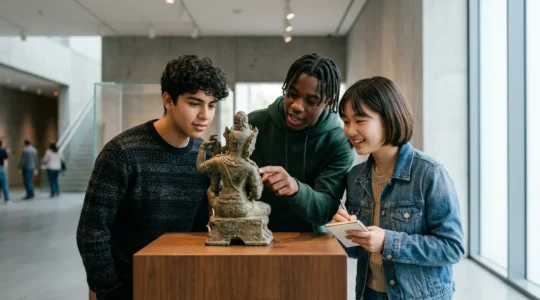
Beyond the Boring: A Museum Educator’s Guide to Making History Thrilling for Teens
Stop trying to bribe your teen through a museum with a scavenger hunt; you’re only treating the symptom, not the cause of their boredom. The real problem isn’t the history itself, but the passive way it’s presented. Focusing on memorizing…
Lire la suite
Which Nootropic Supplements Actually Boost Cognitive Function for Coding Tasks?
True cognitive enhancement for coders isn’t a magic pill, but a systematic protocol optimizing your brain’s core systems—hydration, energy, and plasticity. Dehydration tangibly shrinks brain matter, while structured deep work blocks (90-min cycles) prevent mental fatigue. Task switching carries a…
Lire la suite