Home & Family
Managing a household today is a multifaceted endeavor that goes far beyond basic chores. It requires the logistical prowess of a project manager, the empathy of a counselor, and the technical savvy of an IT specialist. From optimizing your Wi-Fi network to navigating toddler tantrums, creating a balanced domestic life is an ongoing journey that affects our daily well-being.
This comprehensive resource explores the intricate ecosystem of the modern household. Whether you are looking to lower your energy bills through smart automation, seeking the biological secrets to a perfect night’s sleep, or trying to establish healthy boundaries with roommates and children, understanding the mechanics of home and family life is the first step toward cultivating a true sanctuary.
The Modern Smart Home: Balancing Efficiency and Security
Smart home technology promises unprecedented convenience and savings. However, integrating these devices into your daily life requires strategic planning to avoid common pitfalls that compromise both your wallet and your privacy.
Maximizing Energy Savings and Automation
Many homeowners invest heavily in connected thermostats and automated lighting, only to find their utility bills remain unchanged. Why do these energy efficiency upgrades often fail? The answer usually lies in misconfiguration and physical placement. For instance, a smart thermostat relies on accurate temperature readings; placing a sensor near a drafty hallway or a sunlit window ruins your HVAC efficiency, forcing the system to overwork.
To truly harness the power of a smart home, consider the following strategies:
- Eliminate phantom loads: Use smart plugs to completely cut power to entertainment centers and chargers that drain electricity even when turned off.
- Automate around peak rates: Schedule high-energy appliances, like dishwashers and dryers, to run during off-peak utility hours.
- Optimize heating schedules: Implement a winter schedule that lowers the temperature slightly while you sleep or are away, maximizing both comfort and savings.
- Evaluate physical upgrades: Sometimes, comparing smart sensors versus new windows reveals that physical insulation pays off faster than digital automation.
Securing Your Connected Domestic Ecosystem
With digital convenience comes the hidden risk of cyber vulnerability. The proliferation of connected Internet of Things (IoT) devices has created security flaws that expose countless smart homes to external threats. A fundamental rule of home network security is network segmentation.
Your smart light bulbs should never be on the same Wi-Fi network as your work laptop. By isolating smart home devices on a dedicated guest network, you prevent malicious actors from using a vulnerable bulb as a bridge to your personal data. Furthermore, understanding the « alwayslistening » risk associated with voice assistants is crucial; these devices often record snippets of audio even when you are silent to optimize their wake-word algorithms.
When building your system, choosing between protocols like Matter and Zigbee can dictate how future-proof your investment is. Finally, always automate firmware updates, especially for budget devices with poor companion apps, to ensure your digital perimeter remains secure without manual intervention.
The Architecture of Rest: Mastering Sleep Dynamics
Sleep is the foundational pillar of household harmony. A lack of restorative rest exacerbates stress, diminishes patience, and impacts overall health. Designing the perfect sleep environment is a science that combines temperature control, acoustics, and materials.
Biologically Optimized Bedroom Environments
Achieving deep, uninterrupted sleep requires more than just a comfortable mattress. Human biology dictates specific environmental conditions for optimal rest. Studies show that 18°C (65°F) is the biological sweet spot for deep sleep, as it helps lower the body’s core temperature, signaling to the brain that it is time to rest.
For couples, motion transfer can be a significant source of sleep disruption. Choosing the right mattress material is essential. While traditional spring beds transfer movement easily, comparing memory foam versus hybrid materials often reveals that pure memory foam provides superior motion isolation, ensuring light sleepers are not disturbed by a restless partner. Additionally, city dwellers battling traffic noise must choose the right acoustic masking; pink noise, which emphasizes lower frequencies, is often more effective and soothing than harsh white noise for masking urban sounds.
Overcoming Modern Sleep Disruptions
Even with the perfect bedroom setup, behavioral habits can sabotage rest. The phenomenon of « revengebedtimeprocrastination »—where individuals delay sleep to reclaim personal time after a busy day—silently ruins mornings and creates a cycle of chronic fatigue.
- Acknowledge the habit and identify the underlying need for personal time.
- Carve out 30 minutes of dedicated « metime » earlier in the evening.
- Establish a strict digital curfew to reduce blue light exposure.
- Implement a consistent wind-down routine to signal the brain it is time to transition to sleep.
To counteract midday fatigue without ruining nighttime sleep, mastering the art of the power nap is highly effective. Napping for exactly 20 minutes provides a cognitive boost without allowing the brain to enter deep sleep, thereby completely avoiding the grogginess known as sleep inertia.
Intentional Parenting: Space, Routine, and Development
Raising children in modern environments presents unique spatial and emotional challenges. Cultivating a harmonious parenting sanctuary requires intentional design choices and a deep understanding of child psychology.
Designing the Family Sanctuary
Managing space is often the biggest hurdle for growing families. Raising children in small apartments requires clever zoning to ensure everyone has room to breathe. Surprisingly, popular architectural trends can work against parents; open-plan living increases cortisol levels in young parents due to constant visual clutter and a lack of acoustic separation. Creating distinct zones is vital for mental health.
Simple modifications can drastically improve the home environment:
- Soundproofing without renovation: Use heavy rugs, acoustic panels, and strategic furniture placement to dampen noise in a nursery without damaging rental walls.
- Lighting for emotional regulation: Swap cool, blue-toned bulbs for warm light in the evening to help toddlers calm down naturally before bed.
- Managing physical clutter: Avoid the toy rotation mistake that makes your living room look like a daycare. Displaying fewer toys actually increases focus and reduces overstimulation.
Fostering Independence and Emotional Growth
In an era of hyper-parenting, constantly entertaining a child is a trap. Counterintuitively, letting your child be bored significantly boosts their creativity, forcing them to invent games and engage in independent problem-solving. When planning screen-free parenting activities, simplicity is key. Turning a standard park walk into an immersive biology lesson using just a magnifying glass can engage a bored five-year-old for over an hour.
At home, tactile play is essential, but parents must balance fun with maintenance. Choosing kinetic sand over traditional playdough often results in an easier cleanup process, reducing parental stress. However, be wary of the activity overload error; scheduling too many structured activities is a primary trigger for exhaustion and tantrums. As children grow, introducing competitive board games in a controlled environment helps them process frustration, teaching them how to lose gracefully and avoid meltdowns in real-world scenarios.
The Ecosystem of Shared Living: Roommates and Boundaries
Whether you are living with family members, a partner, or roommates, shared living requires diplomacy, clear communication, and robust logistical systems to prevent resentment.
Managing Logistics and Finances
Financial disagreements are the quickest way to sour a living arrangement. When dividing household expenses, choosing the right tool is paramount. Debating between Splitwise versus an Excel spreadsheet to track costs—down to shared toilet paper—ensures transparency and stops petty arguments before they begin. While an app offers on-the-go convenience, a shared spreadsheet allows for custom rules tailored to your specific household dynamics.
Logistical bottlenecks also test relationships. The morning routine is a classic friction point. Scheduling showers for four people requires a strategic approach, perhaps assigning specific 15-minute time slots or shifting some routines to the evening. Furthermore, managing communal food requires respect; labeling food is rarely enough to stop fridge theft. Establishing dedicated shelves and maintaining open communication about shared staples is far more effective.
Safeguarding Privacy and Relationships
Designing a shared living space that guarantees privacy, especially for introverts, is crucial for long-term harmony. Physical barriers play a massive role in perceived privacy. When moving into a shared apartment, investing in solid core doors rather than hollow ones drastically reduces noise transmission, offering a true sense of seclusion.
Finally, social boundaries must be explicitly discussed. Establishing an « overnightguest » rule early on—defining how many nights a partner or friend can stay over before they are expected to contribute to chores or bills—is the ultimate secret that saves friendships from unspoken resentment.
A harmonious home does not happen by accident. By thoughtfully integrating smart technology, respecting biological sleep needs, nurturing child development, and setting clear boundaries in shared spaces, any household can transform from a chaotic intersection of lives into a true, restorative sanctuary.

Screen-Free Parenting Activities: How to Engage a Bored 5-Year-Old for 60 Minutes?
The key to engaging a five-year-old without screens isn’t a magic list of activities; it’s understanding that boredom is the beginning of creativity, not the end of fun. Letting the brain rest in « boredom » activates the Default Mode Network, which…
Lire la suite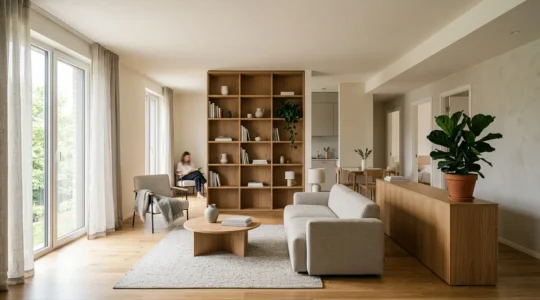
How to Design a Shared Living Space That Guarantees Privacy for Introverts?
Lasting peace in a shared home for introverts isn’t about constant negotiation; it’s about designing systems that make conflict nearly impossible. This involves automating financial decisions to remove money-related friction. It also means creating physical and temporal boundaries that are…
Lire la suite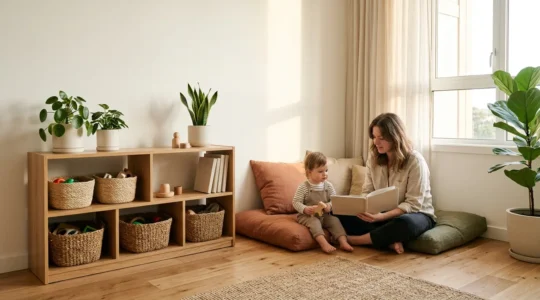
How to Cultivate a Harmonious Parenting Sanctuary in a Small Apartment
The secret to a calm family home isn’t more storage; it’s consciously curating your apartment’s sensory inputs to lower stress hormones for everyone inside. Constant visual clutter and noise in open-plan layouts can elevate parental cortisol levels, impacting health and…
Lire la suite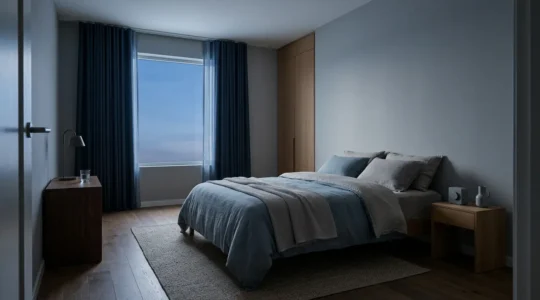
Improving Sleep Patterns: The Bedroom Setup That Cures Insomnia for Light Sleepers
For the light sleeper, achieving deep rest isn’t about trying harder; it’s about designing a smarter environment. This guide moves beyond generic advice to reframe your bedroom as a precisely engineered sanctuary. By architecting every sensory input—from the biological sweet…
Lire la suite
Connected Internet of Things Devices: The Security Flaw That Exposes 1 in 5 Smart Homes
The biggest threat to your smart home isn’t a hacker guessing your password; it’s a cheap smart bulb giving them the keys to your entire network. Most IoT devices are insecure by design and can be used as « pivot points »…
Lire la suite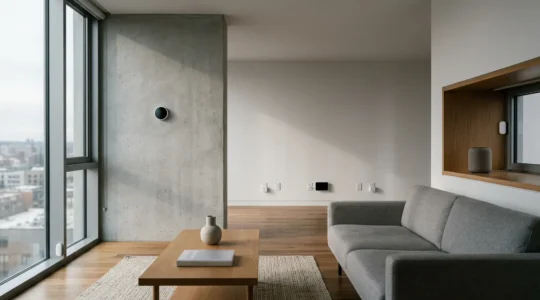
Why Smart Home Energy Efficiency Upgrades Fail to Lower Bills for 40% of Homeowners?
Your smart home isn’t failing because the technology is flawed, but because the strategy is. The key to lower bills isn’t buying more gadgets—it’s calibrating the system you already own. Most energy waste comes from « efficiency blind spots » like phantom…
Lire la suite