Contrary to popular belief, securing a coveted Michelin-starred table isn’t about luck; it’s about understanding the system’s hidden rules.
- Leverage « value arbitrage » opportunities like business lunch menus for the same culinary DNA at a lower price point.
- Master the « Concierge’s Gambit »—strategic calls during specific windows to capture last-minute cancellations.
Recommendation: Start by mastering the « Business Lunch » tactic. It’s the easiest and most reliable way to experience top-tier cuisine without the six-month wait.
There is a unique frustration known to the modern foodie traveler: discovering a city’s most celebrated restaurant, only to be met with a digital wall that reads, « No Tables Available. » The calendar, mockingly, shows a solid block of reservations for the next six, eight, or even twelve months. For the spontaneous epicurean, this is a non-starter. The conventional wisdom—to set phone reminders, stalk reservation apps, or simply give up—is profoundly unsatisfying. It reduces a passionate pursuit of culinary art to a tedious administrative task, entirely at odds with the spirit of travel and discovery.
Most guides will offer the same tired advice: be flexible, book far in advance, or hope for a stroke of luck. But what if securing a table at the world’s most sought-after restaurants wasn’t a game of chance, but a game of strategy? What if the rigid, seemingly impenetrable system of fine dining reservations had built-in inefficiencies and hidden opportunities waiting to be exploited? The key is not to fight the system, but to understand its unwritten rules from an insider’s perspective. It requires moving beyond simple booking apps and learning the art of the strategic inquiry, the value of an alternative timeline, and the power of knowing where to look when no one else is.
This guide is your personal concierge’s playbook. We will not tell you to « be lucky. » Instead, we will equip you with the specific tactics and frameworks to navigate the world of elite dining on your own terms. We will deconstruct the value of lunch menus, reveal the golden hour for cancellation calls, clarify the nuances of modern dress codes, and show you when dining alone can be your greatest advantage. Prepare to unlock a world of gastronomy that you previously thought was out of reach.
To navigate these insider strategies, we’ve structured this guide to give you a clear advantage. Explore the topics below to master the art of spontaneous fine dining.
Summary: The Concierge’s Playbook for Spontaneous Fine Dining
- Why the « Business Lunch » Menu Is the Best Deal in Fine Dining?
- The « Same Day » Call: How to Pick Up Cancellations at Top Tables?
- Smart Casual vs Formal: What Does It Mean in Modern Starred Restaurants?
- Pairing Menu vs Bottle: Which Offers Better Value for a Couple?
- When to Dine Alone at the Counter: The Chef’s Table Advantage
- How to Experience Paris Gastronomy and Culture on a Budget During Fashion Week?
- Why Adventure Tourism Prices Are Rising by 20% Annually in Post-Pandemic Hotspots?
- How to Experience Paris Gastronomy and Culture on a Budget During Fashion Week?
Why the « Business Lunch » Menu Is the Best Deal in Fine Dining?
The most powerful tool in the spontaneous diner’s arsenal is the concept of value arbitrage. It’s the art of obtaining the same, or nearly the same, high-value asset for a fraction of its perceived cost. In fine dining, the « business lunch » is the ultimate expression of this principle. Many diners incorrectly perceive the lunch service as a diluted or lesser version of the dinner experience. This is a fundamental misunderstanding. The lunch menu is often where a chef’s creativity is put to the test, offering a more concise, accessible, and remarkably valuable entry point into their culinary world.
The numbers are compelling. While a dinner tasting menu at a one or two-star Michelin restaurant can easily command $150-$400, lunch menus at 1-2 Michelin-starred restaurants often fall within the $50-$100 range. This isn’t about serving inferior ingredients; it’s about a different format. You are experiencing the same kitchen, the same leadership, and the same commitment to excellence. As a case in point, top-rated restaurants in culinary hubs like Rotterdam offer lunch menus that provide the full signature experience at a 50-70% reduction from their evening prices.
This daytime service is not a compromise; it is a strategic opportunity. It allows the kitchen to experiment with new dishes, refine techniques, and serve a different clientele. For the savvy traveler, it means securing a table at a world-class establishment with minimal advance planning, enjoying a spectacular meal, and paying a price that feels like an inside secret.
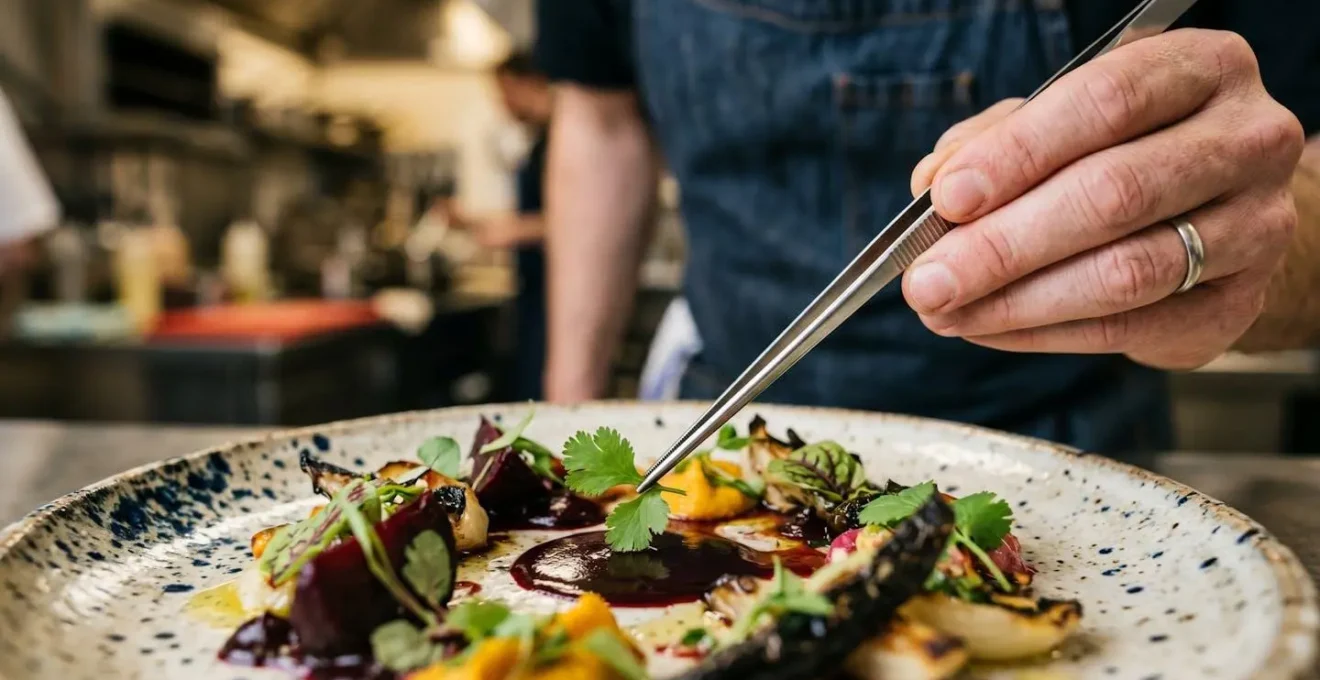
As the image above suggests, the precision and artistry are identical. The lunch menu is a canvas for innovation, allowing you to witness a chef’s work in a focused, high-impact format. It’s the single best way to sample a restaurant’s DNA without committing to the time and expense of a full dinner tasting menu.
Ultimately, choosing lunch is not settling for less; it’s a calculated decision to receive the highest possible return on your investment of time and money, freeing up your evening for other spontaneous adventures.
The « Same Day » Call: How to Pick Up Cancellations at Top Tables?
While the digital world has conditioned us to believe that a red « unavailable » button on a website is the final word, the reality of the restaurant world is far more fluid and human. The « same day » call is the concierge’s gambit for turning a digital rejection into an analog success. This is not about blind luck; it’s about understanding the operational rhythm of a restaurant. The viability of this tactic is surprisingly high; recent industry data reveals that 45% of restaurant reservations in a recent quarter were made for the same day, proving that last-minute plans are a significant part of the business.
The key is not just *that* you call, but *when* and *how* you call. A call at 7 PM on a Saturday is a request; a call at 4 PM on a Tuesday is a strategic insertion into the maître d’s workflow. This is the moment when final confirmations are being made, table assignments are being sketched out, and last-minute cancellations from travelers or business appointments create openings. Your goal is to be the convenient, polite, and flexible solution to the puzzle the maître d’ is trying to solve.
The approach is everything. Your tone should be one of respectful understanding, not entitlement. You acknowledge you are making a long-shot request, which immediately builds rapport. The « Maître d’ Whisperer » script is simple but effective: « I know it’s a long shot, but I wanted to place myself on your radar for any last-minute openings for two tonight. We are local (or staying nearby) and are very flexible on timing. » This communicates three crucial things: you understand their position, you are a reliable prospect (not a tourist who will no-show), and you are making their job easier by being flexible. Here are the key tactics:
- The 4 PM Golden Hour: Call between 3:30 PM and 4:30 PM. This is the sweet spot after lunch service and during dinner prep when the person in charge is finalizing the evening’s seating chart.
- The Politeness Ploy: Use a script that acknowledges the difficulty, expresses flexibility, and positions you as a solution to a potential opening.
- Digital Vigilance: While calling is key, supplement it by monitoring apps like Resy or OpenTable. Cancellations can appear as late as 10 a.m. on the same day.
- Midnight Refresh: Many online reservation systems refresh their data and release late cancellations precisely at midnight. A quick check before bed can yield surprising results.
By transforming from a passive user of a booking system into an active, helpful participant in the restaurant’s daily operations, you dramatically increase your chances of securing a table that, just hours before, seemed impossible.
Smart Casual vs Formal: What Does It Mean in Modern Starred Restaurants?
One of the greatest sources of anxiety for the first-time guest at a Michelin-starred restaurant is not the wine list, but the dress code. The terms themselves— »smart casual, » « business casual, » « elegant chic »—have become so nebulous as to be almost useless. The traditional era of mandatory jackets and ties is fading in many establishments, replaced by an unwritten code of polished self-expression. This ambiguity, however, is an advantage for the prepared diner. Understanding the new landscape means you can dress with confidence, ensuring you feel part of the experience, not an outsider.
The modern philosophy is less about rigid rules and more about respect for the establishment and fellow diners. The restaurant has invested heavily in creating an atmosphere, and your attire is your contribution to it. « Smart casual » in this context does not mean jeans and a t-shirt. It means looking polished and intentional. For men, this often translates to well-fitting trousers or chinos, a collared shirt (button-down or polo), and leather shoes. A blazer or sport coat is almost always a welcome addition and is the safest bet, as it can be removed if the room is more relaxed. For women, it can range from a stylish dress or jumpsuit to tailored trousers with an elegant silk blouse.
The key is to avoid things that are overtly casual: athletic wear, sneakers, flip-flops, ripped denim, or t-shirts with large logos. But rather than guessing, the most effective strategy is to perform a bit of « social reconnaissance. » The restaurant’s own website is often too generic; the real intelligence lies with the guests who have been there before. By leveraging social media, you can get a live, data-driven picture of the real-world dress code, bypassing the vague official descriptions entirely.
Your Action Plan for Dress Code Intelligence
- Location Tag Search: Search for the restaurant’s location tag on Instagram. Do not look at the restaurant’s own curated feed; you want the raw, tagged photos from actual diners.
- Data Collection: Scroll through the last 20-30 tagged photos from recent evenings. This gives you a real-time, visual database of what people are actually wearing.
- Pattern Recognition: Identify the dominant style. Are most men in jackets? Are ties common or rare? Are women wearing cocktail dresses or elegant separates? Look for the average level of formality.
- Gauge the Vibe: The photos will reveal more than just clothing. You’ll see the lighting, the decor, and the overall ambiance, which helps you understand the context you’ll be dressing for.
- Dress to the 75th Percentile: Based on your reconnaissance, aim to be slightly better dressed than the average patron, but not the most formal person in the room. This ensures you look respectful and confident.
By doing so, you move from worrying about fitting in to knowing you belong, allowing you to focus entirely on the culinary experience ahead.
Pairing Menu vs Bottle: Which Offers Better Value for a Couple?
The wine selection presents one of the most significant decision points in a fine dining experience, both in terms of cost and enjoyment. The choice between the sommelier’s curated pairing menu and selecting a bottle from the list is not just about price; it’s about defining the kind of culinary journey you wish to undertake. The best choice depends entirely on your party’s goals for the evening: are you seeking exploration and variety, or shared enjoyment and value? The « better value » is a moving target, dependent on your priorities.
A wine pairing is an educational experience. It’s a guided tour through different regions, grapes, and flavor profiles, each chosen to elevate a specific dish. For the adventurous palate or the diner looking to learn, it offers unparalleled diversity. However, this variety comes at a cost, with industry pricing data showing standard pairings ranging from $25-$75 per person, and reserve options easily exceeding $100. For a couple, this can quickly add $150-$200 to the bill. A single, well-chosen bottle, on the other hand, can often be had for less than the cost of two standard pairings, providing a consistent, shared experience throughout the meal.
To make the most strategic decision, you need a simple framework that considers your preferences and the restaurant’s pricing structure. The following table provides a break-even analysis to guide your choice.
This comparative table, based on a recent analysis of wine pricing strategy, breaks down the scenarios to help you maximize your experience and your budget.
| Scenario | Pairing Menu (per person) | Bottle Option | Better Value For Couples |
|---|---|---|---|
| Standard pairing (5-6 glasses) | $50-75 | Single bottle ($60-100) | Bottle if both enjoy same wine |
| Premium pairing | $75-100 | Premium bottle ($100-150) | Bottle saves $50-100 total |
| Diverse preferences | $50-75 each | Two half-bottles ($40-60 each) | Half-bottles offer variety + savings |
| Exploration focus | $50-75 each | One bottle ($60-100) | Pairing offers 5-6 different wines |
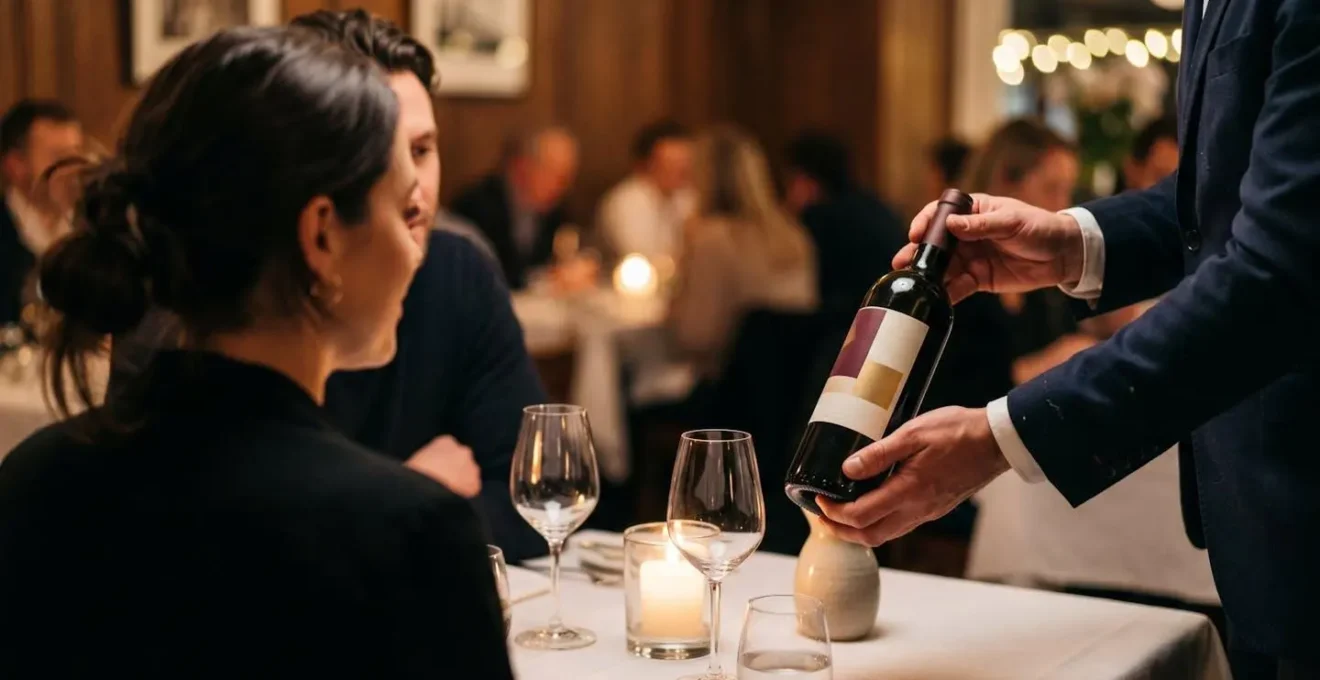
Ultimately, the decision rests on your desired Experience ROI. If the goal is to discover new wines and see the chef’s vision fully realized through beverage synergy, the pairing is worth the premium. If the goal is a shared, romantic experience centered around a wine you both love, a single bottle almost always offers superior financial value.
Do not hesitate to ask for a recommendation within a specific price point; a good sommelier is your ally in finding the perfect bottle for both your palate and your wallet.
When to Dine Alone at the Counter: The Chef’s Table Advantage
In the quest for a last-minute table, the most overlooked strategy is also one of the most rewarding: dining solo at the counter or bar. For the spontaneous traveler, this is the ultimate ace in the hole. While parties of two or four are competing for a limited number of tables, the single diner can often slip into a seat reserved specifically for walk-ins. This isn’t a consolation prize; in many of today’s best restaurants, the counter is the new chef’s table—a front-row seat to the culinary theater.
This strategy effectively bypasses the entire reservation system. Many high-demand establishments hold their bar and counter seats exclusively for same-day guests, transforming an impossible reservation into a matter of timing and a little bit of nerve. You gain access to the full menu, the same world-class service, and an unparalleled view of the kitchen’s artistry. It’s an immersive experience that a standard table in the dining room simply cannot replicate. You feel the energy of the kitchen, you see the intricate dance of the line cooks, and you often have direct interaction with the chefs themselves.
The key to this strategy is timing. You cannot arrive at 8 PM and expect a seat. The play is to arrive early, often 15-30 minutes before the restaurant officially opens for dinner service, and be the first in line. This small investment of time pays massive dividends, securing you a spot that others have been trying to book for months.
Case Study: The Four Horsemen Walk-in Strategy
At highly competitive, Michelin-starred restaurants like The Four Horsemen in New York, securing a reservation can feel like a fool’s errand. However, the restaurant’s best seats—at the bar—are reserved exclusively for walk-ins. The strategy, as documented by seasoned diners, is to arrive at 5 PM to queue for a 5:30 PM opening. This allows a solo diner or a couple to secure a prime spot, enjoy the full, celebrated menu, and completely bypass the reservation bottleneck. The bar seating strategy transforms an impossible-to-get reservation into an accessible, same-day opportunity for the knowledgeable guest.
This approach is validated by industry experts who have studied the anatomy of difficult reservations. As the team at Resy notes when dissecting how to access the city’s toughest tables:
The bar seating strategy offers walk-in access to sought-after restaurants while delivering the full culinary experience without months-advance booking requirements.
– Resy dining guide, How to Get the Toughest Restaurant Reservations in New York
It’s an intimate, educational, and deeply personal dining experience that is often more memorable than any standard table could ever be.
How to Experience Paris Gastronomy and Culture on a Budget During Fashion Week?
There is perhaps no more challenging environment for the spontaneous diner than Paris during Fashion Week. The city’s energy is electric, but its top establishments are seemingly locked down by an international elite of editors, designers, and celebrities. A « fully booked » status here feels less like a suggestion and more like a fortress wall. Yet, even in this high-pressure scenario, the principles of strategic dining do not just apply; they become even more potent. A « budget » in this context is not merely financial—it is a budget of time, stress, and planning.
First, the « Business Lunch » strategy becomes your primary weapon. While the trendy spots in Le Marais are overrun, the grand palace hotels and established institutions on the Right Bank still operate on a different rhythm. Their two- and three-star dining rooms, like Le Cinq or L’Espadon, offer lunch menus that provide a serene, exquisite escape from the city’s chaos at a price point that is a fraction of their dinner service. You are not just getting a meal; you are buying an hour of tranquility and world-class service in the eye of the storm.
Secondly, the « Same Day Call » must be adapted with local intelligence. Instead of targeting the grand-slam, globally-recognized names, focus on the « next wave » of restaurants—the one-star establishments in the 11th or 12th arrondissements that are beloved by locals but may not be on the international fashion circuit’s primary radar. A well-timed, polite call in French (even a poorly-attempted one is appreciated) can open doors. Your flexibility is your currency. Offering to take a 6 PM or 9:30 PM table dramatically increases your odds.
Finally, embrace the culture of the Parisian « comptoir » (counter). This is the solo dining strategy, Parisian-style. Places like L’Avant Comptoir de la Mer are designed for this exact purpose: walk-in, stand at the counter, and enjoy impeccable food without the formality of a table. It’s a vibrant, delicious, and deeply Parisian way to dine, and it requires zero advance planning—the ultimate luxury during a week when every minute is scheduled.
By thinking like a concierge, you can enjoy a gastronomic experience that is richer and more authentic than one booked six months in advance, even when the rest of the world is competing for the same few tables.
Key Takeaways
- Lunch menus are not a compromise; they are a strategic value play offering the same culinary excellence for less.
- The 4 PM « Golden Hour » is the most effective time to call a restaurant to inquire about same-day cancellations.
- Use Instagram’s location tags for « social reconnaissance » to determine a restaurant’s true dress code, not their website.
Why Adventure Tourism Prices Are Rising by 20% Annually in Post-Pandemic Hotspots?
To understand the increasing difficulty of securing a last-minute table, it is useful to look at a parallel trend in a completely different sector: adventure tourism. In post-pandemic hotspots, from the trails of Patagonia to the dive sites of Southeast Asia, travelers are seeing a dramatic surge in prices and a scarcity of availability. The forces at play are remarkably similar to those in the world of fine dining: a combination of pent-up demand, supply chain disruptions, and a collective re-evaluation of what constitutes a valuable life experience.
Just as trekking permits for popular routes are becoming as competitive as concert tickets, reservations at top restaurants have transformed into a form of social currency. The « price » of entry is no longer just the cost of the meal; it is the investment in advance planning. A reported annual price increase of up to 20% in some adventure tourism sectors is a direct reflection of demand outstripping supply. Similarly, the « six-month wait » for a restaurant is a non-monetary price hike, and it’s one that a spontaneous traveler is unwilling to pay.
The lesson from the savvy adventure traveler is instructive. When faced with an overcrowded, overpriced « main trail, » they do not simply give up. Instead, they seek out alternative routes. They hire a local guide who knows a hidden path, they travel in the shoulder season, or they explore an adjacent valley that offers a similar, if not more authentic, experience. They pivot from the obvious and are rewarded with discovery and value.
This is the exact mindset required for strategic dining. The « main trail » is the online reservation system showing no availability. The « hidden path » is the business lunch, the same-day call, the seat at the counter. The challenge of rising prices and limited access in one domain reveals the universal solution: when the front door is barricaded, you must find the side entrance. The true luxury is not following the crowd; it’s having the knowledge to forge your own path.
It reframes the problem not as one of scarcity, but as one of inefficient access, a puzzle waiting for a clever solution.
How to Experience Paris Gastronomy and Culture on a Budget During Fashion Week?
We’ve explored the tactics and strategies, from leveraging lunch menus to mastering the art of the walk-in. We’ve seen how these principles can be applied even in the most competitive environments, like Paris during Fashion Week. The underlying theme is a redefinition of « value. » For the spontaneous, experience-driven traveler, the most significant « budget » is not financial. It is a budget of time, freedom, and mental energy. The goal is not to dine cheaply, but to dine brilliantly, without the prison of a six-month planning cycle.
The true value unlocked by these strategies is freedom. It is the freedom to arrive in a city and let your curiosity, not a pre-set itinerary, guide your choices. It is the ability to read a review in the morning and be sitting in that very restaurant in the evening. This is the ultimate luxury. A reservation made half a year ago is a commitment to a past version of yourself. A table secured on a whim is a celebration of the present moment.
The concierge mindset is not about having unlimited resources. It is about having superior resourcefulness. It’s knowing that for every locked front door, there is a side entrance, a back channel, or a different time of day when the rules are more flexible. By internalizing these approaches, you are no longer a passive consumer at the mercy of a booking system; you are an active player in the game, able to create your own opportunities.
The confidence that comes from this knowledge is transformative. You no longer see a « fully booked » sign as a barrier, but as a challenge to be met with creativity and insider knowledge. You can now navigate the world of fine dining with the same sense of adventure and discovery you apply to the rest of your travels.
Now that you have the playbook, the next step is to put it into practice. Choose a city, pick a target, and apply these strategies to unlock a world of fine dining that was previously hidden behind a ‘fully booked’ sign.