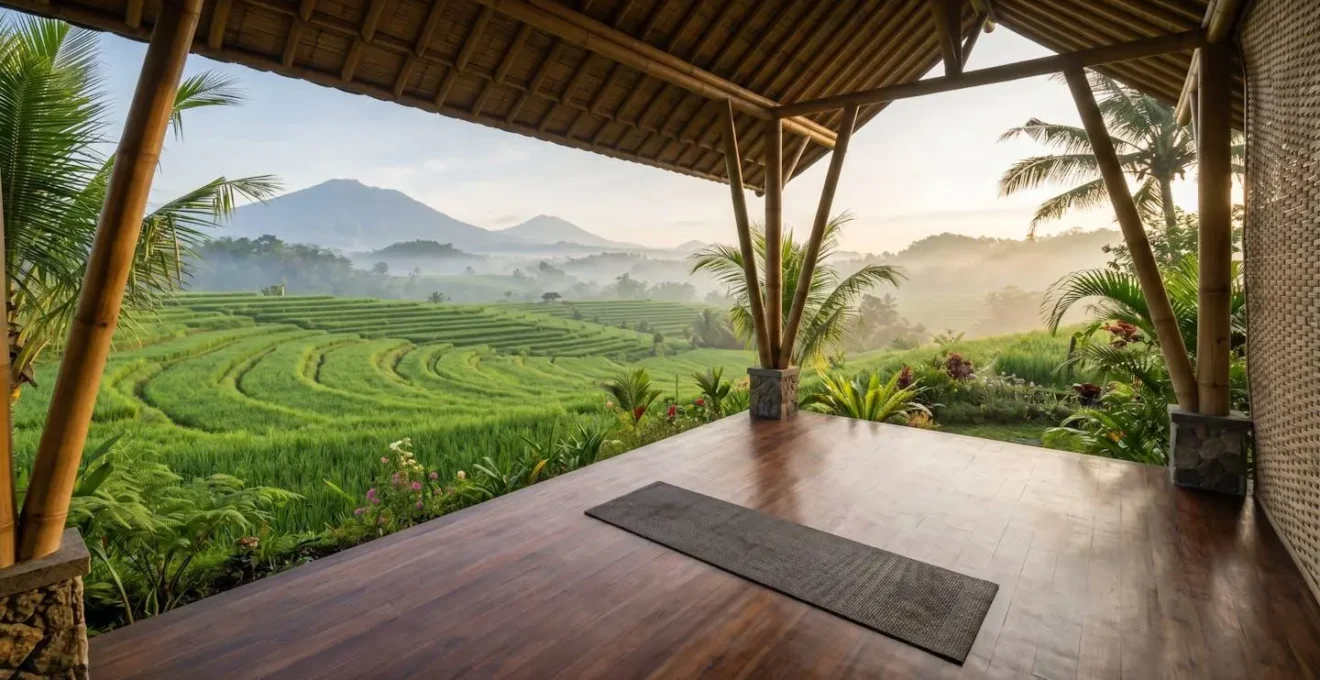
Choosing a Bali retreat is no longer about location, but about « energetic due diligence » to separate authentic practice from costly « Instagram Premiums. »
- Vet teachers via their lineage and direct teachers, not just a 200-hour certificate.
- Analyze menus for energetic support (e.g., grounding Ayurvedic vs. cooling Raw Vegan) to match your practice intensity.
Recommendation: Prioritize operational transparency (kitchen hygiene, building materials, fair wages) over photogenic aesthetics for a genuinely healthy and transformative stay.
The image is seductive: a sun-drenched yoga shala, vibrant smoothie bowls, and a serene smile that promises inner peace. Bali has become the global capital of wellness, but with this popularity comes a paradox. The very thing you seek—authenticity, quiet, and transformation—is now buried under a mountain of perfectly filtered Instagram posts and thousands of retreat options. The wellness seeker, yearning for deep practice, is often left navigating a saturated market where a beautiful photo op can easily be mistaken for a profound experience.
Most advice falls into familiar tropes: check the reviews, look at the pictures, compare prices. But in a landscape where online reputation can be manufactured and aesthetics are prioritized for marketing, these surface-level checks are no longer sufficient. They don’t help you discern between a teacher with deep-rooted lineage and one with a fresh online certificate. They don’t explain why one retreat’s ‘healthy’ menu leaves you feeling depleted while another’s nourishes you from the inside out. They don’t, in short, equip you to see what truly matters.
What if the key isn’t to find the most beautiful retreat, but the most potent one? This guide proposes a new framework: energetic due diligence. It’s about learning to look beyond the curated facade and developing the skill to investigate the core components of a retreat—the teacher, the environment, the food, and the operational integrity. We will move beyond the simple Ubud vs. Canggu debate and into the nuances of what creates a truly supportive space for transformation. This is your toolkit for cutting through the noise and finding a retreat that will genuinely nurture your practice, not just your social media feed.
This article will provide a structured approach to your search, breaking down the critical elements to investigate. By the end, you’ll have a clear methodology for making a choice that aligns with your deepest intentions for growth and well-being.
Summary : An investigator’s guide to finding an authentic Bali yoga retreat
- Ubud vs Canggu: Which Location Actually Offers Silence?
- How to Verify a Yoga Teacher’s Lineage in the Age of 200-Hour Certificates?
- Raw Vegan vs Ayurvedic: Which Menu Supports Intense Practice?
- The « Bali Belly » Risk: Is It Safe to Drink Retreat Smoothies?
- When to Book a Retreat to Avoid Monsoon Season Mold?
- How to Integrate Holistic Wellness Into a 60-Hour Work Week Without Quitting Your Job?
- Why Adventure Tourism Prices Are Rising by 20% Annually in Post-Pandemic Hotspots?
- How to Integrate Holistic Wellness Into a 60-Hour Work Week Without Quitting Your Job?
Ubud vs Canggu: Which Location Actually Offers Silence?
The default question for any Bali-bound yogi often begins with a simple binary: the spiritual, jungled hills of Ubud or the chic, surf-side vibes of Canggu? For years, this was a useful shorthand. Today, it’s a misleading oversimplification. With Bali projected to welcome a staggering 16.4 million visitors in 2024, both domestic and international, the notion of guaranteed silence in either location has evaporated. The true question is no longer « which town, » but « which specific sanctuary » has successfully insulated itself from the surrounding buzz.
Ubud, while still the heartland of traditional Balinese culture and spirituality, now sees its central streets choked with traffic and its serene rice paddies bordered by bustling cafes and boutiques. A retreat located just off the main road may offer a beautiful shala, but the soundtrack to your Savasana might be the roar of scooters. Conversely, while Canggu is known for its vibrant social scene, some of the island’s most secluded and thoughtfully designed retreats are tucked away in its quieter, northern fringes, using masterful architecture to create pockets of tranquility amidst the energy.
This is where your energetic due diligence begins. Instead of relying on a town’s reputation, you must investigate the retreat’s specific micro-location. Use Google Maps’ satellite view. Is it on a main road or a secluded side street? Are its neighbors other quiet villas or noisy construction sites? Look for reviews that mention « noise, » « peace, » or « tranquility. » A truly quiet retreat is now a deliberate design choice, not a geographical default. Your task is to find the centers that have invested in creating this intentional silence, regardless of their postcode.
Ultimately, silence is an internal state, but a supportive external environment is a powerful catalyst. Choose the retreat that has consciously curated that environment, not the one that simply rests on the laurels of its town’s outdated reputation.
How to Verify a Yoga Teacher’s Lineage in the Age of 200-Hour Certificates?
In the saturated Bali yoga market, a « 200-Hour Yoga Alliance Certified » stamp has become the baseline, not a mark of distinction. While it signifies a foundational understanding, it doesn’t reveal the depth, philosophy, or true expertise of a teacher. The most profound retreats are led by individuals whose knowledge is not just certified, but embodied—passed down through a direct lineage of teachers and refined through years of dedicated personal practice. Your mission is to look past the paper and verify the person.
This is a critical act of lineage verification. It begins by moving beyond the retreat’s marketing page. Find the lead teacher’s personal website or social media. Who were their primary teachers? A teacher deeply rooted in a tradition will proudly and frequently mention their mentors. If this information isn’t readily available, it’s a red flag. Look for names associated with established lineages like Iyengar, Ashtanga, Viniyasa Krama, or classical Tantra. Once you have a name, research them. This simple act of tracing the knowledge stream gives you profound insight into the philosophy that will be transmitted during your retreat.
The image below captures the essence of this transmission—the subtle, hands-on guidance that can only come from years of embodied practice. This is the quality you are seeking, far beyond what a certificate can convey.

This visual represents the tactile transfer of wisdom. Scrutinize videos of the teacher leading a class. Do they move with grace and precision? How do they articulate concepts? Do they speak from a place of intellectual understanding or deep, lived experience? Reading their blog posts or listening to interviews can reveal even more about their perspective. A teacher of substance has a clear point of view on the practice that extends beyond generic inspirational quotes.
Choosing a retreat is choosing a guide. By investigating their lineage, you ensure you are placing your trust in a guide who has not only walked the path but also knows the map intimately because they learned it from a master.
Raw Vegan vs Ayurvedic: Which Menu Supports Intense Practice?
The food at a yoga retreat is not just fuel; it is an integral part of the practice. The menu is a tool for transformation, designed to support your body and mind through a demanding process. In Bali, two popular dietary philosophies dominate the wellness scene: Raw Vegan and Ayurveda. Both are promoted as ‘healthy’, but their energetic effects are profoundly different, and choosing the wrong one can hinder your practice. An Insta-famous raw food cafe might look beautiful, but its menu may not provide the grounding energy required for five hours of yoga and meditation a day.
A Raw Vegan diet, rich in uncooked fruits and vegetables, is high in *prana* (life force energy) and can be wonderfully cleansing and cooling. However, it also requires a very strong digestive fire (*agni*) to process. For some constitutions, particularly those with a dominant Vata (air/ether) dosha, an exclusively raw diet can be aggravating, leading to feelings of being ungrounded, anxious, or bloated. It’s often best suited for hotter climates or for individuals with a strong digestive system and a more restorative, less physically demanding practice.
Ayurveda, on the other hand, generally emphasizes cooked foods. The cooking process is seen as a form of pre-digestion, making nutrients more accessible and easier on the digestive system. A warm, spiced, and thoughtfully prepared Ayurvedic meal is designed to be grounding, stabilizing, and supportive of *agni*. This makes it exceptionally well-suited for a retreat involving intense asana, deep meditation, and emotional processing. This aligns with findings that wellness tourists increasingly seek authentic, holistic experiences, as highlighted in a 2023 study on wellness motivation in Bali.
The following table breaks down the key energetic and digestive differences to help you make an informed choice based on your constitution and the intensity of the retreat’s schedule.
| Dietary Approach | Energetic Quality (Prana) | Effect on Vata Dosha | Digestive Demand | Best For Practice Type |
|---|---|---|---|---|
| Raw Vegan | High prana when fresh; cooling effect | Can aggravate (increase anxiety, dryness) | Requires strong digestive fire (Agni) | Light restorative, hot climates, Pitta types |
| Cooked Ayurvedic | Stable prana; grounding, warming | Balancing (reduces anxiety, stabilizes) | Easier to digest; supports Agni | Intense practice, cooler seasons, Vata types |
| Hybrid Approach | Balanced; seasonal adaptation | Customizable per constitution | Moderate; varies by preparation | Adaptable to individual needs |
Don’t be swayed by aesthetics alone. Ask the retreat about their food philosophy. Do they cater to different constitutions? Is the menu designed by a chef or an Ayurvedic practitioner? Choosing a retreat that aligns its menu with its practice intensity is a hallmark of true, holistic expertise.
The « Bali Belly » Risk: Is It Safe to Drink Retreat Smoothies?
Nothing can derail a profound retreat experience faster than a case of traveler’s diarrhea, affectionately known as « Bali Belly. » While you’re focusing on your inner landscape, it’s crucial that the retreat is meticulously managing its physical one, especially the kitchen. That vibrant, picturesque smoothie you see in marketing photos can be a primary vector for bacteria if not prepared with the highest standards of hygiene. The safety of that smoothie is a powerful proxy for the retreat’s overall operational transparency and commitment to your well-being.
The risk often lies not in the exotic fruits themselves, but in the invisible elements: the water used to wash the greens, the ice used to thicken the blend, and the hygiene of the hands that prepare it. Tap water in Bali is not potable, so any retreat worth its salt must have a robust system for water purification. This includes using filtered or bottled water for everything that enters a guest’s mouth—from drinking water to ice cubes and the water used to wash produce. A high-end retreat will openly communicate their water safety protocols.
As a preventative measure, proactively taking specific probiotics before and during your trip can be highly effective. Clinical meta-analyses show that strains like Saccharomyces boulardii and Lactobacillus rhamnosus GG can significantly reduce the duration of traveler’s diarrhea. However, the first line of defense should always be the retreat’s own standards. You have the right to ask pointed questions about their kitchen practices. Their willingness and ability to answer confidently is a key indicator of their professionalism.
Your Kitchen Hygiene Audit: 5 Questions to Ask Any Retreat
- Ice Source: ‘Is the ice in your beverages and smoothies made from a certified delivery service or an in-house filtration system, or from tap water?’
- Produce Washing: ‘What is your protocol for washing raw vegetables and fruits? Do you use a specific food-safe solution or vinegar wash?’
- Water Source: ‘What is the primary source of your drinking and cooking water—is it a reverse osmosis system, delivered gallons, or treated tap water?’
- Cross-Contamination: ‘Are there separate prep areas and utensils used for raw ingredients (like salads) versus cooked foods to prevent cross-contamination?’
- Staff Protocols: ‘Do kitchen staff follow specific hand hygiene protocols, especially after handling money or other non-food items?’
A retreat that can answer these questions without hesitation is one that takes your health as seriously as your spiritual growth. That’s a green flag worth more than any beautiful picture of a smoothie bowl.
When to Book a Retreat to Avoid Monsoon Season Mold?
Choosing the right time to visit Bali is about more than just dodging rain showers; it’s about understanding the environmental impact on your health and comfort. The tropical climate that makes Bali so lush also presents a significant challenge: humidity and mold. The monsoon season, typically running from November to March, brings not only heavy rain but also pervasive dampness that can be a serious issue in poorly constructed buildings. A musty room with hidden mold can trigger allergies, respiratory issues, and fatigue, directly undermining the wellness you’re there to cultivate.
The dry season, from April to October, is the most popular time to visit for a reason. Tourism patterns show that the peak season is July to September, offering the best weather but also the biggest crowds and highest prices. The « shoulder seasons » of April-May and September-October often represent the sweet spot, providing a balance of good weather, fewer people, and more reasonable costs. Booking during these periods significantly reduces the risk of weather-related disruptions and humidity issues.
However, the season is only half the equation. The other half is the retreat’s architecture. This is where your investigation must go deeper, into the very materials of your potential home. Look for retreats that utilize breathable, traditional Balinese construction.

This image of a bamboo joint is more than just an aesthetic detail; it’s a testament to a building philosophy designed to work *with* the climate, not against it. Materials like bamboo, reclaimed wood, and alang-alang (thatched grass) roofing allow for natural airflow. They breathe. In contrast, modern, concrete-block buildings with sealed windows and a heavy reliance on air-conditioning can trap moisture, becoming breeding grounds for mold, especially during the rainy season. Look at photos of the accommodation. Are there large, openable windows? Are the materials natural? A retreat that has invested in smart, climate-appropriate architecture is demonstrating a deep, long-term commitment to guest health.
Your environment has a profound effect on your well-being. Choosing a well-built retreat during the right season isn’t a luxury; it’s a non-negotiable component of a truly healthy and restorative experience.
How to Integrate Holistic Wellness Into a 60-Hour Work Week Without Quitting Your Job?
The true measure of a retreat’s success is not the bliss you feel on the island, but the resilience you carry back into your daily life. The transition from the serene « retreat bubble » to a demanding 60-hour work week can be jarring. This is often where the benefits of a retreat fade, not because the teachings weren’t potent, but because there was no strategy for integration. The first step in successful integration is a radical mindset shift: you must let go of the « all or nothing » mentality.
You cannot replicate a two-hour morning yoga practice, leisurely Ayurvedic meals, and evening meditation circles in the context of your busy life, and trying to do so is a recipe for failure and self-recrimination. The goal is not to perfectly clone the retreat experience, but to distill its essence into sustainable, micro-practices that fit within the cracks of your existing schedule. It’s about finding your Minimum Viable Practice (MVP)—the smallest, most consistent action that keeps the thread of connection to your inner self alive.
This requires a shift from thinking in hours to thinking in moments. Can you find five minutes upon waking for mindful breathing before you reach for your phone? Can you take a two-minute break between meetings to do a simple spinal twist at your desk? Can you eat one meal a day without the distraction of a screen? The power lies not in the duration, but in the consistency and intention of these small acts. This is how the spaciousness of the retreat is woven, thread by thread, into the fabric of your working life.
The retreat provides the spark and the deep-dive reset. The integration work is where that spark is carefully tended until it becomes a steady, self-sustaining flame that can illuminate even the most demanding of workdays.
Why Adventure Tourism Prices Are Rising by 20% Annually in Post-Pandemic Hotspots?
As you browse for retreats, you may notice a wide and often confusing range of prices. It’s easy to assume that « more expensive » simply means more luxurious, but in the post-pandemic travel landscape, the economics are more nuanced. Understanding the financial drivers behind retreat pricing is a key part of your due diligence, helping you discern true value from clever marketing. The adventure and wellness tourism market is booming, and a 2025 trends report notes that the median price of popular adventure itineraries is rising steadily year over year.
This price inflation has created a two-tiered system. The first is what we can call the « Instagram Premium. » These are retreats that charge higher prices based on aesthetics, influencer collaborations, and photogenic locations. The extra cost is for the brand image and social media appeal, which may or may not correlate with the quality of the teaching or the depth of the experience. You are paying, in part, for the marketing.
The second, and more important, concept is the « Authenticity Tax. » This refers to retreats that have legitimately higher operational costs because they are committed to genuine quality and ethical practices. These costs include:
- Fair Wages: Paying experienced, senior-level yoga teachers, skilled chefs, and local staff a living wage that honors their expertise.
- Quality Ingredients: Sourcing organic, locally-grown produce for the kitchen is significantly more expensive than buying from bulk suppliers.
- Smaller Groups: A lower teacher-to-student ratio (e.g., 1:6 vs. 1:15) provides vastly more personal attention but means revenue is spread across fewer participants.
- Investment in Substance: The cost of bringing in a true lineage-holder or a specialized practitioner is much higher than hiring a newly certified teacher.
When you see a higher price, your task is to investigate which of these models it reflects. Look at the teacher’s bio—is their experience commensurate with the price? Inquire about the group size. Ask where they source their food. A retreat that is proud of its « Authenticity Tax » will be transparent about where your money is going. They are not just selling a vacation; they are funding a sustainable ecosystem of quality, ethics, and true wellness.
Case Study: Decoding the Value Proposition
The global adventure tourism market’s rapid growth has created this two-tier pricing. The ‘Instagram Premium’ leverages aesthetics for higher margins. In contrast, the ‘Authenticity Tax’ reflects real costs: fair wages for master teachers, organic local food, and intimate group sizes (e.g., 1:6 vs. 1:15). Understanding this distinction allows the discerning traveler to assess true value beyond marketing, ensuring their investment supports genuine, lineage-based instruction and ethical operations.
By learning to spot the « Authenticity Tax, » you transform from a consumer looking for a deal into a patron supporting the very ecosystem of quality you seek to benefit from. It’s an investment not just in your own transformation, but in the integrity of the practice itself.
Key Takeaways
- Authenticity is an investigative process, not a visual one; use ‘energetic due diligence’ to vet retreats beyond their marketing.
- A teacher’s direct lineage and embodied philosophy matter infinitely more than a baseline 200-hour certificate.
- True value often lies in operational transparency (hygiene, fair wages, food sourcing), which constitutes an ‘Authenticity Tax’ worth paying over an ‘Instagram Premium’.
How to Integrate Holistic Wellness Into a 60-Hour Work Week Without Quitting Your Job?
You’ve navigated the market, chosen with intention, and had a transformative retreat experience. Now comes the most important part of the journey: weaving the wisdom of the retreat into the reality of your life. The serenity of the shala feels a world away from the demands of a 60-hour work week. The key is to see integration not as a new set of overwhelming tasks, but as a series of small, strategic upgrades to your existing routine. This is where your practice moves from an external location to an internal, portable state of being.
As one past retreat participant aptly shared, the goal is to walk away with a strong foundation to continue the practice independently. This sentiment underscores the importance of a sustainable plan.
I walked away with a solid knowledge base of yoga as a spiritual practice and a strong foundation to continue.
– Retreat Participant, Bali Bliss Retreat
Building on this foundation requires a practical template. Instead of trying to replicate the retreat, you will distill its essence into a « Minimum Viable Practice » (MVP). This is about anchoring small moments of mindfulness to your existing habits, transforming your digital devices into tools of support rather than distraction, and scheduling rituals of reflection. It’s a pragmatic approach that honors both your newfound awareness and the real-world constraints of your life.
Here is a simple, actionable template for post-retreat re-entry:
- Identify your MVPractice: Select ONE 5-minute practice you can commit to daily (e.g., 5 minutes of mindful breathing upon waking, not a 2-hour retreat-style session).
- Anchor to an Existing Habit: Use ‘Habit Stacking’—attach your wellness practice to a routine you already have (e.g., ‘After I turn on my work computer, I will do 10 deep belly breaths’).
- Create your Digital Ashram: Transform your phone into a support tool. Delete distracting social apps during work hours, install a meditation timer, and use ‘Do Not Disturb’ during your scheduled practice windows.
- Weekly Reflection Ritual: Schedule 10 minutes every Sunday to journal three moments of presence or gratitude from the past week, maintaining a conscious connection to your retreat insights.
- Micro-Retreat Saturdays: Dedicate one Saturday morning per month to a 2-hour home practice, combining elements you learned on retreat like yoga, meditation, and journaling.
Your practice doesn’t end when you board the plane home; that is where it truly begins. By implementing these small, consistent steps, you ensure that your investment in a retreat pays dividends in well-being and resilience for years to come.