
Your wearable doesn’t provide medical-grade facts; it provides environmental signals that require interpretation.
- Wrist-based heart rate is prone to error during high-intensity, non-rhythmic exercise due to motion artifact.
- Sleep stage tracking is an algorithmic « educated guess » that is significantly less accurate than a clinical sleep study.
- A low HRV score can be caused by simple dehydration, not just overtraining, highlighting the need for physiological context.
Recommendation: Treat your device as a signal detector, not a truth teller. Focus on long-term trends and context rather than absolute daily numbers to inform your training.
You finish a tough interval session, feeling like you left it all on the track, but a glance at your wrist tells a different story. Your watch claims your heart rate barely entered Zone 4. The next morning, it reports a poor sleep score despite you feeling well-rested. For any amateur runner relying on a wearable to guide their marathon training, this discrepancy is a familiar source of frustration and doubt. Is this multi-hundred-dollar device even remotely accurate?
The common advice is often simplistic: « just buy a chest strap, » or « don’t trust the data. » This feedback, while partially true, is unhelpful. It fails to acknowledge the immense potential of the data stream emanating from your wrist. These devices are not medical instruments, but they are incredibly powerful signal detectors. The problem isn’t the device; it’s our interpretation.
But what if the key wasn’t to dismiss the data, but to learn how to read it like a sports data scientist? The true value of your wearable lies not in the absolute accuracy of any single metric, but in your ability to separate the signal from the noise. It’s about understanding the technology’s limitations and using the data as a starting point for a more informed conversation with your own body.
This guide moves beyond the surface-level question of « Is it accurate? » to the more critical question of « How can I use this data intelligently? » We will deconstruct the most common metrics, explain the scientific reasons behind their inaccuracies, and provide a framework for interpreting the signals your body—and your watch—are sending you.
To navigate this complex topic, we have structured this analysis to address the most critical questions and misconceptions about wearable data. The following sections will guide you through the science, the psychology, and the practical application of your device’s metrics.
Summary: A Data Scientist’s Guide to Wearable Accuracy for Runners
- Why Your Low HRV Score Might Be Due to Dehydration, Not Overtraining?
- Chest Strap vs Wrist Sensor: Which Tracks High-Intensity Intervals Accurately?
- The REM Sleep Myth: Why Your Watch Can’t Perfectly Distinguish Sleep Stages
- The « Nocebo » Effect: How Obsessive Tracking Can Actually Raise Your Heart Rate
- When to Charge Your Tracker to Avoid Missing Nightly Data?
- Why Preventative Healthcare Screening Is Crucial for Men Over 45 With High Stress Jobs?
- Personalized Fitness Training Plans: How to Build One for Post-40 Mobility Without a Coach?
- Building Your Personal Data Interpretation Framework
Why Your Low HRV Score Might Be Due to Dehydration, Not Overtraining?
Heart Rate Variability (HRV), the measurement of the variation in time between each heartbeat, has become a cornerstone metric for assessing recovery. The prevailing wisdom is that a high HRV indicates good recovery and readiness to train, while a low HRV signals fatigue or overtraining. However, from a data perspective, this interpretation is overly simplistic. A low HRV score is a signal of stress on the autonomic nervous system, but it doesn’t specify the source of that stress.
One of the most overlooked stressors is dehydration. The physiological link is direct and measurable. As the body becomes dehydrated, blood volume decreases, forcing the heart to work harder to circulate blood. This increased cardiac effort is a form of physiological stress. In fact, for every 1% of body mass loss from dehydration, heart rate can increase by about 3 beats per minute during exercise, demonstrating a clear strain on the system.
This isn’t just a theoretical link; it’s a primary factor that can corrupt your recovery data. Before you conclude that a low HRV score means you’ve overtrained and need a rest day, you must first consider the physiological context. Did you drink enough water yesterday? Was your run in high heat? Was alcohol, a known diuretic, involved? Often, the « fix » for a poor readiness score isn’t a day off, but a large glass of water.
Case Study: Dehydration’s Direct Impact on HRV
A 2015 study published in PubMed provides clear evidence. Researchers took 14 college athletes and actively dehydrated them by approximately 3.4% of their body mass. Four hours later, the dehydrated group showed a significant reduction in heart rate variability. In contrast, the group that was properly rehydrated (consuming 150% of lost fluid) saw their HRV levels return to normal. This highlights that hydration status is not a minor factor; it is a primary driver of the recovery metrics displayed on your watch.
Therefore, treat a low HRV not as a definitive verdict of « overtraining, » but as the first question in a diagnostic process. Rule out the simple variables like hydration and sleep before jumping to conclusions about your training load.
Chest Strap vs Wrist Sensor: Which Tracks High-Intensity Intervals Accurately?
The debate between chest straps and wrist-worn sensors is a common one among runners. The consensus is clear and backed by research: for tracking heart rate during high-intensity interval training (HIIT), chest straps are superior. But to use your data effectively, you need to understand *why*.
Chest straps use electrocardiography (ECG) to measure the electrical signals of your heart, a method that is direct and highly robust. Wrist-worn sensors, on the other hand, use an optical technology called photoplethysmography (PPG). They shine a green light into your skin and measure the changes in light absorption caused by the pulsing of blood in your capillaries. This is an indirect measurement, and it’s susceptible to a major problem: motion artifact.
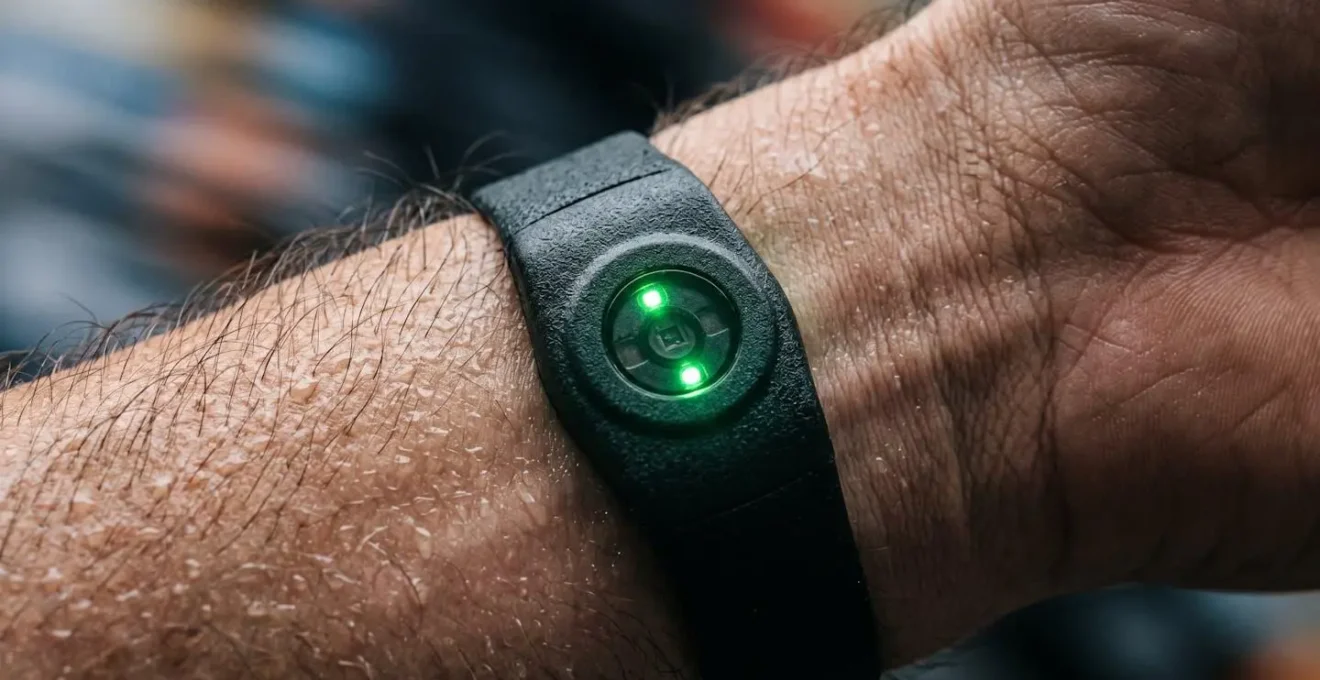
During intense, non-rhythmic exercise like sprinting, weightlifting, or trail running, your wrist is moving rapidly. This movement can interfere with the sensor’s ability to detect the subtle changes in blood volume, creating « noise » that the device’s algorithm can misinterpret as a heart rate. It might lock onto your running cadence instead of your heart rate, or simply fail to capture the rapid peaks and valleys of an interval session. The issue is so prevalent that a 2025 systematic review confirmed chest-strap sensors remain the benchmark technology due to their high accuracy, especially in dynamic contexts.
There was more error observed during high-intensity activities when there was a lack of repetitive wrist motion and when the exercise mode indicator was not used.
– Research team from evaluation study, JMIR mHealth and uHealth study on wrist-worn activity monitors
For marathoners, this means using the right tool for the job. For steady-state runs (like long runs or recovery jogs), a wrist sensor is generally sufficient. For any workout where heart rate accuracy is critical—like threshold runs or VO2 max intervals—a chest strap is non-negotiable for collecting clean data.
The REM Sleep Myth: Why Your Watch Can’t Perfectly Distinguish Sleep Stages
One of the most compelling features of modern wearables is their ability to break down your night into Light, Deep, and REM sleep. Waking up to a high « Deep Sleep » score feels validating, while a low one can cause concern. The truth, however, is that your watch isn’t measuring sleep stages; it’s making an algorithmic educated guess.
The clinical gold standard for sleep analysis is Polysomnography (PSG). This involves a night in a sleep lab, hooked up to electrodes that measure brain waves (EEG), eye movements (EOG), and muscle activity (EMG). This is the only definitive way to distinguish sleep stages. Your watch, lacking electrodes on your brain, uses a combination of heart rate, HRV, and actigraphy (motion sensing) to infer what stage you’re likely in.
Polysomnography (PSG) currently serves as the gold standard for sleep assessment, involving a comprehensive measurement of various physiological changes during sleep, while wearables use heart rate, HRV, and actigraphy to make an educated guess.
– Sleep Research Team, Nature Digital Medicine study on wearable sleep staging
How good is this guess? Not as good as the marketing suggests. A 2025 performance validation study of six commercial wearables found that devices matched PSG-determined sleep stages only 51-83% of the time, with sensitivity for specific stages ranging widely. They are reasonably good at telling if you’re asleep or awake, but their ability to differentiate between light, deep, and REM sleep is far from perfect.
So, should you ignore your sleep score? No. The value is not in the absolute number of minutes in each stage. The value lies in the trends. If your device consistently reports less deep sleep after late-night meals or alcohol, that’s a valuable signal. If your sleep score trends down during a heavy training block, that’s useful information. Use the data for its relative insights over weeks and months, not for its absolute accuracy on any given night.
The « Nocebo » Effect: How Obsessive Tracking Can Actually Raise Your Heart Rate
We buy wearables to gain objective insight into our health, but there’s a powerful paradox at play. For some individuals, the constant stream of data can create a negative feedback loop, where the act of monitoring health metrics actually worsens them. This is known as the nocebo effect: the opposite of the placebo effect, where negative expectations or beliefs cause negative outcomes.
When you fixate on a number—your resting heart rate, your HRV, your sleep score—you can become hyper-vigilant. You might wake up and immediately check your readiness score, with your mood for the day being set by the result. If the number is « bad, » you might feel anxious. This anxiety itself is a physiological stressor, causing a release of cortisol and an increase in heart rate. The very metric you were worried about is now being made worse by your worrying. This is a classic anxiety feedback loop.
This isn’t just a minor inconvenience; it can become a significant source of health anxiety. A 2019 study from the University of Copenhagen revealed that many users rely on their tracker’s data as if it were medical advice, which often sparks unnecessary fear. The device, intended to empower, becomes a source of stress.
Case Study: When Smartwatches Contribute to Health Anxiety
A 2021 case study in the Cardiovascular Digital Health Journal documented patients with atrial fibrillation who developed « pathologic symptom monitoring behaviors » after getting smartwatches. The authors noted that the constant, on-demand access to health data reinforced a preoccupation with their symptoms. This reassurance-seeking behavior—constantly checking their device for a « good » number—actually worsened their health anxiety rather than alleviating it, trapping them in a cycle of digital surveillance and physiological stress.
The solution is to cultivate a degree of emotional detachment from the daily numbers. Use the data to inform, not to dictate. If a low score causes you stress, consider turning off notifications or checking the data only once a day, at the end of the day, to be reviewed as historical information rather than a real-time judgment.
When to Charge Your Tracker to Avoid Missing Nightly Data?
A common frustration for dedicated trackers is the dreaded low-battery warning just before bed, forcing a choice between a fully charged device and a complete sleep data set. To maintain a consistent data stream, establishing a strategic charging routine is essential. The goal is to find a predictable window of low activity or data « insignificance » in your daily schedule.
The most effective strategy is to anchor the charging habit to an existing daily ritual. For many, the optimal time is during their morning shower and grooming routine. This typically provides a 15-30 minute window, which is often enough to give a modern wearable a significant power boost to last the next 24 hours. Charging at this time ensures you have captured all of the previous night’s valuable sleep and recovery data, and it prepares the device for the day’s activities.
For those who work at a desk, another excellent window is the first sedentary hour at work. You are unlikely to be generating significant step counts or activity data during this time, making it an ideal moment for a top-up without creating gaps in your activity record. This also has the benefit of preserving data from an active commute. From a device longevity standpoint, a daily partial charge to 80-90% is often better for the battery’s long-term health than charging from empty to 100%.
Ultimately, the best charging time is one that you can stick to consistently. The key is to make it a deliberate, automatic part of your day, just like brushing your teeth, to ensure you never have to sacrifice a night’s worth of data again.
Why Preventative Healthcare Screening Is Crucial for Men Over 45 With High Stress Jobs?
For the driven, high-stress professional over 45, a wearable can feel like a personal health dashboard. It provides data on stress levels, sleep quality, and heart rate. However, it’s crucial to understand the device’s role: it is a screening tool, not a diagnostic one. Its greatest value is not in providing answers, but in helping you formulate better questions to ask a medical professional.
Chronic stress, common in demanding careers, has well-documented physiological consequences, including elevated blood pressure, increased risk of heart disease, and compromised immune function. A wearable can surface early warning signals—a consistently elevated resting heart rate, a downward trend in HRV, or persistently poor sleep quality. These are not diagnoses, but they are data-backed observations that justify a conversation with a doctor.

Approaching a physician with this data changes the dynamic of a check-up. Instead of relying solely on how you feel on that particular day, you can present objective trends over weeks or months. The conversation shifts from a generic « How have you been? » to a specific, « I’ve noticed my average resting heart rate has climbed by 5 bpm over the last three months, despite my training load remaining consistent. What could that indicate? » This empowers your doctor with long-term context that is impossible to gather in a 15-minute appointment.
For men in this demographic, using wearable data as a catalyst for regular, evidence-based medical screenings is one of the most powerful ways to take ownership of long-term health. The device doesn’t replace the doctor; it makes the doctor more effective.
Personalized Fitness Training Plans: How to Build One for Post-40 Mobility Without a Coach?
As runners age past 40, maintaining mobility becomes as important as cardiovascular fitness for injury prevention and performance. While a coach is ideal, you can leverage your wearable’s data to create a surprisingly effective, self-guided mobility plan. The key is to use your « readiness » or « recovery » score to auto-regulate the intensity and type of mobility work you do each day.
This data-driven approach moves beyond a generic, one-size-fits-all stretching routine. It allows you to tailor your session to what your body can handle on a given day. A high readiness score gives you the green light for more challenging, dynamic work that builds resilience. A low score serves as a crucial signal to back off and focus on gentle, restorative movements that aid recovery rather than adding more stress to an already fatigued system. This prevents the common mistake of pushing through fatigue, which often leads to injury.
Furthermore, it’s important to recognize which metrics are reliable for this purpose and which are not. While readiness scores (a composite of HRV, sleep, and activity) are useful for guidance, other metrics should be viewed with skepticism. For example, a 2024 integrative review concluded that calorie expenditure and VO2max estimates from wearables have high rates of error and should be interpreted with caution. Focus on the recovery-based metrics to guide your mobility work.
Your Data-Driven Mobility Framework
- High readiness score (80%+): Perform dynamic, challenging mobility work like deep goblet squats, loaded hip openers, or complex movement patterns to build strength and range of motion.
- Moderate readiness (60-79%): Focus on sustained mobility routines with moderate intensity. Think of yoga flows, controlled active stretching, or light foam rolling.
- Low readiness (<60%): Prioritize gentle, restorative movements. This is your « permission to go easy » day, focusing on cat-cow stretches, passive holds, or light walking to promote blood flow.
- Weekly mobility heart rate test: Perform the same 5-minute standardized mobility routine weekly while tracking average heart rate. A decreasing HR over time for the same work indicates improved cardiovascular fitness and movement efficiency.
- Minimum Effective Dose approach: Commit to consistent 10-minute daily mobility sessions rather than sporadic longer ones. Use your HRV trends over a 4-week period to validate that this consistent, smaller dose is effective for your recovery.
By using your wearable as a guide for auto-regulation, you can create a sustainable mobility practice that adapts to your life’s stressors, enhances recovery, and helps keep you running strong for years to come.
Key Takeaways
- HRV is context-dependent; factors like hydration can have a greater impact on your score than your training load.
- Wrist-based HR accuracy degrades significantly with non-rhythmic, high-intensity motion, making a chest strap essential for interval training.
- Sleep stage data is an algorithmic estimate based on motion and heart rate; focus on long-term trends, not the exact minutes reported each night.
Building Your Personal Data Interpretation Framework
We’ve established that your wearable is an imperfect tool. It’s prone to error, susceptible to context, and can even create psychological stress. Yet, it remains one of the most powerful assets an amateur runner can possess. The path to mastering your device isn’t in finding one with perfect sensors, but in building your own personal data interpretation framework.
This framework is built on the principles we’ve explored. First, you must accept your role as a data scientist for your own body. Treat every metric not as a fact, but as a signal that requires investigation. A low HRV score prompts the question: « Am I dehydrated, stressed, or sick? » not the conclusion, « I am overtrained. » Second, prioritize trends over daily values. A single bad night of sleep is noise; a week of poor sleep scores is a signal. Track your data over weeks and months to see the true patterns emerge.
Finally, always correlate the data with your subjective feeling. The most powerful analysis happens when you combine the objective signal from your watch with the subjective feedback from your body. If your watch says you’re recovered but you feel exhausted, your body wins. If it says you’re fatigued but you feel great, proceed with caution and listen for feedback during your warm-up. The data’s role is to enhance, not override, your own intuition.
Begin today by viewing your wearable’s data through this new lens. Stop asking « Is this number right? » and start asking « What is this number telling me? » By shifting your mindset from seeking absolute truth to interpreting signals, you transform your device from a confusing gadget into an indispensable training partner.