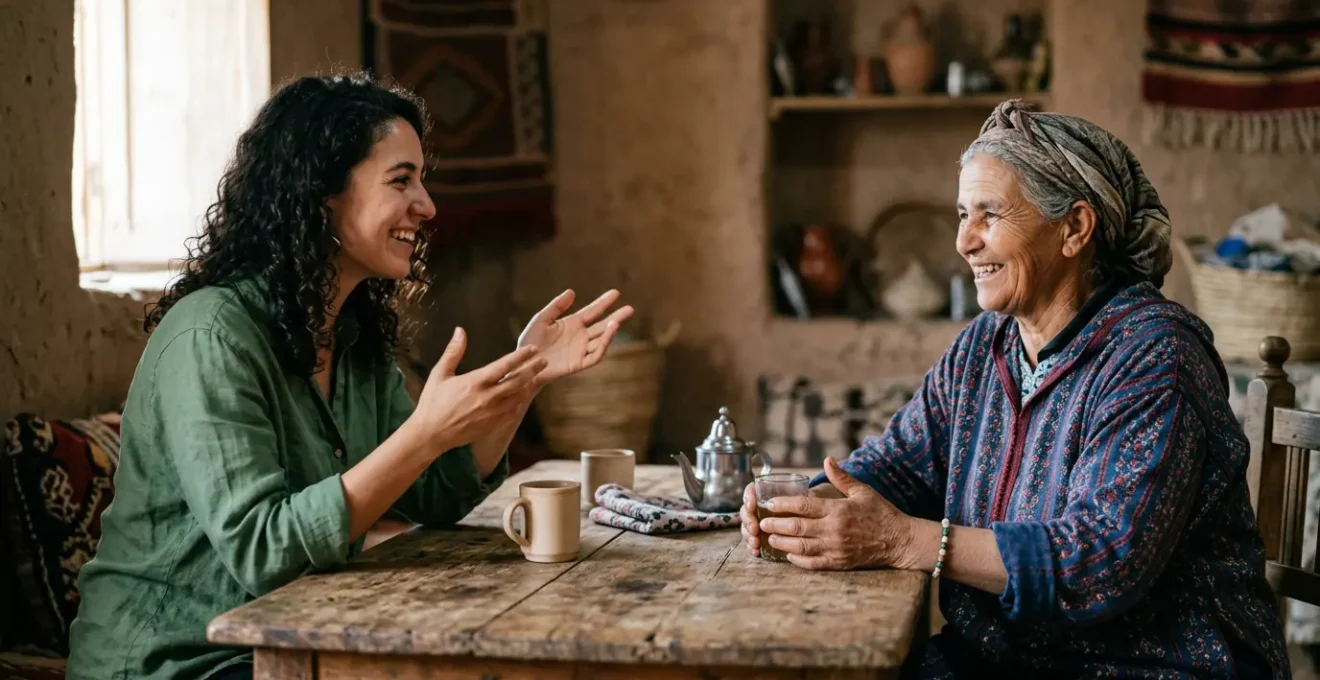
Many travelers believe technology or basic phrases are the keys to overcoming language barriers. The truth is that authentic cultural immersion comes not from what you say, but from what you do. By shifting your mindset from a transactional tourist to a relational guest, you can unlock deep connections by mastering the silent language of observation, respect, and cultural ritual.
The frustration is universal. You’re in a new country, surrounded by a vibrant culture you’re desperate to understand, but a wall of language stands between you and authentic connection. The common advice is to arm yourself with translation apps or a pocket phrasebook. We learn to say « hello, » « thank you, » and « where is the bathroom? » and believe we’ve done our due diligence. These tools are useful for transactions, but they often fail to foster genuine interaction.
This approach treats culture like a problem to be solved with technology, not an experience to be savored. It keeps us on the surface, interacting with a digital intermediary rather than the human in front of us. But what if the true key to immersion wasn’t in breaking the language barrier, but in learning to communicate powerfully within it? What if the most meaningful connections are forged not through words, but through actions, observation, and a deep respect for unspoken rules?
This guide moves beyond simplistic solutions to explore the ‘silent language’ of cultural intelligence. We will delve into the nuances of being a guest, interpreting non-verbal cues, navigating local customs around food and gifts, and engaging with communities respectfully. It’s a journey from being a passive tourist to becoming an active, relational guest who can build bridges without a shared vocabulary.
To help you navigate this journey toward deeper cultural connection, this article is structured to address key situations where non-verbal communication is paramount. The following sections will guide you through the intricacies of homestays, social gestures, food, gift-giving, and more.
Summary: A Guide to Connection Beyond Words
- Why Treating a Homestay Like a Hotel Offends Your Hosts?
- Gestures to Avoid: The Hand Signals That Are Rude in the Middle East
- English Menu vs Local Menu: How to Order What Locals Actually Eat?
- Wine or Sweets: Which Hostess Gift Is Appropriate in Japan?
- When to Join a Local Festival vs When to Just Watch Respectfully?
- Shopping at Artisanal Markets: How to Distinguish Authentic Crafts From Mass-Produced Tourist Traps?
- Tokyo Tech Adventures: How to Navigate Akihabara’s Retro Scene Without Knowing Japanese?
- Shopping at Artisanal Markets: How to Distinguish Authentic Crafts From Mass-Produced Tourist Traps?
Why Treating a Homestay Like a Hotel Offends Your Hosts?
A homestay is not a budget hotel; it’s an invitation into the heart of a family’s life. The fundamental difference lies in the nature of the relationship: one is transactional, the other is relational. When you book a hotel, you are a customer paying for a service. When you enter a homestay, you are a guest being welcomed into a home. Treating your host family like hotel staff—by isolating in your room, expecting services on demand, or avoiding shared activities—communicates a profound lack of respect for this distinction.
The offense comes from misunderstanding the core pact of a homestay. Your hosts are sharing their private space and daily routines, offering a chance for cultural exchange that goes far beyond a bed and a meal. This is a gift. To ignore it is to signal that you only value the transaction—the lodging—and not the relationship being offered. This can be deeply hurtful, turning a potential connection into a sterile service arrangement and robbing both parties of the experience’s true purpose.
Shifting your mindset is key. Instead of a paying customer, see yourself as a temporary family member. Your goal is not just accommodation, but participation. Sharing meals becomes a priority, offering to help with chores is a sign of gratitude, and spending time in common areas opens the door to the spontaneous, meaningful interactions that define a successful homestay. Research confirms this; a study on homestays showed that stronger offline interaction, such as face-to-face communication, directly creates higher guest satisfaction and a desire to return.
Case Study: The Impact of Host-Guest Interaction on Homestay Satisfaction
A study focused on China’s homestay industry provides compelling evidence. It found that proactive, sincere communication from hosts—like recommending local shortcuts or explaining folk customs—was a direct catalyst for stronger guest loyalty. The research highlights that when guests participate in activities and engage in genuine conversation, their experience is transformed from a simple service into a memorable, relationship-based connection. This confirms that proactive guest participation and host interaction are the primary drivers of a positive homestay experience, far outweighing the impact of online reviews or booking platforms.
To embrace this relational approach, focus on these simple yet powerful actions:
- Be Present: Don’t just retreat to your room. Sit in the living room with a book. This simple act makes you approachable and signals a willingness to interact.
- Share Meals: Food is the center of family life in most cultures. Use mealtimes to listen, learn about daily routines, and practice the few words you may know.
- Contribute: Offer to help with setting the table, cooking, or washing up. These small contributions show you see yourself as part of the household, not a customer to be served.
- Share Yourself: Bring a small, thoughtful gift that represents your home culture—local sweets, postcards, or photos. This opens a two-way street of cultural exchange.
- Communicate Needs: Don’t expect hotel-style service. If you need something, from a Wi-Fi password to dietary information, ask your host directly and politely.
Ultimately, a successful homestay hinges on recognizing the humanity of the exchange. It’s an opportunity to build a bridge between cultures, one shared meal and one small act of participation at a time.
Gestures to Avoid: The Hand Signals That Are Rude in the Middle East
In the theater of non-verbal communication, hands are the lead actors. Yet, a gesture of goodwill in one culture can be a declaration of insult in another. This is nowhere more apparent than in the Middle East, where the ‘silent language’ of hand signals carries deep historical and cultural weight. As etiquette expert Jan Goss notes, » Hand gestures can vary significantly in their meaning cross-culturally, with common ones in one country being considered offensive in others. » Understanding these nuances is a fundamental sign of respect.
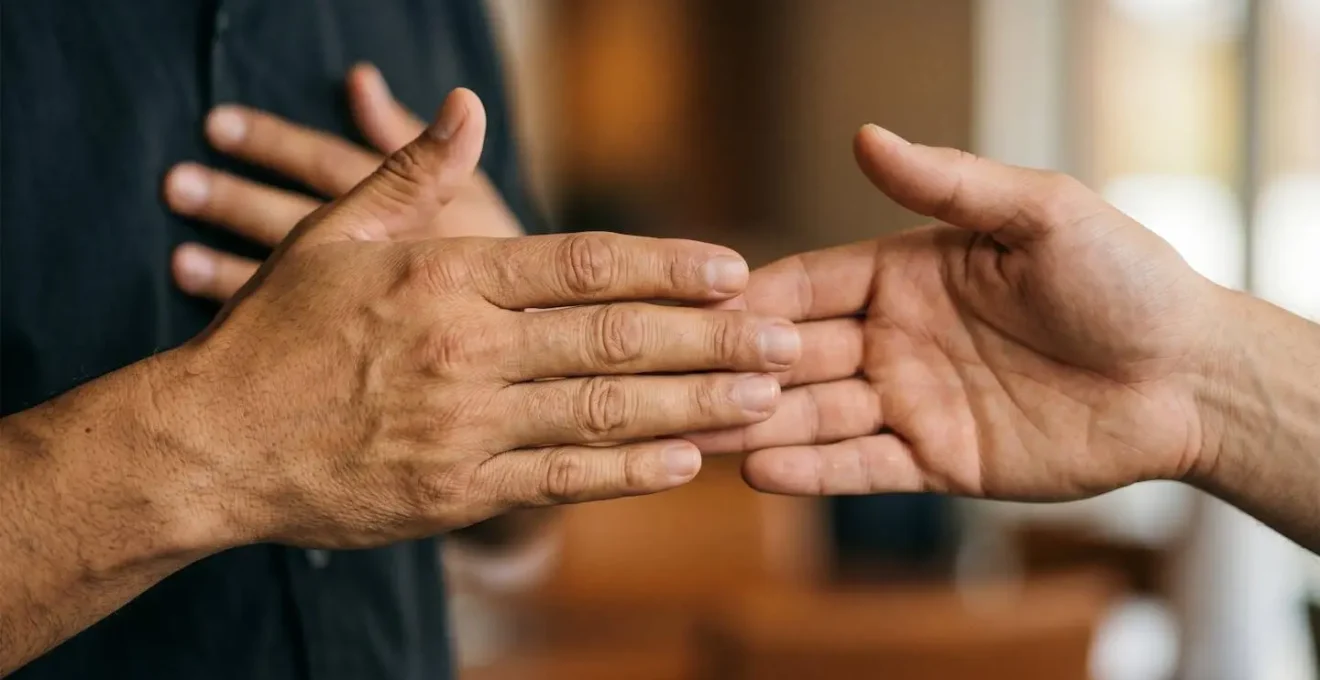
Three areas require particular caution: the distinction between the left and right hand, the symbolism of the open palm, and the status of the feet. In many Islamic and Middle Eastern cultures, the left hand is traditionally reserved for bodily hygiene and is considered unclean. Using it to greet someone, pass an object, or handle food is not just a faux pas; it is seen as deeply disrespectful and offensive. The right hand, in contrast, is for all positive and social interactions.
Similarly, the open palm facing someone (the « talk to the hand » gesture) is extremely insulting. It is a gesture known as the *moutza*, which has ancient origins in the Byzantine Empire where it was used to shame criminals by smearing their faces with cinders. Even showing the soles of your feet or shoes is considered rude, as the feet are the lowest and dirtiest part of the body. Pointing your sole at someone implies they are « dirt. » These are not minor points of etiquette; they are deeply ingrained cultural symbols. Violating them, even accidentally, can shut down communication and cause genuine offense.
The best strategy for a traveler is one of humble observation. Before you gesture, watch how locals interact. How do they beckon a waiter? How do they point? How do they greet one another? Adopting an « observer’s mindset » for your first 24 hours is a powerful tool. Resist the urge to use familiar gestures and instead focus on watching and learning. This respectful pause allows you to absorb the local non-verbal vocabulary before attempting to speak it.
When in doubt, a simple nod and a smile with your right hand placed over your heart is a near-universal gesture of sincerity and respect throughout the region. It communicates warmth and goodwill without risking an unintentional insult.
English Menu vs Local Menu: How to Order What Locals Actually Eat?
You see two menus: one in English, filled with familiar-sounding dishes, and one in the local script, a complete mystery. The English menu is a safety net, but it’s often a culinary trap, a curated list of « tourist-friendly » items that may not reflect what is truly being cooked and eaten in the kitchen. To achieve true culinary immersion, you must find a way to order from the local menu, even if you can’t read a single word.
The key is to bypass language and communicate your desire for authenticity through action and observation. As Matt Berna, a travel industry leader, wisely advises, » Instead of asking a local where they recommend eating, ask them where they eat. » This subtle shift in thinking is crucial. You don’t want the « best » restaurant; you want the *real* one. Look for places bustling with locals, not tourists. A long line of residents is the best review a restaurant can have. The lively chatter, the enticing aromas from the kitchen—these are your primary guides.
Once inside, your best tool is your eyes. Employ the « I’ll have what they’re having » gambit. Scan the tables around you. When you see a dish that looks or smells incredible, catch the waiter’s eye, smile, and politely gesture towards the dish. This is a universal, non-verbal sign of appreciative curiosity. It’s not rude; it’s a compliment. It says, « I trust the judgment of your local patrons. » Another powerful technique is to prepare ahead. Before your trip, use Instagram or food blogs (e.g., searching #BangkokStreetFood) to find photos of local specialties. Save these images to your phone and simply show the photo to your server. This is a visual ordering method that completely bypasses the language barrier.
Above all, be open and humble. A warm smile and an adventurous spirit are your most valuable assets. If you receive something unexpected, embrace it. Some of the most memorable travel meals are born from happy accidents. This approach transforms ordering food from a transaction into an interactive, engaging experience.
You’re not just ordering food; you’re showing a genuine interest in the local culture, and that gesture of respect is understood in any language.
Wine or Sweets: Which Hostess Gift Is Appropriate in Japan?
Arriving at a Japanese home with a gift of expensive wine or homemade cookies seems like a thoughtful gesture. However, in Japan, the art of gift-giving is a complex cultural ritual where the rules are as important as the gift itself. The Western concept of a « hostess gift » doesn’t perfectly align with the Japanese practice of omiyage (souvenirs) and temiyage (visit gifts). Understanding this distinction is crucial to showing genuine respect.
A temiyage is a gift brought when visiting someone’s home. While a nice bottle of wine might be appreciated in some modern households, the most culturally appropriate and safest choice is almost always a beautifully packaged food item, such as high-quality sweets or crackers. Crucially, the gift should be from a well-known shop, not homemade. The emphasis is on the thoughtfulness of the selection and the elegance of the presentation. The wrapping itself is a significant part of the gift, symbolizing respect for the recipient.
The Cultural Ritual of Omiyage
To grasp Japanese gift culture, one must understand omiyage. This is more than a souvenir; it’s a gift you bring back from your travels for friends, family, and colleagues. As detailed in a cultural analysis of the practice, it serves as a way to share your travel experience and apologize for your absence. Omiyage must be a local specialty from the place you visited, reinforcing regional identity. This practice shows how deeply the concepts of social obligation, shared experience, and regional pride are woven into Japanese gift-giving.
The presentation of the gift is a ritual in itself. It should never be given immediately upon arrival at the doorstep, as this can seem rushed. Wait until you are settled inside. When you present the gift, do so with both hands and a slight bow, using a humble phrase like, « Tsumaranai mono desu ga… » which translates to « It’s an insignificant thing, but… » This is not false modesty; it’s a culturally ingrained way of showing that the relationship is more important than the material gift. Conversely, when receiving a gift, you should express thanks and accept it with both hands, but refrain from opening it immediately unless invited to do so.
This intricate dance of giving and receiving is a core part of the ‘silent language’. By participating in it correctly, you are not just giving a box of sweets; you are communicating a deep level of cultural awareness and respect that will be far more appreciated than the most expensive bottle of wine.
It demonstrates that you have taken the time to learn their customs, a gesture that is the greatest gift of all.
When to Join a Local Festival vs When to Just Watch Respectfully?
You stumble upon a vibrant local festival. The air is thick with music, the scent of street food, and infectious energy. Your first instinct might be to jump right in, to dance, to join the parade. But this is a critical moment where cultural intelligence must override impulse. The line between enthusiastic participation and intrusive disruption is thin, and knowing when to cross it is a key skill for a respectful traveler.

The first step is to adopt an observer’s mindset. Before doing anything, simply watch. What is the nature of the event? Is it a joyful public celebration like Carnival, where everyone is invited to participate? Or is it a solemn religious procession or a community-specific ceremony? The answer dictates your role. Look for cues from other locals. Are they all participating, or is there a clear distinction between performers and spectators? If other onlookers are keeping a respectful distance, you must do the same. Your presence as a foreigner is already conspicuous; your behavior should be one of quiet humility.
If the event appears to be an open celebration, you may be able to join in, but do so cautiously. Start at the periphery. Instead of jumping into the center of a dance circle, perhaps clap along with the rhythm from the sidelines. Your goal is to be invited in, not to force your way in. A smile, a nod, or an appreciative gesture towards the participants can often lead to a local beckoning you to join. This invitation is your green light. Without it, you risk being seen as a disrespectful intruder, treating their culture as a theme park for your entertainment.
When you’re there, practice mindfulness. Pay attention to the details, notice flavours and textures, and slow down enough to truly savour each bite. Connect with all your senses.
– Travel Bug Tonic, Travel Through Taste: An Immersive Guide to Local Food Culture
While this advice is for food, its wisdom applies perfectly here. Replace « flavours and textures » with « sights and sounds. » By slowing down and connecting with your senses as an observer, you show respect and are more likely to understand the true nature of the event. Participation is a privilege, not a right. Sometimes the most profound way to connect with a cultural moment is to simply bear witness to it, quietly and respectfully, allowing its beauty and meaning to unfold without your interference.
This act of conscious observation is, in itself, a form of deep and meaningful participation.
Shopping at Artisanal Markets: How to Distinguish Authentic Crafts From Mass-produced Tourist Traps?
An artisanal market is a kaleidoscope of color, texture, and creativity. It’s also a minefield. For every genuinely handcrafted treasure, there are a dozen mass-produced trinkets disguised as authentic local work. Developing the skill to tell them apart is not just about getting a better souvenir; it’s about honoring and supporting true artisans and their cultural heritage. The key is to engage your senses and your curiosity, transforming from a passive buyer into an active investigator.
Your first and most powerful tool is the ‘Meet the Maker’ test. Look for the artisan. Is there a person in the stall actively working—carving, weaving, painting? Can you see their tools, raw materials, or works-in-progress? The presence of the creator is the strongest indicator of authenticity. Mass-produced goods are dropped off in boxes; handmade items are often born right in front of you. If the artisan is present, it provides an invaluable opportunity for connection that transcends language.
Next, use your hands. Authentic handmade objects have a story to tell through their imperfections. Pick up two « identical » items. Are they truly identical? A factory-produced set of bowls will be perfectly uniform in size, weight, and glaze. A hand-thrown set will have subtle variations—a slight difference in height, a unique swirl in the finish. Feel the texture. Is it the smooth, sterile perfection of a machine, or does it have the slight roughness, the minor inconsistencies that whisper « a human made this »? Lack of plastic wrapping and excessive packaging is another good sign. Artisans are proud of their work and want you to touch it.
Your Action Plan for Verifying Authentic Craftsmanship
- Points of contact: List all ways the craft is presented to you—at the market stall, through photos of the workshop, or in the artisan’s own hands.
- Collecte: Inventory the physical details. Note the specific materials used, the tools visible nearby, and whether the artisan is actively working.
- Cohérence: Confront the item’s design with your knowledge of the region. Does the style reflect local traditions, or does it look like a generic « tribal » or « exotic » pattern seen everywhere?
- Mémorabilité/émotion: Evaluate the item’s uniqueness. Does it feel like a one-of-a-kind piece with character, or is it one of a hundred identical, sterile products on a shelf?
- Plan d’intégration: Based on your audit, decide your next move. Do you purchase with confidence, ask a clarifying question about its meaning, or politely move on?
This forensic approach—using your eyes, hands, and a structured audit—is your best defense against the tourist trap. It allows you to identify the items that carry a genuine piece of the culture within them.
This not only ensures you bring home a meaningful memento but also directs your money to the local artists who are the true custodians of their craft.
Tokyo Tech Adventures: How to Navigate Akihabara’s Retro Scene Without Knowing Japanese?
Akihabara. The name itself conjures images of neon-drenched streets, towering buildings plastered with anime characters, and a dizzying symphony of electronic sounds. For a traveler seeking rare retro video games or vintage electronics, it’s a paradise. But for one who doesn’t speak Japanese, it can also feel like an impenetrable fortress. How do you find a specific copy of a 1995 Super Famicom game when you can’t even read the store signs?
The answer lies in a strategy of visual preparation and non-verbal communication. Before you even set foot in Akihabara, your quest begins online. Your mission is to find the Japanese cover art for the game you seek. A simple image search for « [Game Title] スーパーファミコン » (Super Famicom) will usually do the trick. Save this image, large and clear, on your phone. This picture is now your universal passport, a visual key that unlocks communication with any shopkeeper.
Imagine this scenario: You’re looking for ‘Chrono Trigger’ for the Super Famicom. You enter a multi-story retro game store like Super Potato or Mandarake. The walls are a chaotic library of cartridges, and every spine is in Japanese. Instead of panicking, you approach a staff member. You give a polite bow, show them the image of the game cover on your phone, and point to it with an inquisitive look. You don’t need to say a word. They will immediately understand. They might lead you to the correct aisle, check their inventory, or, with a regretful shake of the head and a bow, inform you it’s not in stock. You have successfully communicated a complex request without a single shared word.
This technique can be expanded. Use your phone’s camera to take pictures of price tags or signs you don’t understand, and use a visual translation app later. Observe how other customers navigate the stores—many have specific floors for specific consoles (e.g., Famicom on 5F, PlayStation on 3F). The entire environment is designed for a highly specific, visually-driven audience. By preparing your visual aids and adopting the observer’s mindset, you can transform a daunting challenge into a thrilling treasure hunt.
It proves that with the right strategy, a shared passion for retro games can be a more powerful communication tool than a shared language.
Key takeaways
- True immersion is relational, not transactional; aim to be a guest, not just a customer.
- The ‘silent language’ of observation and respectful action is often more powerful than spoken words.
- Authenticity is found by looking beyond tourist-facing comforts and engaging with what locals actually do, eat, and create.
Shopping at Artisanal Markets: How to Distinguish Authentic Crafts From Mass-Produced Tourist Traps?
Having learned to physically identify a potentially authentic craft, the next step is to confirm its story. A true artisanal object is more than just a thing; it’s a vessel for meaning, tradition, and the creator’s time. The final layer of verification, and the most rewarding part of the experience, comes through interaction. Even without a shared language, you can engage with the creator in a way that reveals the object’s soul.
Every dish tells a story, whether it’s about the local ingredients, traditional cooking methods, or the customs surrounding the meal. Therefore, trying local cuisine is a vital part of cultural immersion.
– Attempt Adventure Podcast, Cultural Immersion: A Guide to Truly Experiencing a New Country
This insight from the world of food applies perfectly to crafts. Every handmade object tells a story. Your goal is to invite the artisan to share that story. Instead of starting with a question about price (« How much? »), which immediately frames the interaction as transactional, begin with a gesture of curiosity. Pick up the object gently. Point to a specific symbol or pattern on it, then look at the artisan with a curious, questioning expression. This non-verbal question— »What does this mean? »—opens the door to a richer exchange.
The artisan’s response will be incredibly telling. They might use gestures to show you the plant the dye came from. They might draw a picture in the dirt to explain the symbol’s connection to a local legend. They might pull out other items to show you the different stages of the process. The richness and passion of their response, even if entirely non-verbal, is a powerful confirmation of authenticity. Someone selling mass-produced goods will have no such story to tell; their only response will be to point to the price tag.
This interaction transforms the act of shopping. It becomes a shared moment of human connection, a ‘ritual of exchange’ where you are trading not just money for a product, but your genuine interest for their cultural knowledge. The price you pay in the end is no longer just for the object, but for the story and the connection that comes with it. This is what transforms a souvenir into a cherished memory.
Embrace this mindset, and you’ll not only bring home authentic treasures but also leave behind a sense of mutual respect and understanding.