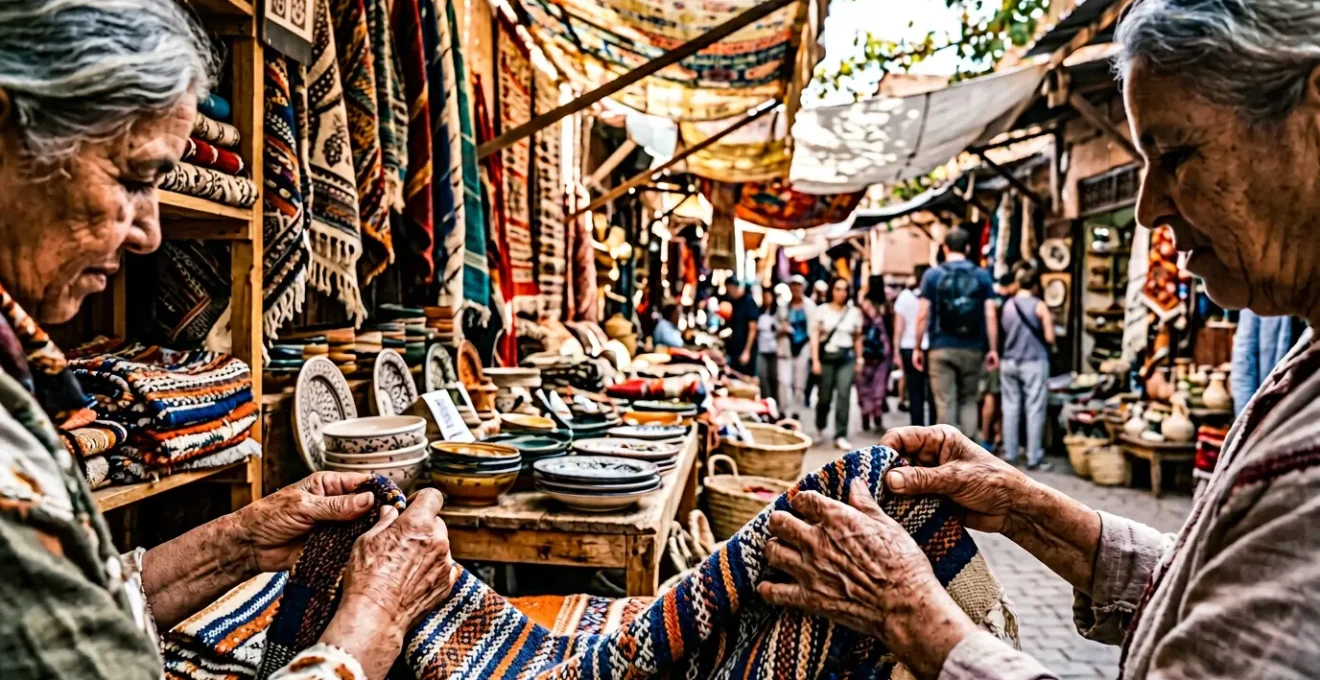
Authenticity in craftsmanship is not found on a label, but in the story of its creation, which any traveler can learn to read.
- Genuine craft has « material honesty »—physical tells like the subtle inconsistencies in alpaca wool or the weight of hand-thrown pottery that synthetics cannot fake.
- The most reliable sign of an authentic artisan is a working studio, complete with tools showing wear, raw materials, and even failed attempts or « practice pieces. »
Recommendation: Instead of asking « Is this real? », ask to see the workshop. The context of creation is the ultimate certificate of authenticity.
The scene is familiar: a bustling market, vibrant with color and sound. You find a beautiful hand-painted ceramic bowl, the perfect memento. The seller assures you it’s a local craft. Yet, weeks later, you see an identical piece in an airport gift shop, its « Made in China » sticker hastily removed. This disappointment is a common pitfall for travelers who genuinely want to support local artists but find themselves navigating a marketplace flooded with mass-produced facsimiles. The usual advice—to haggle aggressively, look for specific labels, or simply trust your gut—often falls short.
These tips treat the purchase as a simple transaction and the object as a commodity. They fail to address the core of the issue. The proliferation of tourist traps has made it harder, but not impossible, to find the real treasures. It requires a shift in mindset, from a passive consumer to an active curator. The secret isn’t in spotting a forgery; it’s in recognizing genuine artistry.
But what if the key to finding authenticity wasn’t a visual inspection, but an intellectual and sensory investigation? What if you could learn to « read » an object, its material, and its maker, much like an art historian assesses a work for a museum? This guide is built on that principle. We will move beyond superficial tells and equip you with a discerning framework to evaluate craftsmanship. We will explore the nuances of material honesty, the cultural language of negotiation, the strategic value of a studio visit, and how to invest—not just spend—in cultural heritage.
This article provides a structured approach to transform your market experiences. Each section below is a practical lesson in becoming a more conscious and confident collector, ensuring the souvenirs you bring home carry a true story of place and person.
Summary: A Guide to Authentic Market Shopping
- How to Tell Real Alpaca Wool From Synthetic Blends by Touch?
- Haggling vs Fixed Price: When Is It Insulting to Negotiate?
- Carry-On vs Shipping Home: Calculating the Cost of Heavy Ceramics
- The « Studio Visit » Sign: Why You Should Always Ask to See the Workshop
- When to Arrive at the Market to Get the Best Selection (Not the Best Price)?
- Investing in Local Craftsmanship: Which Traditional Arts Are Gaining Value Globally?
- How to Achieve Cultural Immersion Without Speaking the Local Language Fluently?
- Investing in Local Craftsmanship: Which Traditional Arts Are Gaining Value Globally?
How to Tell Real Alpaca Wool From Synthetic Blends by Touch?
The allure of genuine alpaca is its incredible softness and warmth, a reputation built on centuries of Andean tradition. With Peru alone responsible for a significant portion of global production, it’s no surprise that its markets are filled with vendors selling alpaca goods. An official report states that in one year, Peru contributed 72% (4,452 tons) of all alpaca fiber worldwide. However, this prevalence also invites imitation. The key to discernment lies not in a label, but in developing a feel for material honesty. Synthetics and blends are engineered for uniformity, while authentic alpaca possesses subtle, natural inconsistencies that are your primary clues.
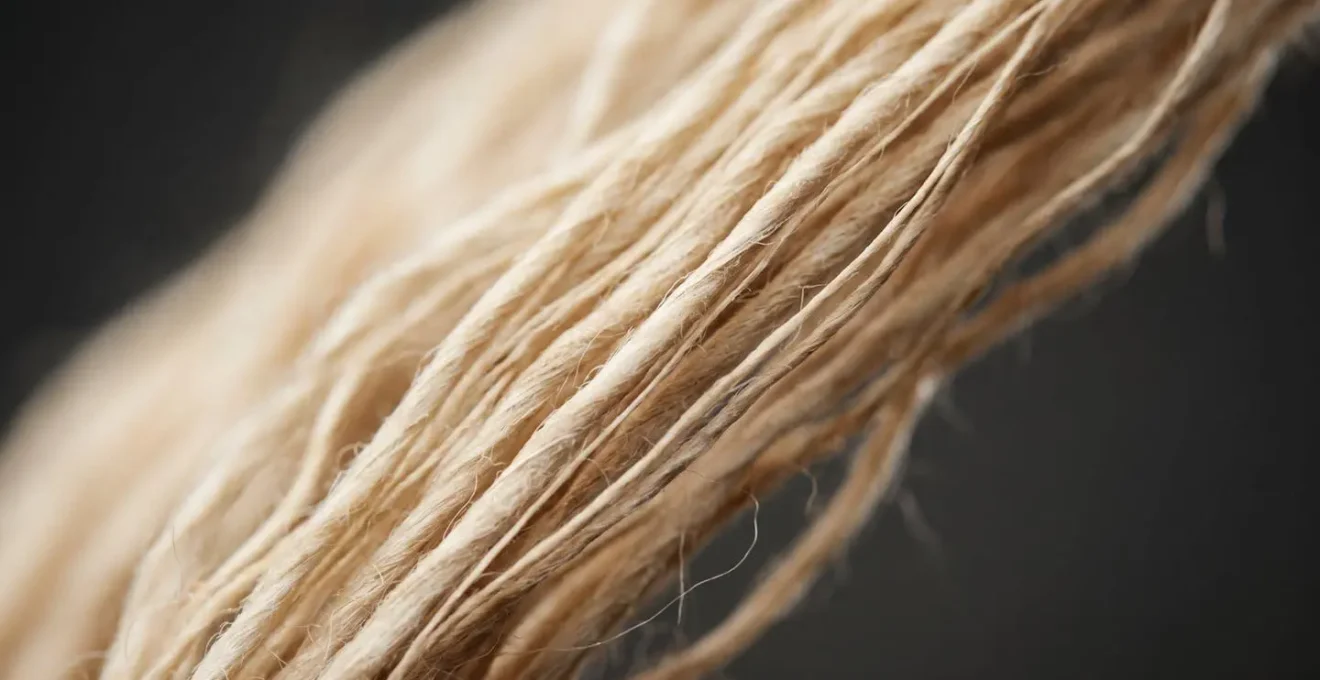
As the image above illustrates, authentic fibers have microscopic variations in thickness and texture. Your fingertips can be trained to detect these differences. Run the fabric between your thumb and forefinger; a machine-perfect, unnaturally slick smoothness is a red flag for acrylic or other synthetic blends. Real alpaca has a unique thermal property: it feels cool to the touch initially, then warms up quickly from your body heat, and is surprisingly lightweight for the warmth it provides. For the more dedicated buyer, a few simple field tests can confirm your suspicions:
- The Touch Test: Feel for microscopic variations in fiber thickness. Synthetic blends are machine-perfect and unnaturally smooth, whereas high-quality alpaca has subtle inconsistencies.
- The Water Test: Dampen the fiber slightly. Real wool has a distinct lanolin or « animal » smell when wet, while synthetics may smell of chemicals or nothing at all.
- The Warmth Test: Drape the garment over your arm. Real alpaca feels surprisingly light for the immediate warmth it provides, a characteristic synthetics cannot replicate effectively.
- The Burn Test (use with extreme caution): If you can obtain a loose fiber, real alpaca will singe and smell of burnt hair, turning to ash. Synthetics melt into a hard, plastic-like bead.
Ultimately, training your senses to recognize these qualities is far more reliable than any tag or verbal promise. It transforms the act of shopping into an engaging, tactile experience and your first line of defense against inauthenticity.
Haggling vs Fixed Price: When Is It Insulting to Negotiate?
The practice of haggling is one of the most misunderstood aspects of market shopping. For many Western travelers, it can feel confrontational or awkward, yet in many cultures, it is an expected and integral part of the exchange. The key is to understand when negotiation is appropriate and when it becomes disrespectful. A study on market dynamics revealed a crucial insight: successful haggling is often more about social connection than financial gain. A 2020 study in the Journal of Economic Psychology found that the experience was viewed positively when it fostered interaction, not just a price reduction. This reframes negotiation not as a battle, but as a form of communication—a « cultural currency » exchange.
The primary rule is to observe. Are prices clearly marked on all items (a sign of a fixed-price policy)? Is this a formal shop or a stall in a sprawling, informal market? In general, haggling is inappropriate in stores with price tags, food stalls, or when dealing with items that are clearly the result of immense, high-skill labor from a master artisan. To lowball an artist on a signature piece is to insult their livelihood and expertise. However, in a bustling souvenir market with no prices listed, a polite negotiation is often expected. The goal should be a fair price for both parties, not to « win. » Start with a smile and a respectful offer (e.g., 20-30% below asking price, depending on local customs), and be prepared to meet in the middle. Most importantly, never negotiate for an item you do not intend to buy.
As experts in cultural travel advise, the attitude you bring to the negotiation is paramount. It should be rooted in respect for the creator and their work.
When bargaining for handcrafted items, acknowledge the value and effort that artisans put into their work. This recognition shows respect for their craftsmanship and the cultural significance associated with their creations.
– RoamHops Cultural Travel Guide, Cultural Etiquette for Bargaining in Markets
Ultimately, the most successful negotiation is one that leaves both you and the vendor smiling. It’s a sign that you have exchanged more than just money; you have participated in a cultural ritual and affirmed the value of the artisan’s work.
Carry-On vs Shipping Home: Calculating the Cost of Heavy Ceramics
You’ve found it: a large, hand-thrown terracotta vase, its glaze capturing the local light perfectly. It’s too big for your suitcase, but the artisan offers to ship it. This is a moment where a discerning buyer must transition into a pragmatic logistician. The price of the object is only the beginning of its total cost. The complexities and hidden fees of international shipping, especially for fragile items like ceramics, can quickly turn a market bargain into a significant expense. In fact, industry guides have noted a 6-8% increase in combined packing and insurance costs for ceramics in the past year alone, highlighting a growing financial consideration.
Before committing, you must calculate the « landed cost »—the total price to get the item from the market stall to your front door. This includes the base shipping quote, specialized packing materials, insurance (which is often higher for ceramics), customs duties, and local import taxes (like VAT/GST) in your home country. For larger shipments, you may also need to pay brokerage fees. A reputable artisan or a dedicated art shipper can provide a more accurate quote, but it is wise to have a general understanding of the options.
The following table, based on common international shipping practices, outlines the trade-offs between different methods. It’s a critical tool for making an informed decision on the spot.
| Shipping Method | Transit Time | Cost Level | Insurance Coverage | Best For |
|---|---|---|---|---|
| Standard Courier (DHL/FedEx) | 3-7 days | High | Limited for ceramics | High-value, time-sensitive items |
| Sea Freight (FCL) | 20-45 days | Low (bulk) | Available with premium | Large quantities, full containers |
| Sea Freight (LCL) | 20-45 days | Medium | Limited, more handling risk | Smaller orders, cost-conscious buyers |
| Art Logistics Specialist | Varies | Very High | Comprehensive | Gallery deliveries, valuable pieces over 45cm |
If the calculated landed cost is too high, it is better to walk away and cherish the memory than to be burdened by unexpected bills. A truly beautiful object should not come with financial regret. Sometimes, the most valuable souvenir is a photograph and the story of the one that got away.
The « Studio Visit » Sign: Why You Should Always Ask to See the Workshop
In the search for authenticity, there is no more powerful tool than verifying provenance. And the most direct way to do this is to go to the source: the workshop. Many market stalls are simply retail fronts, staffed by sellers who are disconnected from the creation process. The true artisan, however, is often working in or near their sales point. An invitation to « see the studio » or « visit the workshop » is the most valuable sign you can encounter. If no sign is present, you should always politely ask, « Is it possible to see where this is made? » The answer is incredibly revealing. A reseller will demur; a true artisan will often light up with pride.
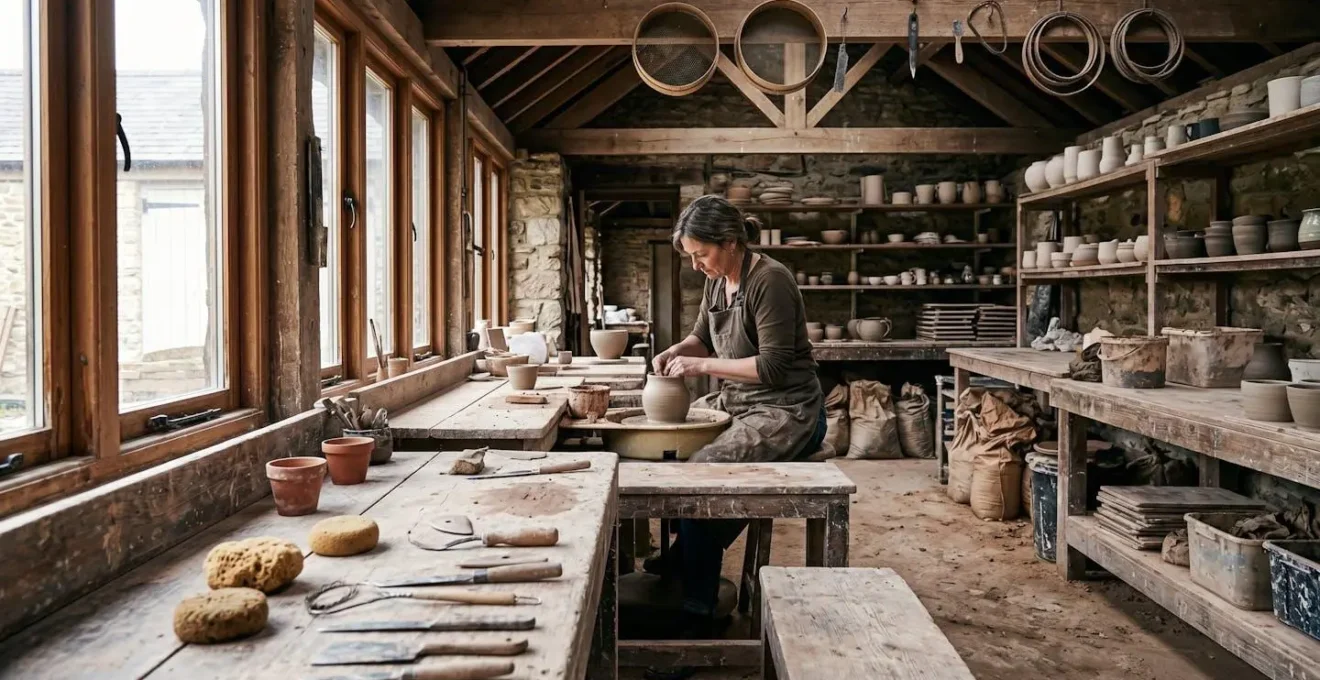
A genuine workshop is a living space, not a sterile showroom. It tells a story of process, skill, and dedication. As you step inside, your role shifts from a tourist to an observer, and your senses become your guide. Look for the organized chaos of creation: the smell of raw clay or wood shavings, the sight of tools worn smooth with use, and pieces in various stages of completion. This environment is the ultimate proof of origin, a narrative that no mass-produced item can replicate. To help you « read » the space like an expert, use this simple scorecard.
Workshop Authenticity Checklist: 5 Signs of a Real Artisan Studio
- Raw Materials in View: Are there stockpiles of unprocessed materials, such as blocks of clay, bundles of fiber, or uncut wood? Authentic workshops have visible inventory for their craft.
- Tools with Patina: Look for tools that show genuine wear and tear—stains, scratches, and a patina from repeated use—not pristine, decorative implements.
- Works-in-Progress: A real studio will have projects at various stages of completion, from raw forms to nearly finished pieces, showcasing the entire creation process.
- The ‘Graveyard’ of Practice Pieces: Do you see a corner with failed attempts, test glazes, or practice carvings? This « graveyard » is a hallmark of an artisan dedicated to honing their skill.
- Signs of Active Work: Is there dust, material scraps, or the artisan themselves actively engaged in their craft? A working studio is a productive space, not just a point of sale.
Engaging with the artisan in their creative space is the pinnacle of conscious travel shopping. It transforms your purchase from a mere object into a piece of a story—a story of skill, tradition, and a personal connection you helped to forge.
When to Arrive at the Market to Get the Best Selection (Not the Best Price)?
Conventional wisdom often suggests that the early bird gets the worm, or in the case of markets, the best price. Arriving at the end of the day to snag a last-minute deal is another common tactic. However, for the discerning collector focused on quality and authenticity, neither strategy is optimal. Your goal is not the lowest price, but the best selection and the most meaningful interaction. This requires a counter-intuitive approach to timing your visit. The best time to arrive is often during the « midday lull, » after the morning rush of tour buses has subsided and before the late-afternoon pack-up begins.
During this quieter period, vendors are more relaxed and have time to talk. This is your opportunity to ask about their craft, learn the story behind a piece, and perhaps be invited to see the workshop. Furthermore, a fascinating phenomenon occurs in many markets: the « midday restock. » Artisans often hold back their most unique or highest-quality pieces during the morning chaos, preferring to show them to more serious buyers. After the initial wave of tourists, they replenish their displays with these superior items. Arriving in the mid-afternoon means you are seeing a curated, often better, selection of goods that early-morning shoppers completely missed.
Case Study: Strategic Timing at Peru’s Pisac Market
At the Pisac market, one of South America’s most famous, most tour groups arrive in the morning and leave by lunchtime. As noted by travel experts familiar with the region, seasoned collectors and travelers have found the optimal time to visit is around 3 p.m. This timing allows for genuine, one-on-one conversations with artisans who are often more willing to share the process behind their crafts. This strategy also capitalizes on the « midday restock, » where vendors, having sold their initial display items, bring out premium stock that was held back from the morning rush, revealing a selection unseen by earlier crowds.
By shifting your focus from price to access, you fundamentally change your market experience. You position yourself not as a bargain hunter, but as a connoisseur, gaining access to better pieces and richer stories.
Investing in Local Craftsmanship: Which Traditional Arts Are Gaining Value Globally?
A truly authentic craft is more than a souvenir; it’s a small piece of cultural history. As a discerning buyer, you can also think like a collector, acquiring pieces that not only have personal meaning but may also represent a tangible investment in heritage. As globalization and mass production erase local traditions, authentic, handmade objects from specific cultural lineages are becoming increasingly rare and valued. The key is to identify crafts that have a deep-rooted tradition and are gaining international recognition for their cultural importance.
A primary indicator of a craft’s significance is its recognition by cultural bodies like UNESCO. As reported by the World Economic Forum, there are currently 678 elements corresponding to 140 countries on UNESCO’s Intangible Cultural Heritage lists. These lists are a goldmine for collectors, as they signal that a craft—be it traditional weaving, pottery, or metalwork—is officially recognized as a vital part of humanity’s shared heritage. Purchasing a piece from an artisan practicing a UNESCO-listed craft is a direct investment in its preservation.
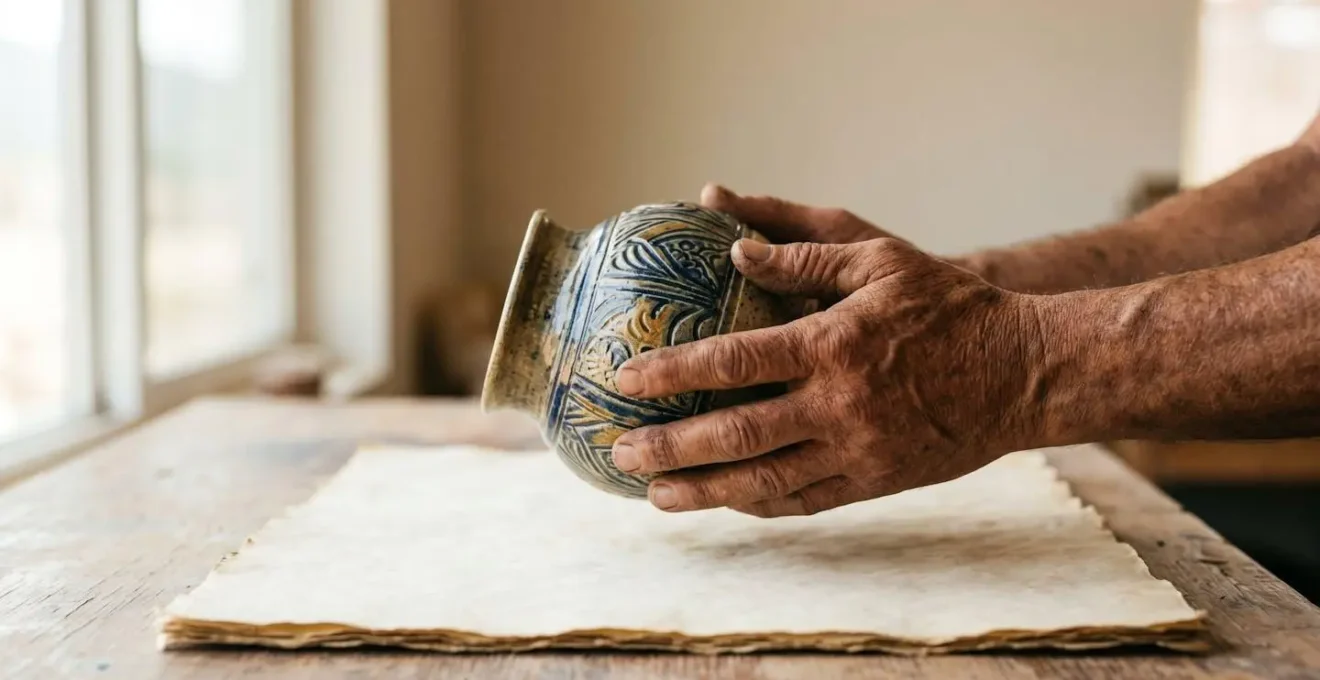
Beyond UNESCO, look for crafts that are deeply tied to a region’s identity and are being revived by a new generation of artisans. This could be Japanese kintsugi (the art of repairing broken pottery with gold), Oaxacan wood carving (alebrijes), or Moroccan Zellige tilework. These are not just objects; they are expressions of a living culture. As UNESCO itself states, this heritage is a critical part of our world.
Traditional craftsmanship is perhaps the most tangible manifestation of intangible cultural heritage. The goal of safeguarding is to ensure that the knowledge and skills associated with traditional artisanry are passed on to future generations so that crafts can continue to be produced within their communities…
– UNESCO, Traditional Craftsmanship – Intangible Cultural Heritage
When you purchase from these traditions, document the story. Take a photo of the artisan, get their name, and note the location and date. This provenance transforms your souvenir into a curated piece with a verifiable history, increasing both its personal and potential future value.
How to Achieve Cultural Immersion Without Speaking the Local Language Fluently?
One of the biggest perceived barriers to a meaningful market interaction is language. How can you connect with an artisan or understand their craft if you can’t communicate fluently? The truth is, you don’t need to be a polyglot to achieve cultural immersion. Non-verbal communication—a smile, a gesture of appreciation, and genuine interest—is a universal language. More importantly, making a small effort to use a few key words in the local tongue speaks volumes and can completely transform the dynamic of an interaction.
It signals respect, humility, and a genuine desire to connect beyond a simple transaction. This effort is a form of cultural currency that can open doors that remain closed to the purely transactional tourist. Instead of trying to memorize complex phrases, focus on a handful of high-impact words. This « Five Word Method » is a simple but powerful tool for building rapport and showing respect in any market in the world.
- Word 1: ‘Hello’ – The universal key. Learn the local greeting to open every interaction with warmth and respect.
- Word 2: ‘Thank you’ – Express gratitude in the local language, not just for the sale, but for the artisan’s time and attention.
- Word 3: ‘Beautiful’ – A simple, powerful compliment. Pointing at a piece and saying « beautiful » in their own language is a direct acknowledgment of their skill.
- Word 4: ‘How much?’ – An essential phrase for respectfully initiating a price discussion in markets where it is appropriate.
- Word 5: The name of the craft itself – Learning the local term for the craft (e.g., ‘Cerámica’ for pottery, ‘Tejido’ for weaving) shows a deeper, specific interest in their tradition.
These few words, combined with attentive body language, can bridge the linguistic divide. They demonstrate that you see the artisan as a person, not just a vendor, and their work as a craft, not just a product. This small investment of effort can yield an immense return in the form of a more authentic and memorable experience.
Key Takeaways
- True authenticity is a narrative you uncover, not a feature you spot. Focus on story and context.
- The workshop is the ultimate certificate of authenticity. Always ask to see where the magic happens.
- Think like a collector, not a consumer. Invest in recognized cultural heritage and document its provenance.
Investing in Local Craftsmanship: Which Traditional Arts Are Gaining Value Globally?
Having established the importance of recognized traditions like those on the UNESCO lists, the truly discerning collector takes the next step: developing an eye for future value. This is where you move from a buyer to a curator. It involves not just recognizing established heritage, but identifying the currents that indicate which traditional arts are poised for greater appreciation. This is the art of « investment curation »—building a personal collection based on an educated understanding of craft, culture, and market dynamics.
One key indicator is the « diaspora effect »: crafts that are being re-interpreted by contemporary designers or second-generation artisans living abroad. When a traditional pattern or technique starts appearing in high-end design boutiques in London, Tokyo, or New York, it’s a sign that the global market is taking notice. Another signal is a craft’s adaptability. Arts that can be applied to modern forms—such as traditional weaving patterns used on contemporary fashion, or ancient glazing techniques on minimalist pottery—have a greater chance of remaining relevant and sought-after. Look for the intersection of tradition and innovation.
Building a valuable collection is not about speculation; it’s about scholarship. Document every purchase. Create a small « provenance file » for each significant piece, including the artisan’s name, a photo of their workshop, the date of purchase, and any stories they shared about the item’s meaning or process. This documentation is what separates a souvenir from an artifact. It solidifies the object’s history and its connection to a specific time, place, and person, adding a layer of value that is both immeasurable and, for future collectors, indispensable.
Begin applying this curatorial mindset on your next journey. Approach each market not as a store, but as a living museum where you have the rare opportunity to acquire a piece of its collection. This transforms travel into a deeply rewarding act of cultural preservation and personal discovery.