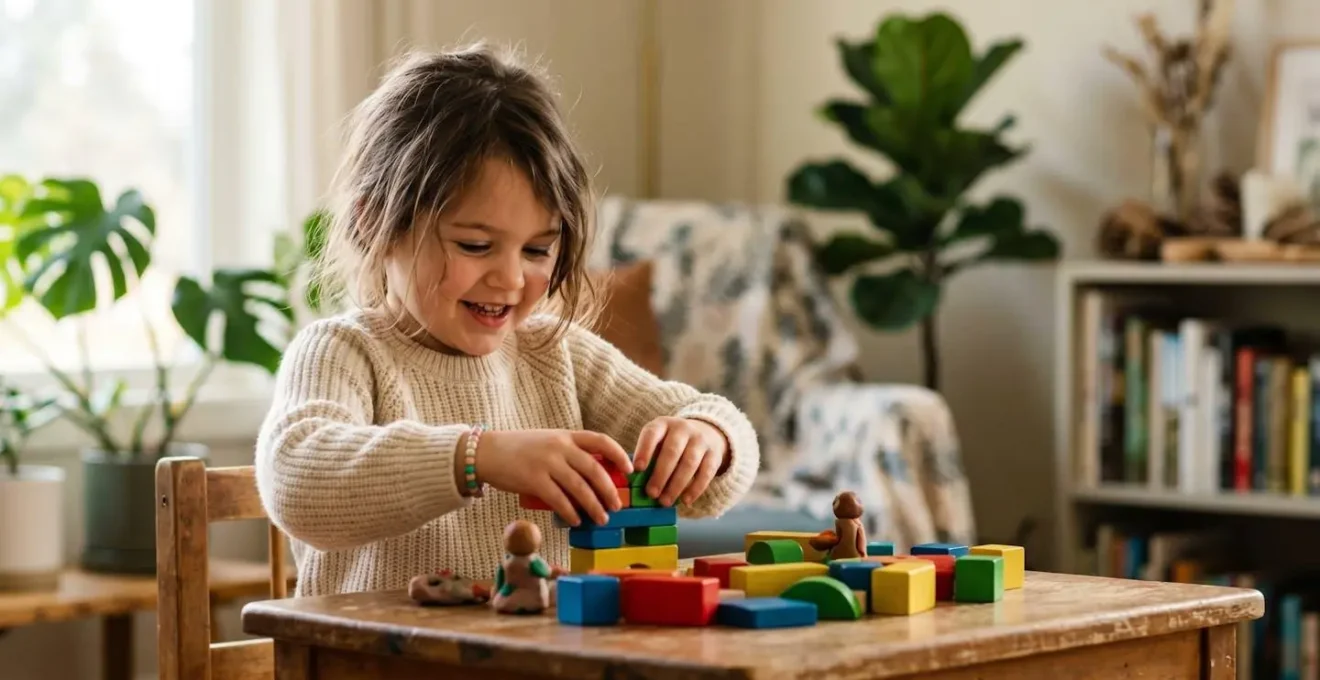
The key to engaging a five-year-old without screens isn’t a magic list of activities; it’s understanding that boredom is the beginning of creativity, not the end of fun.
- Letting the brain rest in « boredom » activates the Default Mode Network, which is crucial for creative thought and problem-solving.
- Simple, low-prep « invitations to play » are more effective than over-scheduled, high-energy activities that can lead to sensory overload.
Recommendation: Instead of fighting boredom, learn to guide your child through its initial discomfort. Create a calm environment with a few simple, open-ended materials and watch their own imagination become the main event.
The familiar whine of « I’m boooored » can send a shiver down any parent’s spine. It’s the siren call that often leads straight to the nearest screen, a quick fix for a moment of peace. You’ve probably tried the usual advice: « go play outside, » « read a book, » or « do some drawing, » only to have your five-year-old return minutes later with the same complaint. This cycle is exhausting, leaving you feeling like a constantly-on entertainer locked in a battle you can’t win.
The conventional wisdom focuses on filling every moment with stimulation. We build elaborate craft stations, schedule back-to-back playdates, and curate toy collections worthy of a small museum. But what if this approach is part of the problem? What if the relentless pursuit of « doing something » is actually starving our children of the one thing they need to develop resilience, independence, and creativity? That one thing is unstructured downtime.
This guide offers a different perspective. We’ll shift the focus from a parent’s frantic search for activities to a child’s innate capacity for self-directed play. The secret to unlocking 60 minutes of engaged, screen-free time isn’t about better toys or more elaborate plans. It’s about understanding the developmental science behind boredom, recognizing the subtle cues of overstimulation, and strategically creating an environment that invites your child’s imagination to take the lead. It’s about becoming a facilitator of wonder, not just a director of entertainment.
This article will walk you through a series of practical, low-prep strategies rooted in child development. We will explore how to reframe boredom as a strength, turn simple moments into learning opportunities, and design your home to be a sanctuary of calm, creative play. Get ready to transform your approach to parenting and reclaim your peace of mind.
Table of Contents: Engaging Your 5-Year-Old Beyond the Screen
- Why Letting Your Child Be Bored Boosts Their Creativity?
- How to Turn a Park Walk Into a Biology Lesson Using a Magnifying Glass?
- Kinetic Sand vs Playdough: Which Is Easier to Clean Up After?
- The Activity Overload Error That Causes Tantrums
- When to Introduce Competitive Board Games to Avoid Meltdowns?
- How to Cultivate a Harmonious Parenting Sanctuary in a Small Apartment?
- Visiting Cultural Heritage Centers: How to Make History Interesting for Teenagers?
- Visiting Cultural Heritage Centers: How to Make History Interesting for Teenagers?
Why Letting Your Child Be Bored Boosts Their Creativity?
In our hyper-stimulated world, we’ve come to view boredom as a problem to be solved immediately. For a parent, a child’s declaration of boredom feels like a failure. But from a neurological standpoint, it’s actually an incredible opportunity. When a child’s mind isn’t occupied by external stimuli like a cartoon or a structured game, it has a chance to turn inward. This is where the magic happens, thanks to a crucial brain system known as the Default Mode Network (DMN).

The DMN is essentially your brain’s « daydreaming » hub. As child development experts have noted, it’s the part of the brain that connects disparate ideas, retrieves memories, and imagines future possibilities. Crucially, neuroscience research demonstrates that individuals with higher creativity show greater connectivity within this very network. By constantly providing entertainment, we prevent the DMN from getting the workout it needs. Allowing for boredom is like sending the brain’s creative muscles to the gym.
As neuroscientist Vinod Menon explains in an interview with the Stanford Wu Tsai Neurosciences Institute, the DMN is fundamental to our sense of self:
The default mode network is a collection of brain areas that becomes active when we turn our attention inward. It’s a network that generates your internal mental life, your memories, your sense of who you are, your plans and daydreams, and the ongoing inner narrative that reflects our own individual experiences.
– Vinod Menon, Stanford Wu Tsai Neurosciences Institute interview
So, the next time your child complains of boredom, resist the urge to immediately offer a solution. Instead, see it as the start of what we can call « boredom’s creative arc. » The initial discomfort and whining are just the warm-up. If you can provide a calm, screen-free space, their brain will eventually take over, starting to build worlds, invent stories, and solve problems on its own. Your role isn’t to fill the void, but to protect the space for their imagination to flourish.
How to Turn a Park Walk Into a Biology Lesson Using a Magnifying Glass?
The advice to « go outside » often falls flat because it lacks a specific purpose. For a five-year-old, a simple walk can become boring without a focus. The key is to transform a passive stroll into an active mission of micro-exploration. A simple, inexpensive magnifying glass is the only tool you need to turn your local park into a living biology lab, sparking curiosity and training observational skills.
This isn’t about you delivering a lecture on photosynthesis. It’s about using developmental scaffolding to guide their natural wonder. By asking open-ended questions like, « I wonder what the lines on this leaf look like up close? » or « Let’s see if we can find the tiniest bug in this patch of grass, » you shift their perspective from the big, familiar landscape to the intricate, hidden world at their feet. This focused attention can easily captivate a child for a significant amount of time.
A successful approach, as highlighted in a Sensory Scavenger Hunt educational program, combines observation with other skills.
Case Study: The Sensory Scavenger Hunt
In one educational program, children on nature walks were equipped with magnifying glasses and sketch pads. They were encouraged not just to look, but to document their findings by drawing the intricate patterns of tree bark, the veins on a leaf, or the legs of an insect. This multi-sensory activity—combining sight, touch, and the fine motor skills of drawing—resulted in children spending extended, focused time on observation tasks while naturally developing scientific vocabulary and classification skills.
The goal is to model curiosity. As recommended by the National Association for the Education of Young Children (NAEYC), you can encourage your child to use all their senses. Touch the rough bark, smell the damp earth after a rain, and listen to the crunch of leaves. When they find something interesting under their magnifying glass, prompt them with « Tell me about what you see. » This simple invitation empowers them as the expert and discoverer.
Kinetic Sand vs Playdough: Which Is Easier to Clean Up After?
Sensory play is a fantastic screen-free activity, but for an exhausted parent, the choice of material often comes down to one crucial factor: the cleanup. Playdough, a classic staple, can quickly become a parent’s nightmare—crumbled into carpets, dried into rock-hard shards on the floor, and staining surfaces. This is where kinetic sand emerges as a superior alternative, especially when you’re trying to manage your own « parental energy budget. »
Kinetic sand is composed of regular sand coated with a polymer, which gives it a magical property: it sticks to itself but not to you (or your furniture). This single characteristic revolutionizes the cleanup process. Instead of hunting for tiny, scattered bits, you can simply take a larger clump of the sand and dab it over the stray grains, which will instantly cling to the main ball. It’s a cleanup that feels more like a magic trick than a chore.
Because it sticks to itself, you can use a wad to grab whatever tiny bits might be lying about. This stuff defies physics. Beyond the fact that it’s easy to clean up, kinetic sand is gluten-free and never dries out, even when forgotten.
– Amy Ives, Mama Say What?!
While both materials offer valuable sensory input, their profiles differ in ways that directly impact parental effort. Playdough requires vigilant supervision to ensure it’s sealed in airtight containers, lest it dry out and become useless. Kinetic sand, on the other hand, never dries out, making storage far more forgiving. You can leave it in an open bin, ready for the next « invitation to play. »
The following table, based on an analysis from parenting resources, breaks down the key differences from a parent’s perspective. It clearly shows why kinetic sand often wins for low-prep, low-stress sensory engagement.
| Criteria | Kinetic Sand | Play-Doh |
|---|---|---|
| Cleanup Effort | Easy – sticks to itself, can use wad to grab bits, vacuum-friendly | Moderate – hardens into shards that hurt to step on, can stain carpet |
| Mess Containment | Needs bin or mat with edges; grains travel but don’t stick to surfaces | Can stick to carpet fibers and requires scraping when dried |
| Longevity | Never dries out, maintains texture indefinitely | Hardens if left out, becomes difficult to manipulate over time |
| Sensory Input Type | Tactile (silky, flowing texture) + Proprioceptive (moldable resistance) | Tactile (smooth, pliable) + Proprioceptive (strong squeezing resistance) |
| Required Supervision | Low-moderate (safe contained play, vacuum handy) | Low-moderate (watch for eating, manage color mixing) |
| Storage | Can be stored in open bin or resealable container | Must be sealed tightly in airtight containers to prevent drying |
The Activity Overload Error That Causes Tantrums
In our eagerness to prevent boredom, we often make a critical mistake: we overschedule and overstimulate. A well-intentioned afternoon packed with a trip to the playground, a craft project, and a new puzzle can easily backfire, leading to meltdowns and tantrums. This isn’t a sign of a « naughty » child, but often a symptom of a nervous system on overload. A child’s sensory budget has been depleted, and they no longer have the capacity to regulate their emotions.
This feeling of being overwhelmed isn’t just limited to children. It’s a shared family experience. In fact, startling research from Lurie Children’s Hospital found that nearly 3 in 4 Illinois parents experience sensory overload related to child-rearing, with common triggers being noise levels and toy clutter. When both parent and child are overstimulated, the home environment can quickly become a pressure cooker. The solution is not more activity, but less. It’s about recognizing the early warning signs and creating pockets of calm.
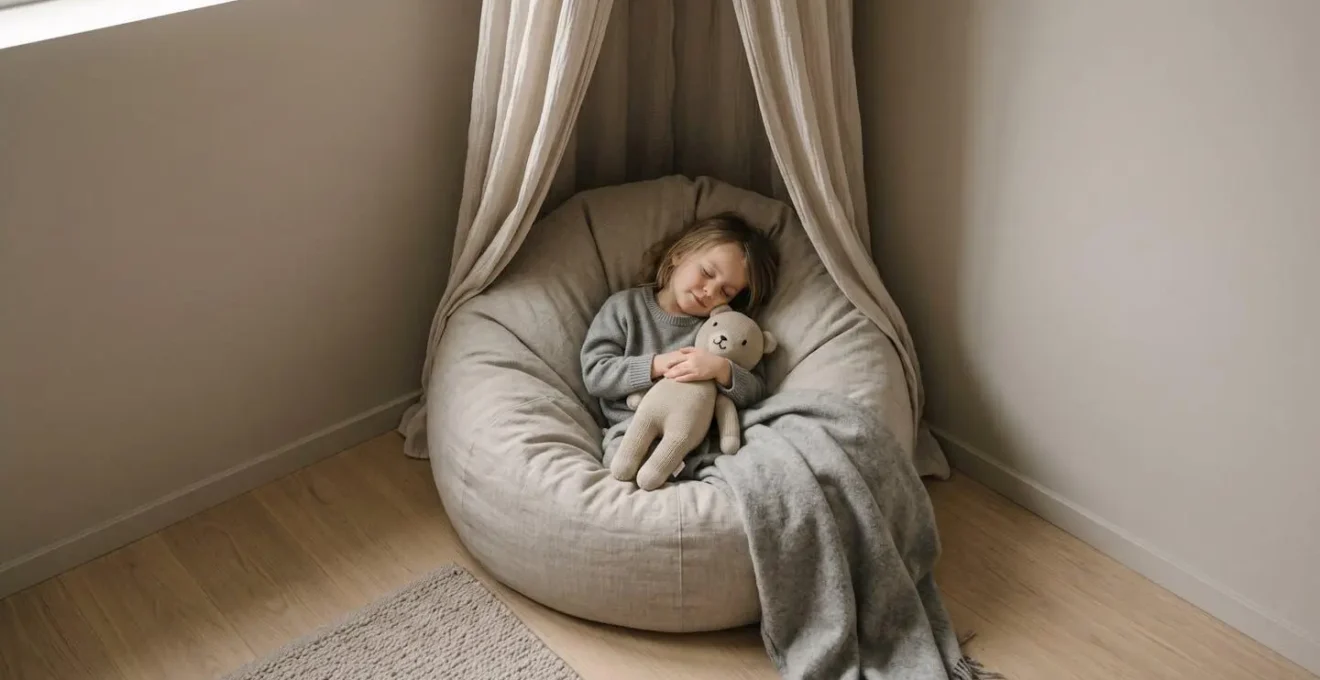
Learning to differentiate between the cues of genuine boredom and the signs of overstimulation is a parental superpower. A bored child is often lethargic and looking for input (« What can I do? »). An overstimulated child, on the other hand, might become frantic, emotionally volatile, or withdrawn. They are not looking for more to do; they are desperately seeking a way to do less. Providing a quiet, cozy corner with a soft blanket can be far more effective than suggesting another game.
Intervening before the system tips over is key. If you notice your child becoming unusually clingy, hyperactive, or irritable during an activity, it’s a signal to downshift. This doesn’t mean the day is ruined; it means it’s time for a sensory break. The following checklist can help you identify the cues and know how to respond effectively.
Your Action Plan: Recognizing and Responding to Overstimulation
- Identify Cues: Learn to distinguish between overstimulation (frantic energy, emotional outbursts, covering ears/eyes) and boredom (whining, asking for entertainment, passivity).
- Implement a Downshift Protocol: When you see signs of overwhelm, immediately move your child to a calm, quiet space. Reduce noise, dim lights, and remove clutter. Offer a heavy blanket or a firm hug for grounding pressure.
- Watch for Early Warnings: Intervene at the first signs, such as increased fidgeting, becoming clingy, or sudden silliness. A proactive sensory break can prevent a full-blown meltdown.
- Respect the Recovery Phase: After an outburst, resist the urge to immediately lecture or problem-solve. Give your child (and yourself) ample time to calm down before gently exploring what might have been too much.
- Audit Your Environment: Regularly assess your play space. Is it cluttered with too many toys? Is the TV on in the background? A calmer environment reduces the baseline level of sensory input for everyone.
When to Introduce Competitive Board Games to Avoid Meltdowns?
Board games seem like an ideal screen-free activity: they teach rules, turn-taking, and strategy. However, for a five-year-old, introducing a game with a clear winner and loser can be a recipe for a meltdown. At this age, the concept of losing can feel like a personal failure, triggering intense feelings of frustration and disappointment. The key to success is not the game itself, but gauging your child’s developmental readiness for competition.
Before you even unbox a competitive game, it’s wise to start with cooperative games. These are games where all players work together as a team to achieve a common goal, often against the game board itself (e.g., getting all the fruit into the basket before the raven reaches the end of the path). Cooperative games teach all the essential skills of board games—following rules, taking turns, strategic thinking—without the emotional weight of a single winner and loser. They build a foundation of positive gaming experiences.
When is your child ready to transition? There are several observable skills that signal they may be prepared to handle the emotional challenge of competition. It’s less about a specific age and more about their ability to regulate emotions and understand rules in a broader context. Does your child show interest in rule-based play? Can they wait for their turn in a simple activity without constant reminders? Their ability to handle small « losses » in everyday life, like a game of « I Spy, » is a good indicator.
Your role in modeling a healthy attitude towards winning and losing is paramount. How you react when you lose sets the tone. A cheerful « Oh man, you got me! Good game, that was fun! » teaches them that the goal is enjoyment, not just victory. Equally important is how you win. A gracious « That was a close one! You played really well » emphasizes their effort over the outcome. This focus on process over results is the cornerstone of building a resilient little gamer.
- Start with Cooperative Games: Choose games where players team up against the board, like First Orchard or Don’t Break the Ice.
- Look for Readiness Cues: Can your child follow a 2-step instruction? Can they wait for their turn? Can they handle gentle corrections about rules?
- Model Healthy Reactions: Show enthusiasm and good sportsmanship whether you win or lose. Say « Good game! » and mean it.
- Emphasize Effort, Not Outcome: Praise their smart moves and good tries, not just whether they won.
- Keep it Short and Sweet: Choose games that are quick to play so that a loss is a minor event, and you can easily say, « Let’s play again! »
How to Cultivate a Harmonious Parenting Sanctuary in a Small Apartment?
Living in a small apartment with a young child can feel like a constant battle against clutter and chaos. It’s easy for the entire space to feel like a minefield of things to trip over and items your child shouldn’t touch. This environment contributes to parental sensory overload, as you’re constantly saying « no » and « don’t touch that. » The solution is not to have fewer things, but to be more strategic with your space. You can create a harmonious sanctuary by designing specific zones, particularly the powerful concept of a « Yes Space. »
A « Yes Space » is a designated corner or area of your home that is 100% child-proofed and filled only with age-appropriate, safe-to-explore items. It’s a zone where your child has complete autonomy. Within its boundaries, they can touch, move, and play with everything freely, and you never have to say no. This simple strategy can dramatically reduce parental stress and the constant need for hyper-vigilance.
The power of the « Yes Space » was highlighted in a strategy shared by parenting resources.
Case Study: The ‘Yes Space’ Strategy
As documented by the child-rearing resource Raising Children Network, parents in small living spaces implemented this strategy with great success. By creating a small, fully child-proofed zone with rotated toys and soft flooring, they found it paradoxically gave their children more freedom. The child learned they had a space of their own, which increased their independent play, while parents could briefly relax or attend to a task without worry, significantly lowering the overall stress in the home.
To keep this space engaging, the key is not to fill it with toys, but to create simple « invitations to play. » Instead of a chaotic toy box, set out a small tray with just a few blocks and a car, or a corner of a low table with three crayons and a single sheet of paper. These minimalist setups are visually calming and act as a gentle nudge, inviting the child’s curiosity without overwhelming them. By rotating these small stations every few days, you maintain novelty and engagement without adding to the clutter.
Utilizing vertical space with low shelves or hanging pockets for toy rotation can also help keep the floor clear and the environment feeling more open and calm. By thoughtfully designing your small space, you can transform it from a source of stress into a supportive sanctuary for both you and your child.
Key Takeaways
- Boredom is not a parenting failure; it’s a neurological necessity that activates the brain’s creative networks.
- Transform passive activities into active missions by providing simple tools (like a magnifying glass) and asking open-ended questions.
- Choose low-prep, low-mess materials like kinetic sand to conserve your own parental energy and reduce stress.
- Recognize that tantrums are often a sign of sensory overload, not bad behavior. Learn to spot the cues and provide calm downtime.
Visiting Cultural Heritage Centers: How to Make History Interesting for Teenagers?
Dragging a teenager to a museum or historical site can feel like a losing battle. Their phones often seem more appealing than ancient artifacts, and their glazed-over expressions show a clear disconnect. The mistake we often make is framing the visit as a passive act of consumption—a place to look at old things. The key to engaging a teenager is to flip the script entirely: transform them from a passive observer into an active creator and digital storyteller.
Their phone, often seen as the enemy of engagement, can become their most powerful tool. By giving them a specific, creative mission, you harness their digital fluency for a learning purpose. Instead of « put your phone away, » the instruction becomes « use your phone to complete your mission. » This shift in framing validates their world and gives them a sense of purpose and autonomy within the museum walls.
The missions should challenge them to think critically and creatively. For example, task them with creating a 60-second TikTok or Instagram Reel telling the story of the most surprising object they find. Or challenge them to do « opposition research »—identify who was opposing the historical figure or movement featured in an exhibit and investigate their reasoning. These activities require them to look closer, read the placards, and synthesize information in a way that simply walking through never would.
Another powerful technique is the « Fandom Bridge. » Before the visit, work with them to identify a connection, however tenuous, between the historical period and their favorite movie, video game, or book series (e.g., « Let’s find a real piece of armor that looks like something from *The Lord of the Rings* »). This builds a bridge from their world to the historical world, giving them a personal anchor point to start their exploration. The goal is to make history relevant to their identity and interests.
Visiting Cultural Heritage Centers: How to Make History Interesting for Teenagers?
While the previous section focused on engaging teenagers, the core principle—turning a passive visit into an active mission—is even more essential for a five-year-old. A young child lacks the abstract thinking to appreciate historical context, but they are master observers and natural treasure hunters. For them, a museum is not a place of quiet reverence; it’s a giant « I Spy » book waiting to be explored. Your role is to create the game.
Forget the historical timelines and detailed placards. The mission for a five-year-old should be sensory and concrete. A « Shape and Color Scavenger Hunt » is a perfect example. Before you go, create a simple checklist on a piece of paper with colored squares (red, blue, yellow) and basic shapes (circle, square, star). Their mission is to find these colors and shapes in the paintings and artifacts around them. This focuses their attention, gives them a clear goal, and celebrates their success with every checkmark.
Another engaging mission is the « Story Hunt. » Stand in front of a busy painting or a diorama and ask, « What story do you see here? » or « I wonder what this person is thinking. » This invites them to use their imagination to fill in the gaps, connecting with the art on an emotional, narrative level. You can also play « Find the Animals, » a simple and universally loved game in any art or history museum. Challenge them to find dogs, horses, birds, or even mythical creatures in the exhibits.
By framing the visit as a series of fun, achievable mini-games, you bypass the potential for boredom and overwhelm. You are aligning with their developmental stage, which thrives on play, discovery, and concrete tasks. The museum transforms from a boring place for adults into an exciting adventure where they are the chief explorer. This positive early experience lays a foundation for a lifelong appreciation of cultural spaces, making future visits—even as a teenager—far more likely to be met with enthusiasm instead of an eye-roll.
Now that you are equipped with these strategies, the next logical step is to begin creating your own « invitations to play » and building a home environment that fosters calm, creative, and screen-free engagement.