Investing in traditional art requires more than a good eye; it demands a financial framework to distinguish appreciating assets from mere decoration.
- The true value of a craft is found in a combination of verifiable provenance, quantifiable market signals, and material integrity.
- Systematically documenting your collection with professional tools can directly increase its resale value by an estimated 15-30%.
Recommendation: Start today by implementing a system to track proxy value metrics for your existing pieces, treating each as a unique asset in your portfolio.
For the discerning collector, the allure of traditional craftsmanship is undeniable. It’s a connection to history, a testament to human skill, and an object of profound beauty. Yet, in a world where every purchase can be an investment, a crucial question arises: is this beautiful object also a sound financial asset? Many will advise you to simply « buy what you love, » a romantic but ultimately insufficient strategy for building a collection that appreciates in value. The market is flooded with pieces ranging from priceless heirlooms to mass-produced tourist traps, and aesthetic appeal alone cannot guarantee a return on investment.
The true challenge lies in navigating this complex landscape with the mind of an investor. This involves looking past the surface beauty to deconstruct the underlying value drivers of a piece. What if the key to a successful craft investment portfolio wasn’t just about developing a good eye, but about applying a rigorous analytical framework? Instead of relying on emotion, we can learn to identify and track concrete market signals, verify authenticity with an almost forensic approach, and implement systems to protect and enhance the value of our tangible assets.
This guide provides that framework. We will move beyond the gallery and into the mindset of an art investment broker, exploring the methodologies to identify crafts with real growth potential, protect your investments from commission to customs, and build a collection that is not only aesthetically pleasing but financially robust.
Summary: Investing in Local Craftsmanship: Which Traditional Arts Are Gaining Value Globally?
- How to Generate Essential Strategic Insights for Small Businesses With Limited Data?
- Shopping at Artisanal Markets: How to Distinguish Authentic Crafts From Mass-Produced Tourist Traps?
- Why Japanese Kintsugi Pottery Is skyrocketing in Value?
- How to Display Natural Fiber Textiles Without Sun Damage?
- Signed by the Master vs Studio Piece: Is the Price Gap Justified?
- The « Deposit » Risk: Protecting Yourself When Commissioning Overseas Artisans
- When to Declare Art at Customs to Avoid Seizure?
- Which Scalable Cloud Computing Infrastructure Offers the Best ROI for Bootstrapped SaaS?
How to Generate Essential Strategic Insights for Small Businesses With Limited Data?
While this question typically applies to tech startups, its core principle—generating insights from scarce data—is precisely the challenge an art investor faces. A traditional artisan is, in essence, a small business, and their work an asset class without a stock ticker. The global artisan market is substantial; the United Nations Conference on Trade and Development estimates it generates $34 billion a year. To tap into this, we must adapt by tracking non-traditional or « proxy » metrics to gauge an artisan’s or a style’s appreciating value.
Instead of quarterly earnings reports, an investor in craftsmanship looks for different signals. Is the artist’s commission waiting list growing? A lengthening wait time is a classic economic indicator of demand exceeding supply, a strong predictor of future price increases. We must also analyze their trajectory in the art world. Are they moving from regional craft fairs to prestigious, juried national shows or museum exhibitions? This progression signals rising cultural capital and market validation. These are the strategic insights that turn a collector into a savvy investor.
Here are the key proxy metrics to track for any artisan you consider investing in:
- Social Media Velocity: Monitor quarterly growth in followers and, more importantly, engagement rates on platforms like Instagram and Pinterest. Active and growing online communities often precede sales growth.
- Waiting List Analysis: A waiting list measured in months or years is one of the strongest indicators of investment-grade potential.
- Juried Show Trajectory: Document their progression through the hierarchy of craft shows and exhibitions. An acceptance into a show like the Smithsonian Craft Show is a major value catalyst.
- Curator and Press Mentions: Third-party validation from respected publications, design blogs, or museum curators acts as a powerful endorsement that builds long-term value.
- Secondary Market Activity: The ultimate proof. When pieces start appearing in auction houses or resale markets at prices above their original retail, the craft has officially achieved investment-grade status.
Shopping at Artisanal Markets: How to Distinguish Authentic Crafts From Mass-Produced Tourist Traps?
The artisanal market is a minefield for the untrained eye. It’s where authentic, investment-grade crafts sit alongside convincing, mass-produced replicas. Distinguishing between them requires moving beyond a superficial glance and performing a quick but systematic « authenticity audit. » The key is to look for the « perfect imperfections » that signal the human hand, which are absent in the sterile uniformity of factory production.
Start with a simple weight test. Authentic handmade items, built from solid, quality materials, are often noticeably heavier and denser than their hollow, composite-material replicas. Next, examine the surface for tool marks. A genuine hand-carved or hand-thrown piece will bear subtle, non-uniform marks and slight asymmetries. Machine-made items, by contrast, display a flawless, repetitive pattern that is a red flag for mass production. This level of scrutiny is your first line of defense against a poor investment.
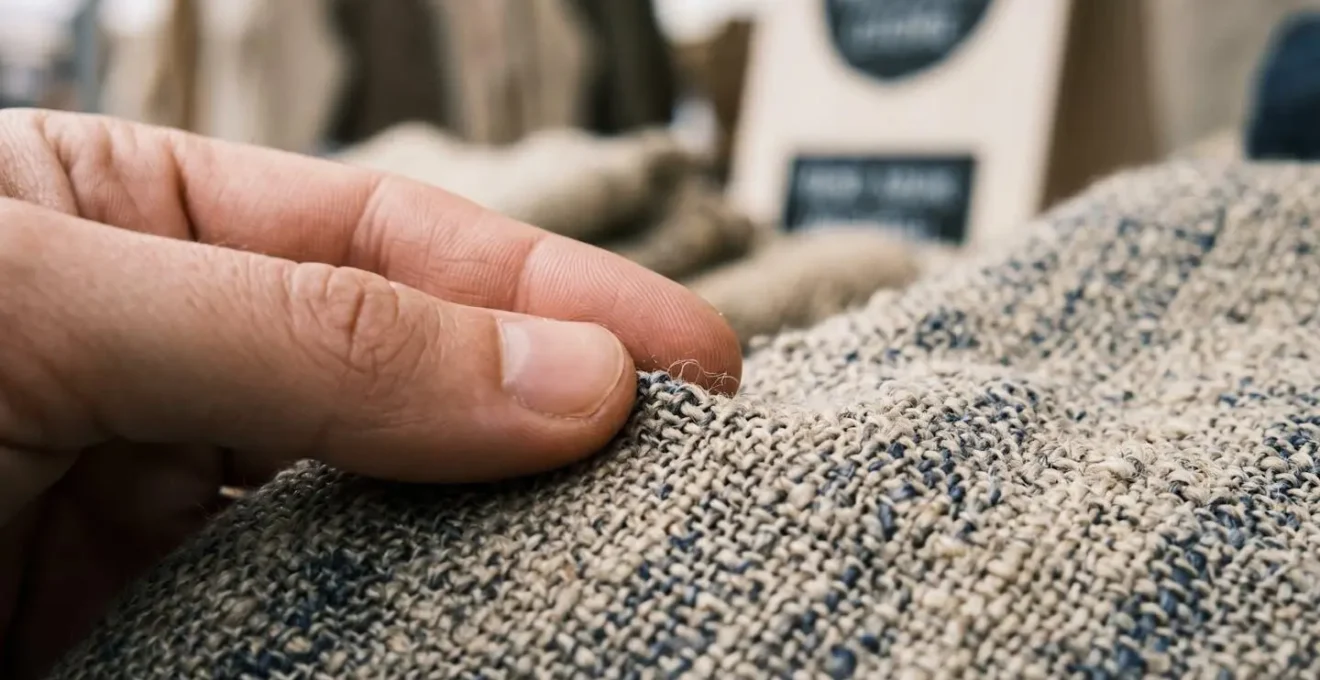
Material consistency is another crucial checkpoint. Natural materials like wood, clay, and fiber have organic variations in grain, color, and texture. Factory-made items often use standardized, synthetic materials that lack this character. An authentic piece celebrates these natural variations; a fake one hides behind uniformity. By training your eye and hand to detect these subtle clues, you can confidently identify the pieces with true artisanal soul and investment potential.
Your 5-Minute Authenticity Audit Checklist
- Weight Test: Lift the piece to assess its material substance. Authentic handmade items are often heavier and denser than mass-produced replicas due to solid construction and quality materials.
- Tool Mark Examination: Look for subtle, non-uniform tool marks, slight asymmetries, and surface variations. Machine-made items display perfect uniformity and repetitive patterns that indicate a lack of hand-crafting.
- Material Consistency Check: Examine for natural variations in wood grain, clay color, or fiber texture. Authentic pieces show organic inconsistencies, while factory items use standardized synthetic materials.
- « Perfect Imperfection » Spotting: Identify intentional or natural irregularities—like slight wobbles in pottery bases or minor glaze pooling—that signal a human maker rather than automated production.
- Fair Wage Price Calculation: Estimate the hours required and apply a minimum skilled artisan wage for the region. If the price seems impossibly low, it likely signals mass production, not a bargain.
Why Japanese Kintsugi Pottery Is Skyrocketing in Value?
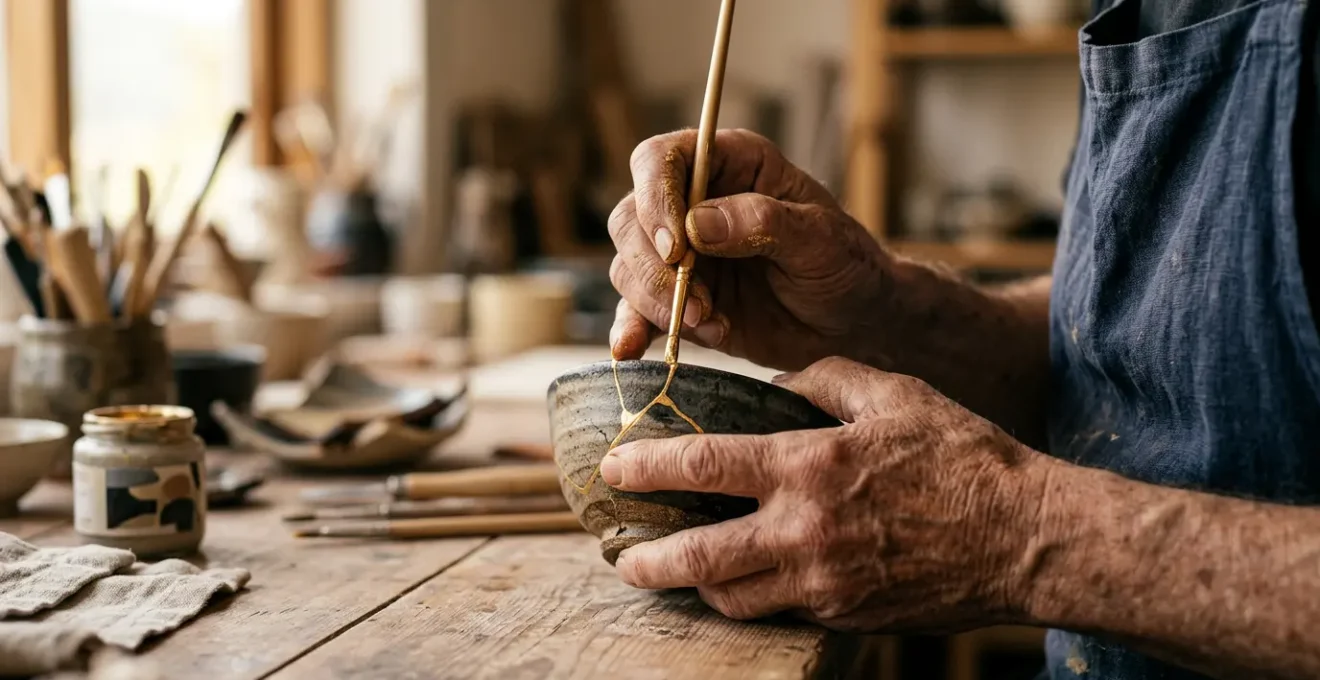
Kintsugi, the Japanese art of repairing broken pottery with lacquer dusted or mixed with powdered gold, is more than a repair technique; it’s a philosophy. It treats breakage and repair as part of the history of an object, rather than something to disguise. From an investment perspective, this philosophy creates a fascinating value proposition: the piece becomes more valuable *because* it was broken. A successful Kintsugi repair adds a second layer of artistry and provenance to the object, creating a « dual legacy. »
The value now resides not only in the original piece and its maker but also in the skill and reputation of the Kintsugi master who performed the repair. When a recognized master artisan repairs a piece by a notable potter, the result is a unique collaboration across time. This is why certain repaired Kintsugi pieces have sold at auction for more than comparable, unbroken examples. The golden seams are not scars; they are narrative threads that document the object’s journey, and in the world of collectibles, a compelling story is a significant value multiplier.
This principle is demonstrated at the highest end of the market. Consider the incredible investment potential of historically significant Japanese pottery, such as a 16th-century tea bowl named ‘Raku Chawan’ which sold for an astounding $20.5 million at auction. While this is an extreme example, it illustrates the deep market appreciation for Japanese ceramic art. In a more accessible range, antique pieces from the late 19th and early 20th centuries can be acquired for $1,500 to $3,000. When such a piece is artfully repaired by a Kintsugi master, its valuation can easily command a premium, as it now embodies the legacy of two distinct artisans.
How to Display Natural Fiber Textiles Without Sun Damage?
Investing in natural fiber textiles—such as handwoven wool rugs, silk tapestries, or intricate cotton embroideries—means you are acquiring an asset that is highly sensitive to its environment. The single greatest threat to the longevity and value of these pieces is light, specifically the ultraviolet (UV) component. Proper display is not just an aesthetic choice; it is a critical act of asset protection.
The damage from UV light is insidious and irreversible. It causes dyes to fade, but more critically, it breaks down the physical structure of the fibers themselves. Research shows that exposure to UV light can reduce the tensile strength of silk and wool by up to 30% within 10 years. This means the fabric becomes brittle, weak, and prone to tearing, catastrophically reducing its value. Therefore, never display a valuable textile in a location that receives direct sunlight.
To display your textile investments safely, adopt museum-level practices. Frame the piece behind UV-filtering glass or acrylic, which can block up to 99% of harmful UV rays. Use low-level, indirect artificial lighting (LEDs are preferable as they emit minimal UV and heat). Implement a rotation schedule: do not keep the same piece on display indefinitely. By storing some pieces in dark, climate-controlled conditions and rotating them periodically, you allow them to « rest » while still enjoying your collection. This proactive approach ensures that your beautiful textiles remain in investment-grade condition for decades to come.
Signed by the Master vs Studio Piece: Is the Price Gap Justified?
In the world of artisan crafts, not all pieces from a famous workshop are created equal. The distinction between a piece executed entirely by the master artisan and one produced by their apprentices or « studio » is a critical driver of valuation. The often-significant price gap is not only justified but is a fundamental principle of the art market. It comes down to the concept of the « percentage of hand »—how much of the final work was directly touched by the master whose name gives it value.
A piece signed by the master, indicating it was made entirely by them, is the purest expression of their vision and skill. It is a finite resource, as a single artist can only produce so much work. This scarcity, combined with the direct connection to the artist’s genius, commands the highest prices. It is the equivalent of a « blue-chip stock » within that artist’s portfolio of work. These are the pieces most likely to see significant appreciation and are sought after by top-tier collectors and museums.
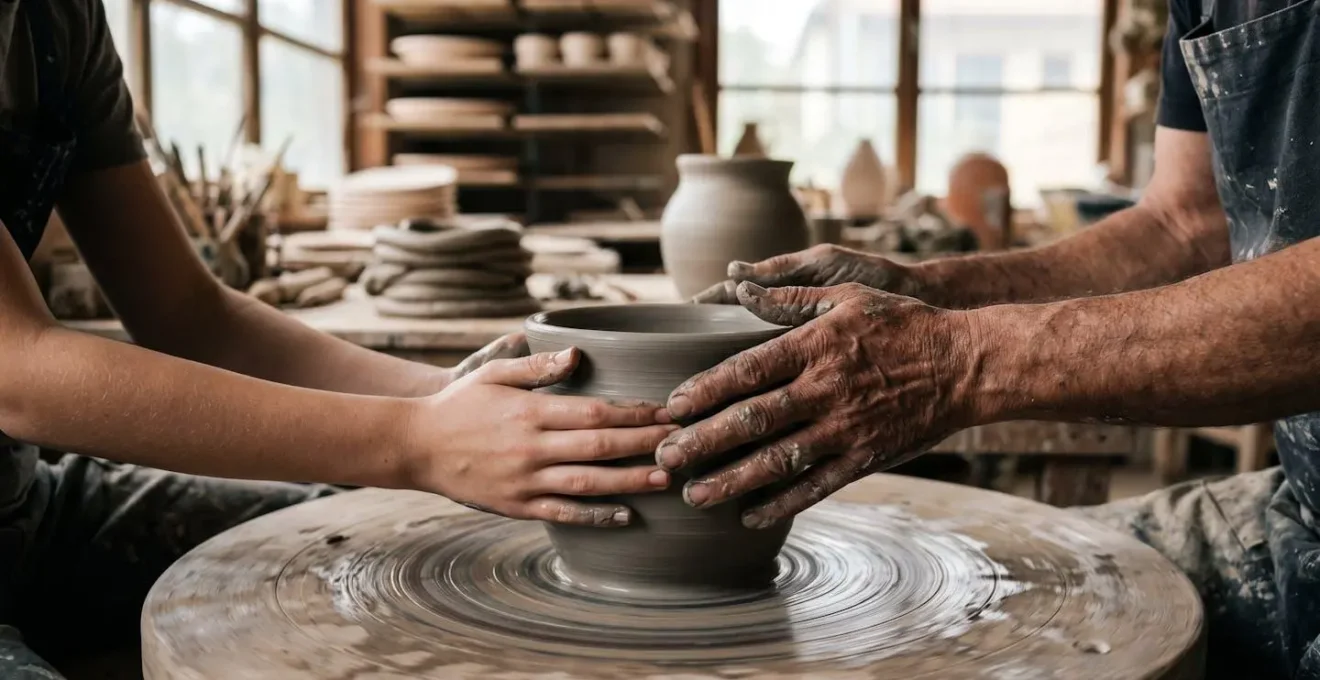
A « studio piece, » on the other hand, is made under the master’s supervision, often by skilled apprentices, following the master’s designs. While it carries the studio’s brand and aesthetic, the master’s direct involvement may be limited to final touches or quality control. These pieces allow the studio to increase output and offer work at a more accessible price point. For an investor, they represent a different asset class: lower entry cost and potentially lower appreciation ceiling. The price gap is absolutely justified because you are investing in two different things: with a master’s piece, you buy the artist’s hand; with a studio piece, you buy the artist’s eye.
The « Deposit » Risk: Protecting Yourself When Commissioning Overseas Artisans
Commissioning a piece directly from an overseas artisan can be a rewarding way to acquire a unique work of art. However, it also introduces significant financial risk, particularly around the initial deposit. Sending a large sum of money across borders with little more than a promise can be daunting. To mitigate this « deposit risk, » the savvy investor replaces blind trust with a structured, milestone-based payment framework. This professionalizes the agreement, protecting both you and the artisan.
This framework breaks the total project cost into phased payments, each tied to a specific, verifiable deliverable. You release funds not based on the passage of time, but on the successful completion of a project phase. This approach minimizes your exposure; if the project goes awry, you haven’t paid for work that hasn’t been done. It also keeps the artisan motivated and accountable throughout the process. A professional contract should also include a « kill fee » clause (typically 25-40%), which fairly compensates the artist for their time if you terminate the project early for reasons on your end.
A typical milestone-based payment structure looks like this:
- Phase 1: Pre-commission Contract (10% Deposit): This payment secures your place in the artist’s schedule and covers initial consultations. The contract should define materials, size, pricing formula, and artist rates.
- Phase 2: Material Acquisition (20% Payment): Before releasing this tranche, request photographic proof of purchased materials, especially for expensive components like specialty glass or precious metals.
- Phase 3: Initial Design Approval (30% Payment): Require detailed progress photos or a video call to see the work-in-progress. Verify it aligns with the agreed-upon design before authorizing this payment.
- Phase 4: Pre-shipment Final Review (30% Payment): Demand high-quality photos of the completed piece from multiple angles. This is when you verify signatures and receive digital copies of authenticity certificates.
- Phase 5: Delivery Confirmation (10% Retention): The final payment is released only after the artwork arrives safely, is inspected, and matches the approved final specifications.
When to Declare Art at Customs to Avoid Seizure?
The answer is simple: always. The real question for an investor is not *if* you should declare, but *how* you should declare to protect your asset and your wallet. Navigating customs is a critical part of the international art investment process, and mistakes can lead to costly delays, unnecessary tariffs, or even seizure of the artwork. Proper documentation and correct classification are paramount.
The Harmonized System (HS) is the international nomenclature for the classification of products. Classifying your art under the correct HS code is crucial. For instance, an original, hand-made sculpture falls under Heading 9703 and is typically duty-free in many countries, including the U.S. However, a mass-produced ceramic item falls under Chapter 69 and is subject to duties. Misclassifying an original sculpture as a generic ceramic product can result in you paying tariffs you didn’t need to. Furthermore, for high-value items, the process becomes more formal; U.S. customs regulations mandate that for artwork valued over $2,500, a customs broker must file an ACE Manifest. Trying to handle this yourself to save a few hundred dollars is a classic rookie mistake that can cost you thousands.
Finally, be aware of CITES (the Convention on International Trade in Endangered Species of Wild Fauna and Flora). If your artwork incorporates materials like certain exotic woods (rosewood), ivory, or tortoiseshell, you absolutely must have a CITES permit from the country of origin *before* you ship. Without it, customs will seize the item, and you may face legal consequences. Due diligence on materials is a non-negotiable part of the pre-purchase process.
- Original Sculpture/Statuary (Heading 9703): Generally duty-free. Requires a declaration of originality from the artist or seller.
- Antiques over 100 years (Heading 9706): Duty-free. Requires proof of age. Even repaired antiques can qualify.
- Ceramic Products (Chapter 69): Subject to duties. For mass-produced or factory-made items. Avoid this classification for original work.
- CITES-restricted Materials: Materials like ivory, tortoiseshell, and certain rosewoods require an export permit. Failure to obtain one will lead to seizure.
Key Takeaways
- Investment value in crafts is quantifiable through « proxy metrics » like commission waitlists, juried show acceptances, and secondary market activity.
- Provenance is not just a story; it’s a collection of verifiable documents (receipts, customs forms, certificates) that directly impacts financial ROI.
- The authenticity of a craft is not a matter of opinion but can be verified through a systematic audit of weight, tool marks, and material inconsistencies.
Which Scalable Cloud Computing Infrastructure Offers the Best ROI for Bootstrapped SaaS?
The question of scalable infrastructure is not just for software companies. A serious art collector, even a « bootstrapped » one operating on a tight budget, requires a robust infrastructure to manage their assets. The « cloud computing » of art collection is the digital system you use to track provenance, condition, insurance valuations, and exhibition history. Choosing the right platform is a critical decision that directly impacts the long-term ROI of your collection.
A simple spreadsheet may suffice for a handful of pieces, but as your collection grows in size and value, this basic approach becomes a significant liability. Inadequate documentation can lead to lost provenance, which directly erodes resale value. For insurance claims or estate planning, a disorganized folder of JPEGs and receipts is insufficient. Professional-grade collection management software, the « scalable infrastructure » for collectors, provides automated tracking, professional report generation, and a secure, centralized repository for all documentation. The ROI is realized when you sell a piece, as a complete, professionally-documented provenance can increase its value by 15-30%.
The market for these platforms offers solutions for every budget, from DIY setups to enterprise-level software. Your choice represents an investment in the financial future of your collection.
| Platform Type | Setup Cost | Monthly Cost | Key Features | Best For | Long-term ROI |
|---|---|---|---|---|---|
| Specialized Software (e.g., ArtLogic, Artwork Archive) | $500-2,000 | $50-200 | Provenance tracking, insurance documentation, automated valuation updates, exhibition history, condition reports | Serious collectors with 50+ pieces; galleries | High – Professional-grade documentation increases resale value 15-30% |
| Advanced Notion/Airtable Setup | $0-300 (template cost) | $10-20 | Custom databases, relational tracking, image galleries, acquisition records, basic valuation logs | Emerging collectors (10-50 pieces); bootstrapped budget | Medium – Adequate documentation; manual updates required; limited automation |
| Spreadsheet + Cloud Storage (Google/Dropbox) | $0 | $0-15 | Basic inventory lists, photo storage, receipt scanning, simple purchase tracking | Beginners (<10 pieces); minimal investment | Low – Basic records sufficient for personal use but inadequate for serious resale or insurance claims |
| Hybrid Approach (Spreadsheet + Instagram Archive) | $0 | $0 | Free visual catalogue via social media, informal provenance through posts/stories, community engagement | Digital-native collectors leveraging online marketplaces (Etsy, Saatchi Art) | Medium-Low – Good for discovery and initial sales tracking but lacks formal documentation standards |
As the global handicraft market continues to expand— market research indicates the global handicraft market is projected to grow to $2,917.71 billion by 2034—the importance of professional asset management will only increase. Adopting a scalable infrastructure today is what will separate the casual hobbyist from the serious investor tomorrow.
Your next step is to move from passive admiration to active management. Begin today by applying this framework to a single piece in your collection; the insights you generate will be the foundation of your portfolio’s growth.