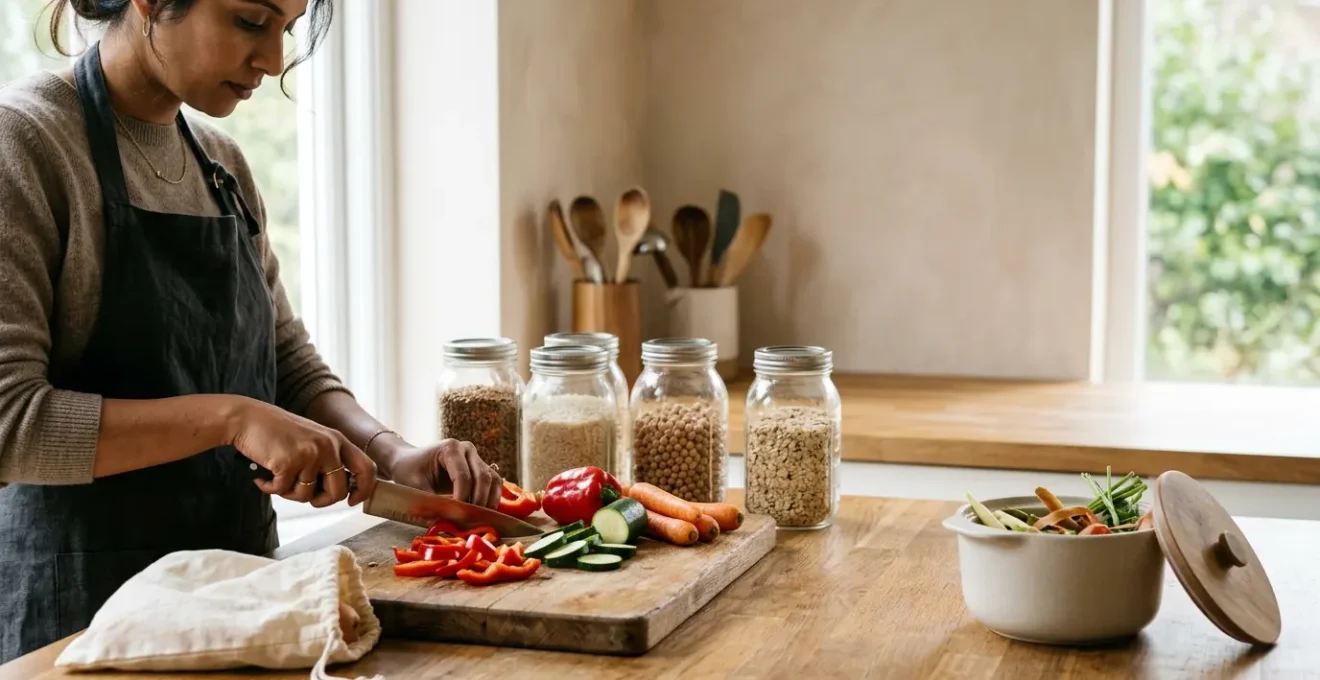
Shifting to a zero-waste kitchen is the single most effective strategy for eating gourmet food on a tight budget, not by depriving yourself, but by unlocking hidden value in every ingredient.
- It redefines « waste » like broccoli stems and vegetable peels as nutritional and flavorful assets waiting to be used.
- Simple, age-old techniques like fermentation can preserve surplus produce, creating complex, delicious ingredients while saving you money.
Recommendation: Start by auditing one ingredient you frequently discard. Instead of tossing it, find a single recipe to transform it—this is the first step toward a more creative and economical kitchen.
The sting of a rising grocery bill is a feeling most of us know all too well. You buy beautiful, fresh ingredients with the best intentions of creating trendy, delicious meals, only to find wilted greens and forgotten vegetables in the back of the fridge a week later. The common advice is to meal plan more strictly, buy less, or start a compost bin. While these have their place, they often feel like chores and frame the problem as one of restriction.
But what if the solution wasn’t about limitation, but about creativity? What if you could adopt the mindset of a sustainable chef and a frugal food economist, viewing every part of an ingredient not as potential waste, but as a culinary asset? This is the core of true zero-waste cooking. It’s not about what you throw away; it’s about what you choose to transform. This approach is an act of culinary alchemy, turning the overlooked and undervalued into gold.
This guide moves beyond the platitudes. We won’t just tell you to « use your leftovers. » We will show you how to see a broccoli stem as a valuable ingredient, how to turn surplus vegetables into a probiotic-rich flavor bomb, and how to build a pantry that works for you, not against you. This is about unlocking a more sustainable, flavorful, and financially savvy way of cooking that empowers you to eat better for less.
Summary: A Chef’s Guide to Eliminating Food Waste and Saving Money
- Why Throwing Away Broccoli Stems Is Throwing Away Money?
- How to Ferment Surplus Vegetables Before They Spoil in the Fridge?
- Local Seasonal vs Imported Organic: Which Is Truly Better for the Planet?
- The « Aspiring Chef » Mistake That Leads to $50 of Wasted Ingredients
- When to Swap Meat for Legumes: A Transition Plan for Carnivores
- Balanced Nutrition for Remote Workers: How to Avoid the Afternoon Energy Crash Without Caffeine?
- Eco-Conscious Outdoor Adventure Exploration: How to Hike National Parks Without Leaving a Carbon Footprint?
- Balanced Nutrition for Remote Workers: The Science of Sustained Energy
Why Throwing Away Broccoli Stems Is Throwing Away Money?
For most home cooks, the broccoli stem is the first thing to hit the compost bin. We’ve been conditioned to see the florets as the prize and the stalk as woody, fibrous refuse. This is the first and most costly mistake in the zero-waste kitchen. It’s an error in perception, not an issue with the ingredient itself. When you throw away the stem, you are discarding a significant portion of the food you paid for. In fact, research shows that broccoli stems can account for up to 60% of the vegetable’s total weight. That’s like paying for a full tank of gas and only using less than half of it.
The argument for using the stem isn’t just about financial frugality; it’s about nutritional value. Scientific analysis reveals that broccoli stems are not just edible, but are a nutritional powerhouse. They contain significantly more of certain compounds like glucoerucin—a precursor to the cancer-fighting sulforaphane—than the florets. Furthermore, they are rich in calcium, iron, and vitamin C. The key to unlocking this value lies in proper preparation. By simply peeling away the tough outer layer, you reveal a tender, mild-tasting core that is incredibly versatile. It can be grated into slaws, sliced into stir-fries, or roasted until sweet and tender.
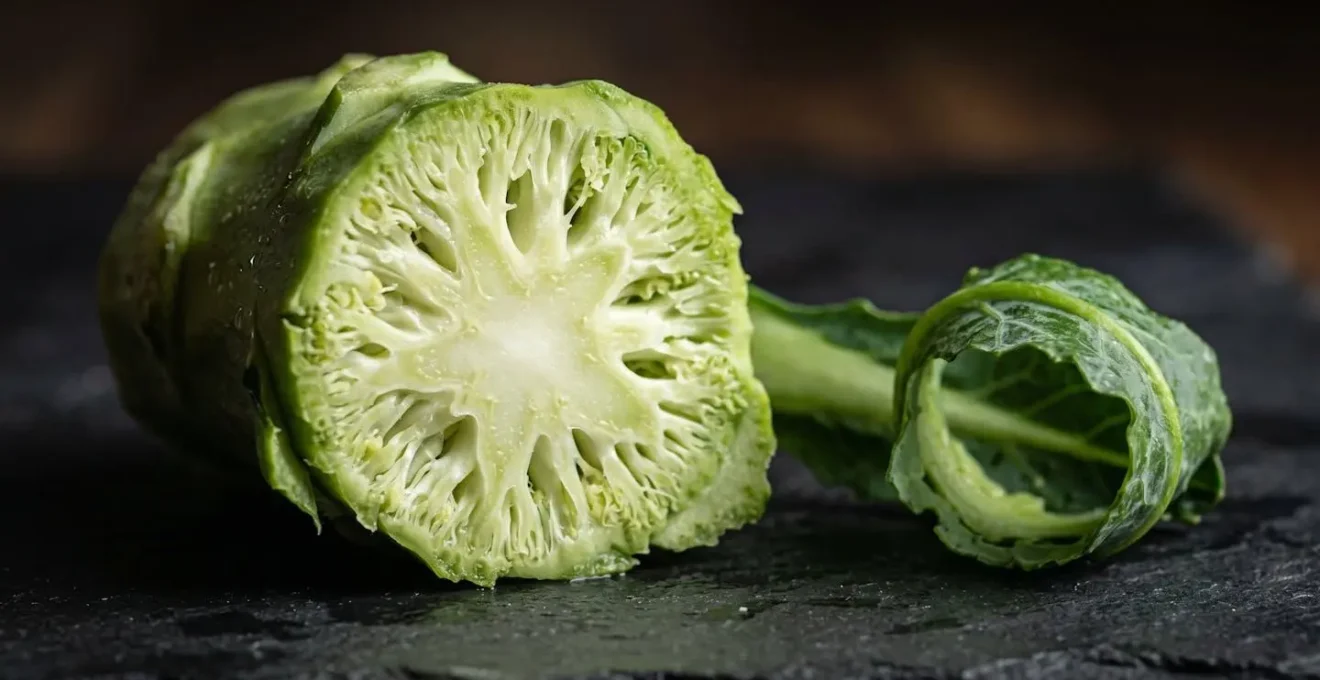
As the image above highlights, the interior texture is crisp and ready for culinary application. Embracing this « ingredient arbitrage »—finding high value in overlooked parts of food—is the foundational principle of the economist chef. Every broccoli stem you save is a direct deposit back into your food budget and a boost to your nutritional intake. It’s a simple shift in habit that yields immediate, tangible returns.
How to Ferment Surplus Vegetables Before They Spoil in the Fridge?
That bag of carrots going soft, the half a cabbage you don’t know what to do with—this is the point where good intentions often turn into food waste. But what if you could stop time? Fermentation is a form of culinary alchemy that does just that. It’s an ancient preservation technique that not only extends the life of your produce but transforms it into something more complex, flavorful, and nutritionally enhanced with probiotics. Best of all, it’s incredibly simple and cheap, offering a massive « flavor ROI » (Return on Investment). While a small jar of artisanal kimchi can cost upwards of $10 at the store, making fermented vegetables at home costs approximately $2 for a much larger batch.
Lacto-fermentation, the most common type for vegetables, requires only two basic ingredients: vegetables and salt. The salt creates an environment where beneficial lactobacillus bacteria can thrive while inhibiting the growth of spoilage-causing microbes. These good bacteria then get to work, converting sugars in the vegetables into lactic acid, which acts as a natural preservative and gives fermented foods their characteristic tangy flavor. You don’t need fancy equipment; a simple glass jar will do.
By learning this one skill, you give yourself a powerful tool against food waste. Instead of watching your vegetables slowly wilt with guilt, you can transform them into a delicious condiment, a zesty addition to salads, or a gut-healthy side dish that will last for months in the refrigerator.
Your Foolproof One-Jar Fermentation Plan
- Prepare Your Vegetables: Choose firm vegetables like carrots, cabbage, or cucumbers. Peel if necessary and chop them into sticks, rounds, or slices to maximize surface area.
- Create the Basic Brine: In a separate container, stir 1 tablespoon of non-iodized salt (kosher or sea salt) into 2 cups of non-chlorinated water until dissolved. Chlorine can inhibit fermentation.
- Pack the Jar: Tightly pack the prepared vegetables into a clean mason jar. Pour the brine over them, ensuring they are fully submerged. Leave about an inch of headspace at the top.
- Ferment at Room Temperature: Seal the jar and leave it on your counter, away from direct sunlight, for 3-7 days. You’ll need to « burp » the jar daily to release built-up gases. The vegetables are ready when they taste tangy and are slightly fizzy.
- Store in Refrigerator: Once they’ve reached your desired level of tang, move the jar to the refrigerator. This dramatically slows down the fermentation process and they will keep for several months.
Local Seasonal vs Imported Organic: Which Is Truly Better for the Planet?
The choice at the grocery store can feel like a moral quandary. On one hand, you have local, seasonal produce that supports nearby farmers and has a lower transportation footprint. On the other, you have certified organic produce flown in from thousands of miles away, grown without synthetic pesticides. The « organic » label often feels like the default « good choice, » but the reality is far more nuanced. From a pure carbon perspective, transportation is a major factor. According to research published in Nature Food, nearly 20% of total food-system emissions come from transport. This gives a significant advantage to the strawberries from a farm down the road over those shipped from another continent, even if the latter are organic.
Furthermore, the « organic » certification itself isn’t a silver bullet for environmental impact. While it avoids synthetic chemicals, organic farming can sometimes be less efficient, requiring more land to produce the same amount of food. As Stefan Wirsenius, an expert in the field, points out, this land use has its own environmental cost.
Organic farming has many advantages but it doesn’t solve all the environmental problems associated with producing food. There is a huge downside because of the extra land that is being used to grow organic crops.
– Stefan Wirsenius, Associate Professor at Chalmers University of Technology
This isn’t to say organic is bad, but to highlight that the most sustainable choice is often contextual. The zero-waste economist’s approach is to prioritize local and seasonal first. When you shop at a farmers market, you can often speak directly to the grower about their practices, which may be organic in principle even if not certified. You are also getting produce at its peak freshness, which means better flavor and a longer shelf life in your kitchen, further reducing waste.
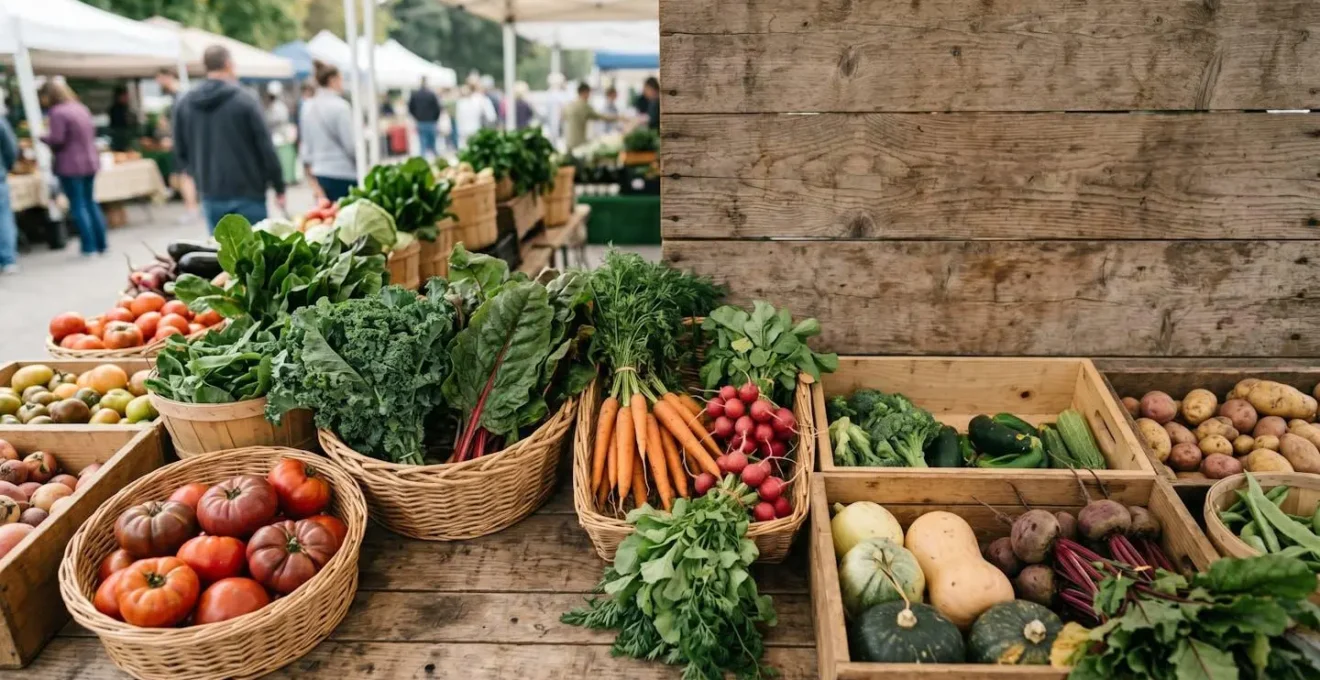
Ultimately, the ideal choice is local, seasonal, *and* organic. But when faced with a trade-off, reducing « food miles » by choosing local often provides a more significant and immediate environmental win. It’s a decision that supports your local economy, reduces carbon emissions, and provides you with superior ingredients.
The « Aspiring Chef » Mistake That Leads to $50 of Wasted Ingredients
We’ve all done it. Inspired by a cooking show or a beautiful food blog, we embark on a quest for a single, ambitious recipe. This often involves buying a host of specialty ingredients: a particular type of vinegar, a rare spice, or an exotic grain. You make the dish once, and the half-used, expensive ingredients are relegated to the back of the pantry, destined to expire. This is the « Aspiring Chef » mistake. It stems from a project-based approach to cooking rather than a system-based one. The result is a pantry that becomes a museum of forgotten ingredients and a significant source of waste. The scale of this problem is staggering; the average American household generates 219 pounds of food waste annually, and disorganized shopping is a major contributor.
The solution is to treat your pantry as a portfolio. Instead of a random collection of items, curate a « capsule pantry » of versatile staples that can be combined in endless ways. This means having a good quality olive oil, a few types of acid (like lemon and a versatile vinegar), core grains and legumes, and a curated set of spices you use regularly. When you do need a specialty ingredient, ask yourself: « What are three other dishes I can make with this? » If you can’t answer, reconsider the purchase.
This strategic approach to stocking your kitchen not only saves money and prevents waste but also fosters creativity. When you have a well-understood set of ingredients, you become more confident in improvising and combining them in new ways, moving from simply following recipes to truly cooking.
Your Action Plan for a « Capsule Pantry »
- Take Inventory Before Shopping: Before you leave the house, physically open your pantry and fridge. Check what you already have to prevent buying a third jar of cumin or another bag of pasta you don’t need.
- Transfer Dry Goods to Airtight Containers: Store flour, sugar, rice, and cereals in clear, airtight containers. This extends their freshness, protects them from pests, and allows you to see at a glance when you’re running low.
- Label Everything with Contents and Date: Prevent mystery ingredients and accidental re-purchases. A simple piece of masking tape and a marker is all you need to label your containers with what’s inside and when you bought it.
- Avoid the Warehouse Club Trap: Only buy ingredients in bulk if you are absolutely certain you will use them before they spoil or go stale. For most items, buying smaller quantities more frequently is more economical.
- Shop After Eating, Not While Hungry: This is a classic for a reason. Research consistently shows that hungry shoppers buy more on impulse, especially specialty items that are more likely to go to waste.
When to Swap Meat for Legumes: A Transition Plan for Carnivores
The conversation around sustainable eating often frames meat as the villain and legumes as the hero. While it’s true that reducing meat consumption, particularly red meat, has significant environmental and health benefits, the « all or nothing » approach can be daunting for committed carnivores. A more effective strategy is a gradual transition and a broader understanding of protein sources. The goal isn’t necessarily to eliminate meat entirely, but to be more intentional about when you use it, treating it as a flavorful accent rather than the main event.
Start by designating one or two days a week as meat-free. On these days, explore the world of legumes. Lentils are fantastic in soups and curries, chickpeas are perfect for roasting or turning into hummus, and black beans are a hearty base for tacos and burgers. The key is to use bold flavors—spices, herbs, and acids—to make these dishes just as satisfying as their meaty counterparts. Another great strategy is the « 50/50 » method: when making a dish like bolognese sauce or chili, replace half the ground meat with cooked lentils or finely chopped mushrooms. You’ll hardly notice the difference in texture, but you’ll have cut your meat consumption in half.
But the full-utilization ethos of zero-waste cooking pushes us to look for protein in even more unexpected places. We are learning that many parts of vegetables we typically discard are surprisingly rich in protein and other nutrients, offering a new frontier in sustainable nutrition.
Case Study: Finding Protein in Vegetable Waste
The idea of swapping meat for vegetables goes beyond just legumes. A groundbreaking 2025 study in Food Bioscience explored the potential of broccoli waste as a food source. The research demonstrated that on a dry weight basis, broccoli waste contains approximately 60% carbohydrates and 25% proteins. The study’s modeling showed that vegetable byproducts like stems and leaves could be viable partial substitutes for cereal and protein in various food products, significantly boosting their fiber and protein content. This highlights a future where ingredients we currently see as waste could become key components of a sustainable protein strategy.
Balanced Nutrition for Remote Workers: How to Avoid the Afternoon Energy Crash Without Caffeine?
Working from home offers flexibility, but it also brings unique nutritional challenges. The proximity of the kitchen can lead to mindless grazing, and the lack of a structured workday can result in skipped meals followed by a desperate grab for sugary snacks. The result is often the dreaded 3 PM energy crash, a productivity-killing slump that sends many reaching for another cup of coffee. The key to avoiding this cycle isn’t more caffeine; it’s a strategic approach to meal preparation that ensures you have balanced, energy-sustaining options readily available.
This is where « component prep » becomes a remote worker’s best friend. Unlike traditional meal prep where you make five identical lunches for the week, component prep is about preparing versatile building blocks. On Sunday, you might cook a large batch of quinoa, roast a tray of root vegetables, grill some chicken or marinate some tofu, and whip up a simple vinaigrette. With these components in your fridge, assembling a balanced and satisfying lunch takes minutes, not willpower. You can combine them in different ways throughout the week to avoid palate fatigue.
A balanced lunch that includes a complex carbohydrate (quinoa), a lean protein (chicken), healthy fats (in the vinaigrette), and plenty of fiber (from the vegetables) will provide a slow, steady release of energy. This prevents the sharp spike and subsequent crash in blood sugar that comes from eating simple carbs or sugary snacks. This strategy not only boosts your productivity but also significantly cuts down on food waste, as you’re using your ingredients more intentionally. Indeed, some studies show that meal preppers can cut household food waste by 50-70%.
Your Energy-Stable Component Prep Strategy
- Prep Versatile Grains: Cook a large batch of a whole grain like quinoa, brown rice, or farro. These provide complex carbohydrates for sustained energy.
- Roast Hardy Vegetables: Prepare a tray of roasted sweet potatoes, carrots, broccoli, or brussels sprouts. They hold up well in the fridge for 4-5 days.
- Prepare Proteins in Advance: Cook a batch of chicken breasts, hard-boil some eggs, or marinate and bake some tempeh or tofu. Having protein ready is crucial for satiety.
- Make Simple Vinaigrettes or Sauces: Prepare one or two simple dressings (e.g., lemon-tahini, balsamic vinaigrette) to transform your basic components into different flavor profiles each day.
- Assemble Quick, Balanced Lunches: Combine your prepped components in different ways—as a grain bowl, a salad, or a wrap—to avoid boredom and ensure a balanced meal that prevents blood sugar spikes.
Eco-Conscious Outdoor Adventure Exploration: How to Hike National Parks Without Leaving a Carbon Footprint?
The principles of a zero-waste kitchen don’t have to stay within your home. In fact, taking them into the great outdoors is the ultimate test of your skills and commitment. Hiking and camping are often associated with disposable packaging—energy bars, trail mix bags, and freeze-dried meals. However, with a little planning, your kitchen can become the source of delicious, package-free, and lightweight trail food that’s better for you and the planet.
This is where techniques like fermentation and dehydration shine. The fermented vegetables you made can be drained and packed for a probiotic-rich, salty trail snack that helps replenish electrolytes. You can also take vegetable peels (like potato or carrot skins), toss them in a little oil and salt, and dehydrate them in the oven on low heat to create savory, crunchy « vegetable chips. » This approach directly combats the larger issue of food waste, which is a significant driver of climate change. It’s estimated that globally, food waste contributes 8-10% of global greenhouse gas emissions. Every scrap you divert from the landfill makes a difference.
Home fermentation expert Talia demonstrates this principle beautifully by transforming surplus vegetables into nutrient-dense trail food. By using lacto-fermentation on scraps and creating vegetable powders from peels, hikers can produce their own shelf-stable energy foods without any packaging. It’s a method that is not only sustainable but also connects us to the most ancient and resilient forms of food preservation. Carrying your own zero-waste creations into a National Park is a profound way to honor the « leave no trace » ethic, ensuring that your exploration doesn’t come at the expense of the environment you’re there to enjoy.
Key Takeaways
- See Waste as an Asset: The most fundamental shift is to stop seeing scraps, stems, and peels as waste and start seeing them as underutilized ingredients with culinary and nutritional potential.
- Master One Preservation Technique: Whether it’s simple fermentation, pickling, or dehydration, learning one core skill gives you the power to rescue produce on the verge of spoiling and transform it into a long-lasting asset.
- Build a « Capsule Pantry »: A curated pantry of versatile staples, rather than a collection of one-off specialty ingredients, is the key to reducing waste, saving money, and fostering everyday culinary creativity.
Balanced Nutrition for Remote Workers: The Science of Sustained Energy
We’ve discussed the « how » of avoiding the afternoon energy crash through component prep, but to make this a lasting habit, it’s crucial to understand the « why. » The feeling of sleepiness and lack of focus that hits mid-afternoon is not a personal failing; it’s a physiological response to how your body is processing fuel. The typical Western lunch—heavy in refined carbohydrates like white bread, pasta, or sugary drinks—causes a rapid spike in your blood sugar. Your body responds by releasing a large amount of insulin to manage this sugar rush, but this often overcorrects, causing your blood sugar to plummet shortly after. This is the « crash. »
The antidote is to build meals that promote a slow, steady release of energy. This is achieved by focusing on three key elements: fiber, protein, and healthy fats. Fiber, which is abundant in vegetables (especially in the stems and peels we’ve learned to value), whole grains, and legumes, slows down the absorption of sugar into the bloodstream. Protein and healthy fats contribute to a feeling of fullness (satiety) and also help to stabilize blood sugar levels.
This is where the entire zero-waste philosophy comes full circle. The broccoli stems we saved are packed with fiber. The lentils we swapped for meat are a fantastic source of both fiber and protein. The fermented vegetables we made are not only full of flavor but also support a healthy gut, which plays a crucial role in overall energy and nutrient absorption. By building your meals around these nutrient-dense, high-fiber, and often overlooked ingredients, you are naturally creating a diet that prevents energy spikes and crashes. It’s not about restriction; it’s about intelligently fueling your body with the complete, whole foods you’ve learned to appreciate in their entirety.
Begin today by choosing one small, manageable change. Don’t try to overhaul your entire kitchen overnight. Simply decide to save and cook your broccoli stems this week. This single act will start to retrain your brain to see value where you once saw waste, unlocking the door to a more creative, sustainable, and affordable way of eating.