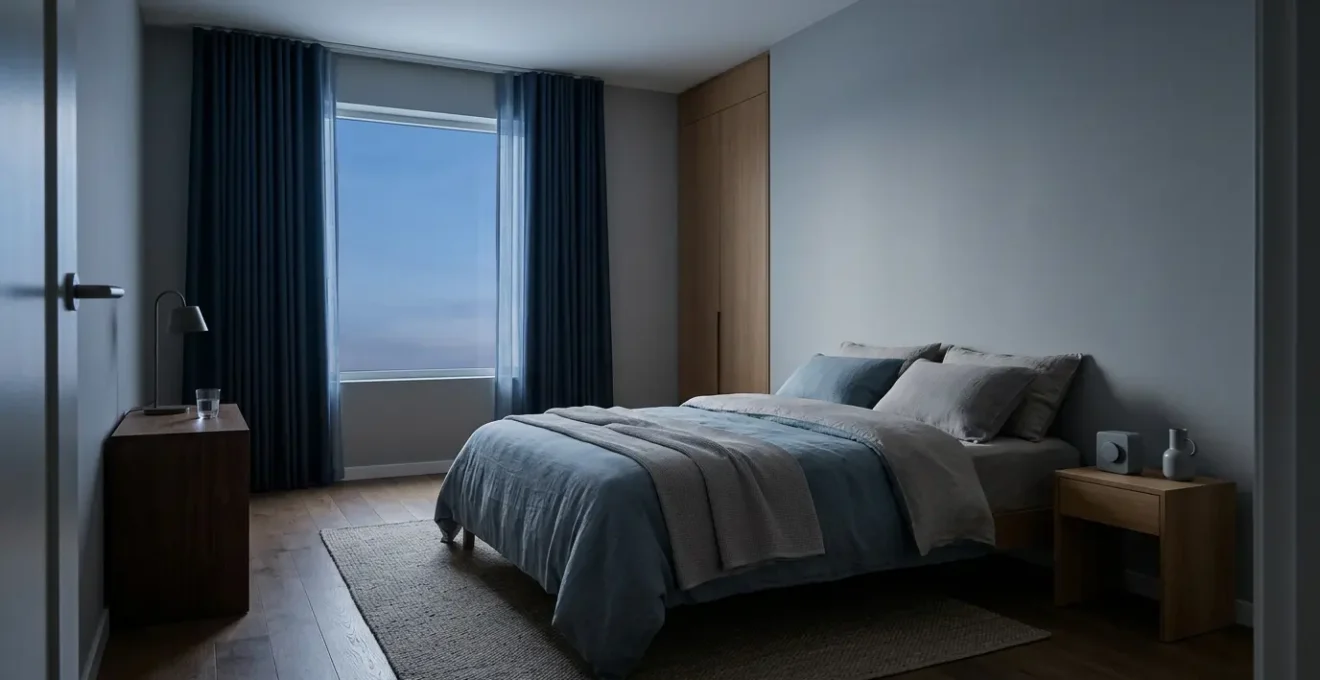
For the light sleeper, achieving deep rest isn’t about trying harder; it’s about designing a smarter environment. This guide moves beyond generic advice to reframe your bedroom as a precisely engineered sanctuary. By architecting every sensory input—from the biological sweet spot of temperature and the physics of mattress motion to the specific frequencies of sound—you can create a space that doesn’t just block disturbances, but actively promotes profound, uninterrupted sleep.
As a light sleeper, you live on a different sensory plane. While others sleep through a distant siren or a partner’s gentle shift in bed, you’re wide awake, heart racing, the possibility of restorative sleep slipping further away. You’ve likely tried the standard advice: blackout curtains, earplugs, a cooler room. Yet, these one-size-fits-all solutions often fail because they treat the symptom, not the system. They don’t respect the profound sensitivity of your nervous system.
The frustration is understandable. You feel fragile, as if your own body is working against you. But what if the problem isn’t your sensitivity, but the design of your environment? The key to unlocking deep, uninterrupted sleep lies not in dulling your senses, but in creating a meticulously controlled sensory environment—a true sleep sanctuary. This isn’t just about sleep hygiene; it’s about sleep environment architecture. It’s about understanding the biological principles that govern sleep and using them to design a space where rest is the inevitable outcome.
This guide will deconstruct the four pillars of your sleep sanctuary. We will explore the precise science of temperature, the physics of motion on your mattress, the acoustic properties of sound masking, and the psychological habits that either build or break your nightly peace. We will then extend these principles, showing how to maintain your sanctuary even within the complexities of shift work and family life. Prepare to become the architect of your own rest.
Summary: Engineering Your Ideal Sleep Environment
- Why 18°C (65°F) Is the Biological Sweet Spot for Deep Sleep?
- Memory Foam vs Hybrid: Which Material Prevents Motion Transfer for Couples?
- White Noise vs Pink Noise: Which Frequency Mask Is Better for City Dwellers?
- The « Revenge Bedtime Procrastination » Habit That Ruins Your Morning
- How to Power Nap for 20 Minutes Without Entering Sleep Inertia?
- How to Reset Your Circadian Rhythm After Night Shift Work Within 3 Days?
- How to Cultivate a Harmonious Parenting Sanctuary in a Small Apartment?
- Modular Ergonomic Furniture: Which System Adapts Best to a Growing Child’s Spine?
Why 18°C (65°F) Is the Biological Sweet Spot for Deep Sleep?
The instruction to « sleep in a cool room » is perhaps the most common piece of sleep advice, yet it lacks the precision a light sleeper requires. The true power lies in understanding *why* a specific temperature range is so crucial. Your body’s core temperature naturally dips to initiate sleep, a key part of your circadian rhythm. An optimized bedroom temperature doesn’t just feel comfortable; it assists this biological process. The ideal range is not arbitrary; it’s a thermal environment that requires the least amount of metabolic work from your body to maintain its ideal sleep state. Think of your thermostat as a tool for biological synchronization.
Experts consistently point to a narrow window as the gold standard for sleep quality. According to sleep scientists, the optimal temperature is between 65 to 68 degrees Fahrenheit (18.3 to 20 degrees Celsius). In this range, your body can efficiently shed heat without shivering, facilitating the transition into deeper, more restorative sleep stages. Deviating even slightly can disrupt this delicate balance. A room that is too warm forces your body to work harder to cool down, leading to restlessness and shallow sleep.
This effect is not just subjective. It is measurable and becomes more pronounced with age. For instance, compelling research on older adults shows a 5-10% drop in sleep efficiency when the ambient temperature increases from a comfortable 25°C to a warm 30°C. For a light sleeper, a 10% drop is the difference between a functional day and a struggle. Setting your thermostat to this specific range is the first, most impactful step in architecting your sleep sanctuary, creating a foundation upon which all other optimizations can be built.
Memory Foam vs Hybrid: Which Material Prevents Motion Transfer for Couples?
For a light sleeper sharing a bed, a partner’s slightest movement can feel like an earthquake. This is where the concept of motion isolation becomes paramount. It’s the mattress’s ability to absorb movement at its source, preventing it from rippling across the surface to disturb you. The material science of your sleep surface is a critical pillar of your sanctuary’s architecture. The two dominant contenders in this space, memory foam and hybrid mattresses, offer distinctly different approaches to solving this problem.
Memory foam, a viscoelastic material originally developed by NASA, is the undisputed champion of motion absorption. Its dense, contouring nature means that when pressure is applied, the material compresses locally without transferring energy to adjacent areas. This creates a « dead » surface in terms of bounce, making it an ideal choice for couples where one or both are extremely light sleepers. A hybrid mattress, by contrast, combines a coil-based support system with top layers of foam, latex, or other materials. While modern pocketed coils (where each spring is individually wrapped) have vastly improved motion isolation compared to old innerspring designs, they inherently possess more bounce and responsiveness than a solid foam core.
This detailed comparison highlights the trade-offs involved in selecting the right material for your needs.
| Feature | Memory Foam | Hybrid |
|---|---|---|
| Motion Isolation | Excellent – absorbs motion effectively | Good – pocketed coils reduce transfer |
| Temperature Regulation | Tends to retain heat | Better airflow through coil system |
| Edge Support | Moderate – foam compression at edges | Superior – reinforced coil perimeter |
| Responsiveness | Slow – sinking sensation | High – bouncy, easier to move |
| Best For Couples | Light sleepers prioritizing zero motion transfer | Those needing cooling and easier movement |
As the table sourced from a deep dive into mattress construction illustrates, the choice is not simply about which is « better, » but which is better *for you*. If your primary sensitivity is motion, memory foam is the superior architect’s choice. If you sleep hot or value ease of movement, a high-quality hybrid with excellent pocketed coils might be a more balanced solution. The visual below demonstrates how a material can be engineered to absorb impact locally, the core principle of motion isolation.

Ultimately, your mattress is not just furniture; it is a highly technical piece of equipment designed to manage energy. For the light sleeper, investing in a surface that excels at motion absorption is a non-negotiable aspect of building a resilient sleep sanctuary.
White Noise vs Pink Noise: Which Frequency Mask Is Better for City Dwellers?
In the urban jungle, silence is a luxury rarely afforded. For the city-dwelling light sleeper, the goal is not to eliminate noise—an impossible task—but to control it. This is the art of sound masking, where you introduce a consistent, pleasant sound to cover up jarring, unpredictable ones like traffic, sirens, or neighbors. This intentional sound layer raises your threshold of arousal, meaning a louder external noise is required to wake you. While many people use the term « white noise » generically, the world of acoustic masking is far more nuanced, with different « colors » of noise offering unique benefits.
White noise contains all audible frequencies in equal measure, creating a sound similar to radio static or a hissing fan. Its strength lies in its ability to mask a wide range of frequencies, making it highly effective at blocking sudden, sharp sounds. In fact, one study found that 38% of people fell asleep faster listening to white noise. Pink noise, however, is different. Its intensity decreases as the frequency increases, resulting in a deeper, more natural sound, often compared to steady rainfall or wind. This reduction in high frequencies makes it less harsh and more soothing for many listeners.
The choice between them depends on your specific environment and sensitivity. A city dweller plagued by high-pitched sirens and voices might find white noise’s broad coverage more effective. Someone seeking a more immersive, calming environment to promote deep sleep might prefer pink noise. Understanding the spectrum is key:
- White Noise: Equal power across all frequencies. It sounds like a ‘shhhh’ and is best for blocking a wide variety of sudden sounds.
- Pink Noise: More power in lower frequencies, sounding deeper and softer, like steady rain. It is often considered more relaxing and may help promote stable, deep sleep.
- Brown Noise: Even more power in the lowest frequencies, creating a bass-heavy rumble like a strong waterfall. This is excellent for masking low-frequency sounds like heavy traffic or bass from music.
The placement of your sound machine is as important as the color you choose. Position it between your bed and the source of the noise (like a window or a thin wall) to create an « acoustic curtain. » By consciously designing the soundscape of your room, you transform noise from a source of stress into a tool for sleep.
The « Revenge Bedtime Procrastination » Habit That Ruins Your Morning
Sometimes, the greatest threat to your sleep sanctuary comes not from the outside world, but from within. « Revenge bedtime procrastination » is a modern phenomenon where individuals, feeling a lack of free time during their busy day, intentionally sacrifice sleep to reclaim a few hours of personal time for leisure. It’s a rebellion against a packed schedule, but it’s a rebellion with a high cost, especially for a light sleeper. This habit directly sabotages the very foundation of sleep hygiene engineering by creating a state of « tired but wired, » making it impossible for your body to wind down.
This is not a trivial issue; it’s a significant contributor to chronic sleep debt. In fact, some new research reveals Americans lose approximately 300 hours of sleep per year due to this habit. For a light sleeper, the impact is twofold. First, the blue light from screens and the mental stimulation from content consumption delay the onset of melatonin production. Second, this creates a cycle of sleep-related anxiety. You know you should be sleeping, which makes it harder to relax, which in turn makes you more anxious. You are essentially trading low-quality leisure time at night for a low-quality, exhausted day.
The antidote is not more discipline, but better design. Instead of rebelling against your schedule, you must architect a « wind-down » ritual that feels more rewarding than scrolling. This is about creating a transition that signals to your mind and body that the day is over and it is time for rest. This could be 20 minutes of reading a physical book in a comfy chair, gentle stretching, or listening to calming music—anything that is screen-free and personally restorative.
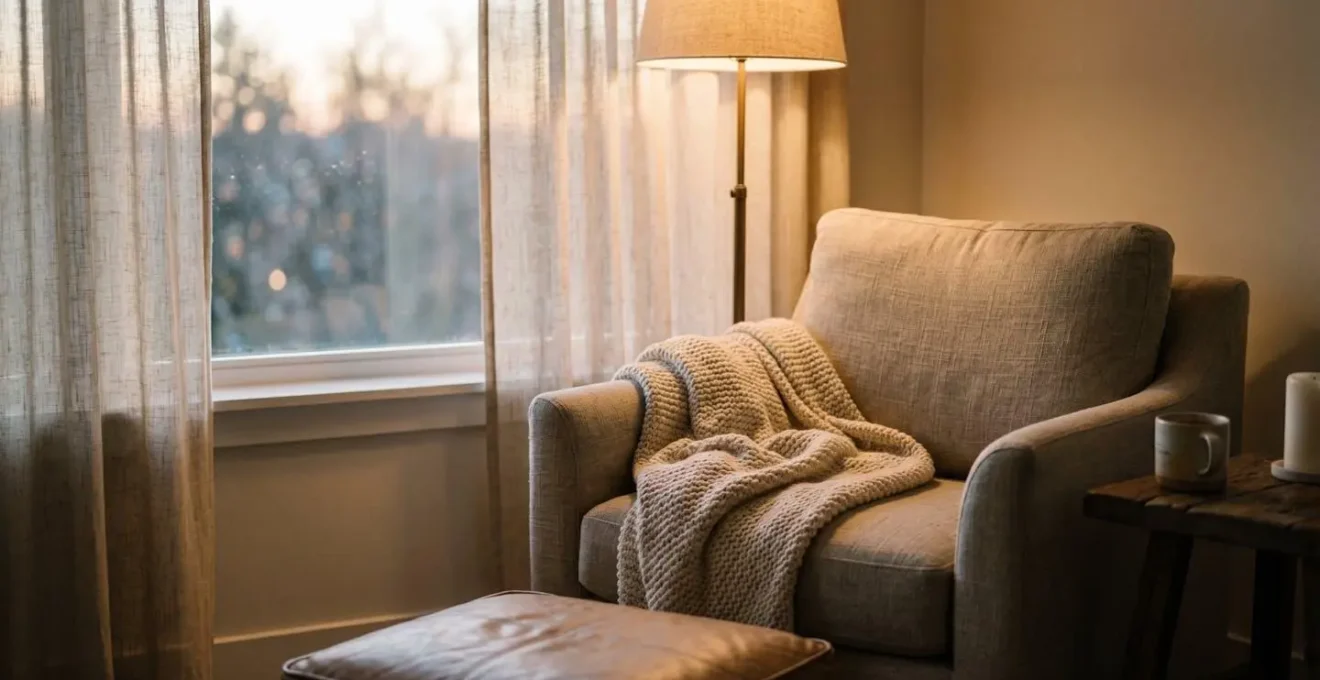
By creating an inviting wind-down sanctuary, you replace the « revenge » with a reward. You are still reclaiming personal time, but you are doing so in a way that aligns with your biology, not against it. This intentional transition is a cornerstone of a well-architected sleep environment, protecting your nights from your days.
How to Power Nap for 20 Minutes Without Entering Sleep Inertia?
For a light sleeper, a bad night can often feel like it has ruined the following day. The power nap emerges as a potent tool for recovery, but it’s a double-edged sword. A successful nap can restore alertness and cognitive function, but a nap gone wrong can plunge you into « sleep inertia »—that profound grogginess and disorientation that can feel even worse than being tired. Architecting the perfect power nap is about precision: controlling the duration and environment to get the benefits without the backlash. The goal is to hover in the lighter stages of sleep without tipping into the deep, slow-wave sleep that is so difficult to wake from.
The 20-minute mark is widely cited because it typically allows the body to complete the first two stages of sleep (N1 and N2) without entering the deeper N3 stage. Mastering this requires a strategic approach that goes beyond simply setting a timer. It’s about using clever biological and psychological tricks to manage the entry and exit from your brief rest. Here are several advanced techniques to engineer the perfect nap:
- The Nappuccino Technique: This is a cornerstone of strategic napping. Consume a cup of coffee or another caffeinated beverage immediately before you lie down for your 20-minute nap. Caffeine takes about 20-30 minutes to be absorbed and take effect. This means it will begin to kick in right as your alarm goes off, acting as a natural wake-up booster and actively fighting off sleep inertia.
- Environment Differentiation: Do not nap in your bedroom. Napping in a semi-lit room on a sofa or in a recliner creates a psychological distinction between a temporary rest and your main nighttime sleep. This helps prevent your brain from sinking into a deeper sleep state.
- Posture Strategy: Avoid lying completely flat. Napping in a slightly upright position in a comfortable chair further discourages the transition into deep sleep. It keeps your body in a state of « active rest » rather than full surrender.
- Sensory Bookending: Create a specific, nap-only sensory cue. This could be a 20-minute playlist of instrumental music or an energizing essential oil like citrus used only for this purpose. The beginning of the cue signals your brain it’s time to rest, and its conclusion provides a gentle, non-jarring signal that the nap is over.
By applying these principles, you transform the nap from a gamble into a predictable and powerful tool for managing your energy. It becomes another perfectly controlled element within your broader strategy for restorative living.
How to Reset Your Circadian Rhythm After Night Shift Work Within 3 Days?
Nothing disrupts the body’s internal clock—the circadian rhythm—more profoundly than night shift work. For the light sleeper, whose system is already finely tuned and easily disturbed, the rapid switch between day and night schedules can be brutal, leading to a state of perpetual jet lag. Resetting your rhythm quickly is the ultimate act of sleep environment engineering, requiring a disciplined, multi-faceted approach. It’s about using powerful external cues—light, temperature, and food—to force your body’s master clock back into alignment. A successful reset within 72 hours is ambitious but possible with a strict protocol.
The single most powerful tool you have is light. Bright light exposure tells your brain to suppress melatonin and be awake, while darkness signals it’s time to sleep. You must wield this tool with absolute precision. This involves creating an « artificial night » during the day for sleep and an « artificial day » with bright light upon waking, regardless of what the sun is doing outside. This is not just about pulling the blinds; it requires a total commitment to managing your light environment, alongside other key biological triggers that help synchronize the dozens of « peripheral clocks » throughout your body’s organs.
This aggressive reset is a short-term, intensive project. It demands consistency and a clear plan. By systematically controlling the primary environmental signals your body uses to orient itself in time, you can dramatically shorten the painful adjustment period and reclaim a sense of normalcy.
Your 3-Day Circadian Reset Plan:
- Master Light & Temperature Control: Immediately post-shift, create an « artificial night. » This means total blackout curtains, a bedroom cooled to 18°C (65°F), and a white noise machine. Upon waking, expose yourself to a 10,000-lux light therapy lamp for 30 minutes to forcefully signal « daytime. »
- Implement a Pre-emptive Melatonin Strategy: During the last 2-3 hours of your final night shift, wear blue light-blocking glasses. This tricks your brain into starting melatonin production early, making the transition to daytime sleep much smoother.
- Synchronize with Chrononutrition: Align your meals with your new target schedule, not the clock on the wall. Eat a « breakfast » meal immediately upon waking. This sends powerful synchronization signals to your body’s internal clocks.
- Establish a Social Contract: For the 3-day reset period, this is non-negotiable. Clearly communicate to household members the critical importance of maintaining absolute darkness and quiet during your designated sleep hours. No interruptions.
- Optimize Light Exposure Timing: Beyond the initial light therapy, be vigilant. Get bright light whenever you need to be awake and avoid all bright light for 2-3 hours before you intend to sleep. This is the most crucial lever for the reset.
How to Cultivate a Harmonious Parenting Sanctuary in a Small Apartment?
For the parent who is also a light sleeper, the concept of a personal sanctuary can seem like a distant, impossible dream, especially within the confines of a small apartment. Every space is shared, every moment is potentially interrupted, and your sensory environment is no longer your own. However, the principles of sensory architecture can be adapted. The goal shifts from controlling a whole room to carving out « micro-sanctuaries »—small pockets of personal space and time that allow for mental and sensory reset. It’s about using subtle cues to create zones of calm without building walls.
The key is to move from physical separation to sensory separation. You can create a distinct personal zone using layered sensory inputs that are unique to you. This might be a specific armchair in a corner, which, when occupied, is paired with personal noise-canceling headphones, a warm, dimmable floor lamp, and a scent diffuser with a calming oil like lavender. These combined cues create a powerful signal to your own brain, and to your family, that this is a moment of personal reprieve. It’s a bubble of tranquility that can exist even in the middle of a busy living room.
This strategy also involves using furniture and textiles not just for their primary function, but for their acoustic properties. Bookshelves filled with books, thick area rugs, heavy curtains, and fabric wall hangings are all powerful tools for sound absorption. They reduce echo and dampen the transmission of noise throughout the apartment, lowering the overall ambient stress level for everyone and making it easier for your nervous system to relax. Think of it as softening the hard edges of your shared environment. You can also use multi-functional furniture to hide your sanctuary in plain sight—a storage ottoman that contains your weighted blanket and reading light, or a secretary desk that closes up to conceal your personal workspace.
Finally, the most important element is the « transition ritual. » This is a 3-5 minute symbolic act—like brewing a specific cup of tea or practicing a brief breathing exercise—that you perform before entering your micro-sanctuary. This small ritual is a powerful psychological tool that signals a mental shift from « parent on duty » to « person at rest, » allowing you to fully benefit from your precious moments of peace.
Key takeaways
- The ideal sleep temperature of 18°C (65°F) is a biological necessity, not a suggestion, as it supports your body’s natural thermal regulation.
- For light sleepers, a mattress’s ability to absorb motion (motion isolation) is more critical than any other feature; memory foam excels at this.
- Sound masking is a science; use specific noise ‘colors’ (like pink or brown noise) to create an acoustic barrier against disruptive urban sounds.
- Combat « revenge bedtime procrastination » not with willpower, but by designing a wind-down ritual that is more rewarding than screen time.
Modular Ergonomic Furniture: Which System Adapts Best to a Growing Child’s Spine?
At first glance, a discussion of children’s ergonomic furniture may seem out of place in a guide for light sleepers. However, a sleep architect understands that a sanctuary is only as strong as its weakest point. For a parent, a child’s restlessness is a primary disruptor of their own sleep. A significant and often overlooked cause of a child’s nighttime fidgeting and frequent waking is daytime physical discomfort. Poor posture from ill-fitting desks and chairs creates musculoskeletal strain and tension that doesn’t simply vanish at bedtime—it manifests as an inability to settle down and sleep soundly, which in turn wakes you up.
Therefore, investing in your child’s ergonomic health is a direct investment in your own stimulus control. Modular, adjustable furniture is the only logical solution for a growing body. A static chair and desk that fit a child at age 6 will be actively harmful by age 8. The ideal system is one that can be precisely adjusted to maintain a critical set of ergonomic alignments at every stage of growth. This adaptability prevents the build-up of physical stress that leads to sleep-disrupting pain and restlessness.
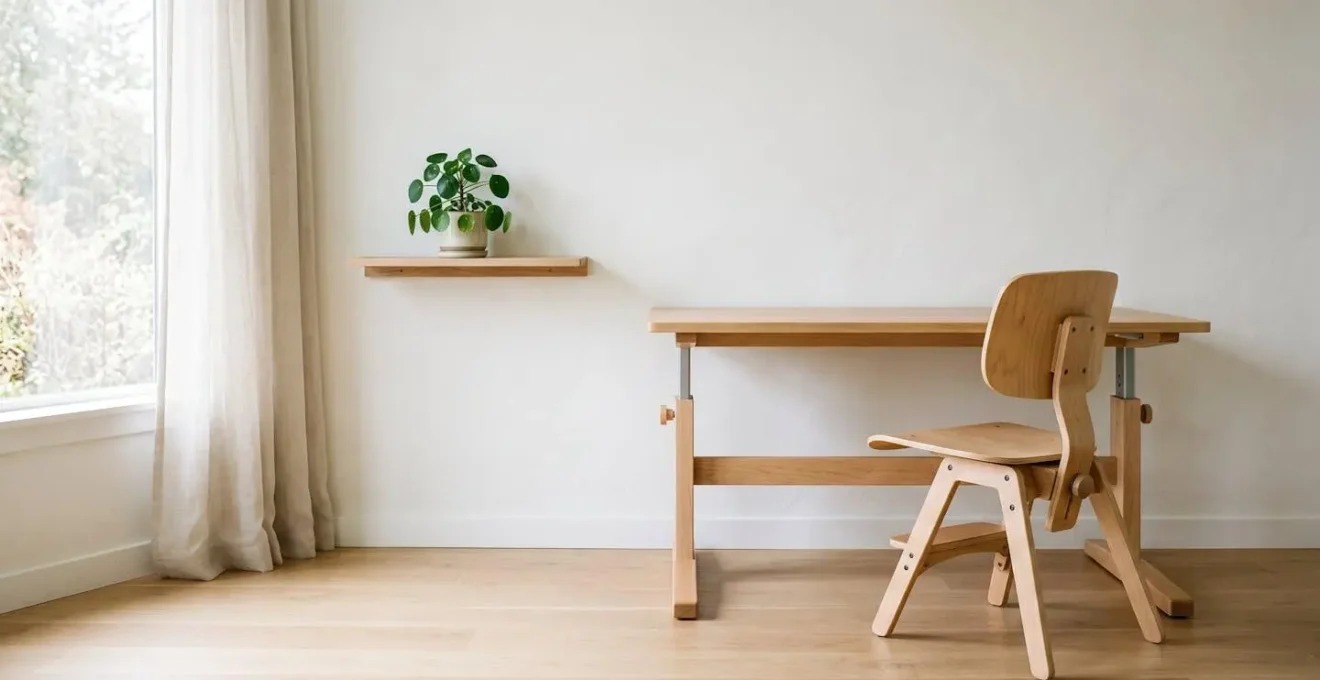
When assessing a system, focus on its ability to maintain the « Ergonomic Triad »: feet flat on the floor, knees at a 90-degree angle, and elbows also at a 90-degree angle when resting on the work surface. The best systems allow for independent adjustment of the seat height, seat depth, and desk height to maintain this triad as your child’s limb proportions change. Furthermore, look for systems that embrace a « dynamic sitting » philosophy. Chairs that allow for safe, gentle movement or easy transitions to standing are superior to rigid ones, as they prevent the static muscle strain that contributes to nighttime discomfort.
By architecting a healthy, adaptive workspace for your child during the day, you are proactively managing a major potential source of disruption to your sanctuary at night. It’s a powerful, long-term strategy for protecting the tranquility of the entire family unit, ensuring that everyone can rest more deeply.
Start by auditing your current sleep environment with this new architectural mindset. Your journey to restorative sleep begins not with trying harder to sleep, but by designing a space where sleep is the inevitable, natural outcome.