
In summary:
- Success in Akihabara isn’t about speaking Japanese; it’s about mastering the underlying systems for transit, shopping, and etiquette.
- Leverage your iPhone with a digital transit card (Suica/Pasmo) and know the cash-reload workarounds for a frictionless experience.
- Identify authentic items and avoid tourist traps by learning to read visual cues, understanding pricing signals, and knowing the rules of tax-free shopping.
- Respecting unspoken rules, especially in arcades, is a strategic tool that grants you access and a better experience than a typical tourist.
The dream of any tech-savvy traveler in Tokyo is a pilgrimage to Akihabara. You envision yourself digging through dusty bins in a back-alley shop, unearthing a rare Famicom cartridge or a limited-edition Gundam model. But then, reality hits: walls of inscrutable kanji, cashiers speaking rapid-fire Japanese, and the paralyzing fear of committing a cultural faux pas. Most guides offer generic advice: « learn a few phrases » or « use a translation app. » While helpful, these tips only scratch the surface and won’t help you find the truly rare items you’re hunting for.
What if the key to unlocking Akihabara wasn’t breaking the language barrier, but bypassing it entirely? The secret isn’t in what you say, but in understanding the unspoken systems that govern the city. Tokyo, and especially Akihabara, runs on a set of highly efficient, often invisible, rules and digital infrastructures. Mastering these is your true superpower. It’s about learning the « language » of transit cards, arcade etiquette, and tax-free procedures. This is how you move from a confused tourist to a savvy navigator, able to pinpoint treasures with confidence.
This guide is your Rosetta Stone for those systems. We’ll bypass the frustrating language lessons and focus on the practical, tech-forward strategies that let you operate like an insider. From optimizing your iPhone for the Tokyo Metro to decoding the signals of authenticity in a crowded market, you’ll learn the techniques to make your Akihabara adventure a success. Get ready to transform your approach from one of intimidation to one of strategic exploration.
To help you conquer the Electric Town, this guide breaks down the essential systems you need to master. Each section tackles a common challenge, providing you with the insider knowledge to navigate it flawlessly.
Summary: A Non-Japanese Speaker’s System Mastery Guide to Akihabara
- Suica vs Pasmo on iPhone: Which Transit Card Is Easiest for Tourists?
- How to Play Japanese Rhythm Games Without Annoying the Regulars?
- Tax-Free Shopping: The Passport Mistake That Costs You 10%
- Robot Restaurant vs TeamLab: Which Is a Tourist Trap?
- When to Rent a Pocket Wi-Fi: Is Public Wi-Fi Enough in Tokyo?
- Shopping at Artisanal Markets: How to Distinguish Authentic Crafts From Mass-Produced Tourist Traps?
- How to Adapt to the Acceleration of Smart Digital Innovation Without Bankrupting Your Startup?
- How to Secure a Reservation at Michelin-Starred Restaurants Without Booking 6 Months Ahead?
Suica vs Pasmo on iPhone: Which Transit Card Is Easiest for Tourists?
The first system to master in Tokyo is movement. Your key is a digital transit card on your iPhone: Suica or Pasmo. Functionally, they are identical—both work on all trains, buses, vending machines, and at convenience stores. For tourists, the choice is simple: get whichever one is available to create on your device. Due to past chip shortages and system updates, one might be available while the other isn’t. Don’t waste time debating; just grab the one that works.
The real challenge isn’t choosing, but recharging. While you can add them to Apple Wallet from anywhere, reloading with a foreign credit card can be unreliable. Many tourists find their VISA cards are blocked for security reasons. While a detailed technical analysis from December 2023 shows VISA cards started working again after the iOS 17.2 update, success is not guaranteed. Mastercard and AMEX tend to be more reliable for in-app reloads. Expecting this issue is part of mastering the system.
When your card inevitably fails to reload mid-trip, don’t panic. This is a standard tourist problem with a simple, analog solution. Every major train station has multilingual recharge kiosks. You simply place your iPhone on the designated reader and insert cash. Alternatively, every convenience store (konbini) like 7-Eleven, FamilyMart, or Lawson can recharge your card. Just show the cashier your iPhone screen and say « Charge, please » while holding up the cash you want to add. This cash-based workaround is the most robust part of the system.
How to Play Japanese Rhythm Games Without Annoying the Regulars?
Akihabara’s arcades, or « game centers, » are temples for gamers, and the rhythm game section is the inner sanctum. For a tourist, stepping up to a high-end cabinet like a maimai or Chunithm can be as intimidating as a tea ceremony. The key to a positive experience is understanding the unspoken etiquette, a system built on respect for the regulars who spend hours perfecting their craft. Blundering in can lead to silent judgment and a poor experience.
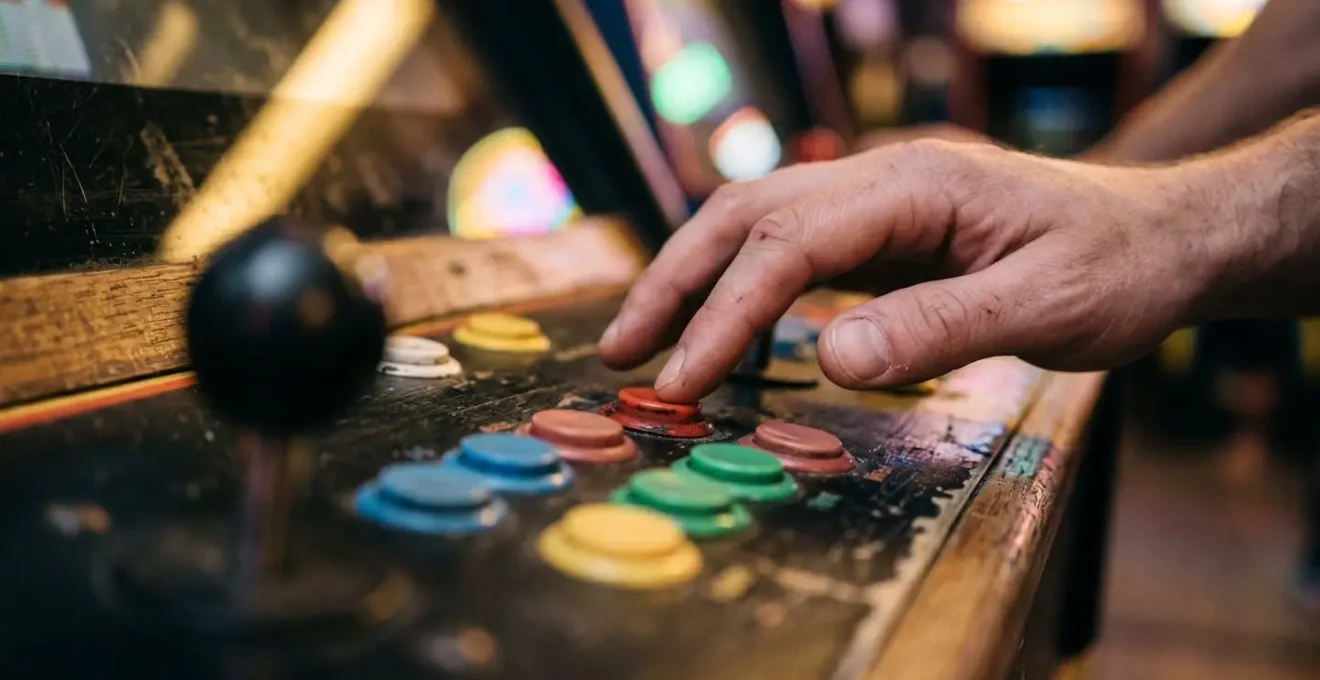
The most important rule is managing the queue. Never verbally interrupt a player or stand directly behind them. The local system is subtle: place a 100-yen coin on the cabinet’s control panel to signal you’re next. This is a silent, universally understood gesture. While waiting, maintain a respectful distance; don’t hover or make them feel watched. This is their space for focus and performance. Your goal is to observe, learn, and wait your turn patiently. For a better learning experience, try to visit during off-peak hours like weekday afternoons.
Once it’s your turn, follow the « 1-Credit-Etiquette. » A single credit (usually ¥100) typically gets you three songs. After your set is over, step away from the machine, especially if you see another coin in the queue. This shows you’re not hogging the machine and respect other players’ time. Many modern cabinets have headphone jacks; if one is available, use it. This immerses you in the game and shows consideration for the overall noise level of the arcade. By following these simple rules, you’re not just being polite; you’re participating in the culture and earning the silent respect of the regulars.
Tax-Free Shopping: The Passport Mistake That Costs You 10%
In your hunt for rare figures and retro games, one of the most valuable systems to understand is tax-free shopping. This allows you to get an instant discount on your purchases, effectively saving you the 10% consumption tax on purchases over ¥5,000 at a single store on the same day. However, this system is rigid and unforgiving. A single mistake, often involving your passport, can make you ineligible for the refund, and store staff cannot make exceptions.
The single most common and costly mistake is not having your original, physical passport with you at the time of purchase. A photo on your phone, a photocopy, or a digital passport app will be rejected by almost every store. The staff must see the physical document and the tourist visa stamp inside. If you used an automated entry gate at the airport and don’t have a stamp, you must have the QR code generated from the Visit Japan Web service ready to show. Without this proof, the tax-free process cannot begin.
Another critical point is that the procedure must be completed on the same day you buy the items. You cannot return the next day with your passport and receipts. For large department stores with multiple vendors, this means you pay the full price at each counter, then take all your items and receipts to a centralized tax-free counter before you leave the store. Finally, understand the distinction between « general goods » (electronics, clothes) and « consumables » (food, cosmetics). They are tallied separately and cannot be combined to meet the ¥5,000 minimum. Consumables will be sealed in a special bag that you must not open until after you have left Japan.
Your Action Plan: The Critical Tax-Free Procedure Checklist
- Present Original Passport: Always carry your physical passport. Digital versions or copies are not accepted.
- Verify Entry Stamp/QR Code: Ensure your passport has a « Temporary Visitor » stamp. If you used an e-gate, have your Visit Japan Web QR code ready.
- Separate Goods Categories: Understand that consumables (food, cosmetics) and general goods (electronics, figures) are separate pots and cannot be combined to reach the ¥5,000 minimum.
- Keep Consumables Sealed: If you buy tax-free consumables, they will be sealed. Do NOT open this package before leaving Japan, or you risk being charged the 10% tax at airport customs.
- Finalize Same-Day: The entire tax-free process must be completed in the store on the same day of purchase. You cannot do it retroactively.
Robot Restaurant vs TeamLab: Which Is a Tourist Trap?
Part of navigating Tokyo’s scene is developing a « tourist trap calculus »—a system for deciding if a famous attraction is worth your limited time and money. Two of the most-hyped experiences are the (now-rebranded) Robot Restaurant and the TeamLab digital art museums (Borderless and Planets). For the average tourist, both are dazzling spectacles. But for a discerning geek or gamer, the value proposition is vastly different.
The Robot Restaurant is the definition of a tourist trap, but that isn’t necessarily a bad thing. It’s a loud, chaotic, and utterly bizarre sensory overload of drums, lasers, and fighting robots that has very little to do with modern Japanese culture. It is an experience engineered *for* tourists. Think of it as a live-action anime B-movie: it’s cheesy, expensive for what it is, and you won’t find many locals there. However, if you embrace its campy, over-the-top nature, it can be a tremendously fun and memorable evening. It’s spectacle for spectacle’s sake. The trap is thinking it’s an authentic cultural experience; it’s not. It’s a theme park ride.
TeamLab, on the other hand, occupies a different space. While wildly popular with tourists, it is also a legitimate and respected digital art installation created by a world-renowned Japanese art collective. The technology is cutting-edge, the concepts are thought-provoking, and the experience is genuinely immersive and beautiful. For a tech and art enthusiast, this is less of a « trap » and more of a « must-see. » It represents a genuine strand of contemporary Japanese innovation in art and technology. The calculus is clear: if you want authentic, world-class digital artistry, choose TeamLab. If you want a loud, silly, unforgettable story to tell back home, the Robot Restaurant delivers exactly that.
When to Rent a Pocket Wi-Fi: Is Public Wi-Fi Enough in Tokyo?
Your smartphone is your most powerful tool for navigating Tokyo, but it’s useless without data. The question of how to stay connected—pocket Wi-Fi, eSIM, or relying on public Wi-Fi—is a critical system to figure out before you land. Relying solely on free public Wi-Fi is a recipe for frustration. While available in train stations, convenience stores, and cafes, the coverage is spotty, requires constant sign-ins, and creates significant « dead zones » just when you need Google Maps the most.
The modern, streamlined choice for most solo travelers is a data-only eSIM. You can buy and install it before you even leave home. It’s convenient, cost-effective, and provides the constant connectivity you need for navigation, translation apps, and checking train times. For a 7-10 day trip focused on basic navigation and messaging, a 5-10GB plan is usually sufficient. It integrates seamlessly with your phone without any extra hardware to carry or charge.
However, the pocket Wi-Fi still holds a crucial place in certain scenarios. It is the undisputed champion for groups or families, as a single device can connect 5-10 users simultaneously, making it far more economical than multiple eSIMs. It’s also the superior choice for content creators or remote workers who need to upload large files like high-resolution photos or videos, as pocket Wi-Fi units often offer better upload speeds and more generous data caps than many eSIM plans. The decision depends entirely on your use case:
- Solo traveler with basic needs: eSIM is the clear winner for convenience.
- Group or family travel: Pocket Wi-Fi is more cost-effective.
- Heavy data user (uploads, streaming): Pocket Wi-Fi offers better performance.
- Budget-conscious minimalist: You can *try* to survive on public Wi-Fi, but an eSIM is a small price to pay for a massive reduction in stress.
Shopping at Artisanal Markets: How to Distinguish Authentic Crafts From Mass-Produced Tourist Traps?
Beyond Akihabara’s electronics, you might find yourself in a temple market or a design store, tempted by beautiful Japanese crafts. Here, the system you need to master is one of visual and tactile discernment. How do you tell a genuinely handmade piece of pottery from a mass-produced imitation that was « designed in Japan » but made elsewhere? The clues are subtle but clear once you know what to look for.

First, trust your eyes and hands. Authentic craftsmanship embraces imperfection. A hand-thrown ceramic bowl will have slight variations in weight, thickness, and a unique feel to the glaze. A factory-made piece will be perfectly uniform. Similarly, a hand-dyed *tenugui* (towel) will show organic, slightly uneven color gradations, whereas a screen-printed copy will have sharp, perfect lines. Feel the material: real Japanese paper (*washi*) has a distinct fibrous texture that slick, mass-produced paper lacks.
Second, learn to read the signals of price and packaging. Artisan labor has a cost. If you see a « handmade » item at a suspiciously low price—like a ceramic bowl for under ¥2,000—it’s almost certainly not authentic. Be a detective with the packaging. Look for the characters 日本製 (Nihon-sei), which means « Made in Japan. » Be wary of phrases like « Designed in Japan, » which often implies overseas manufacturing. Finally, don’t be afraid to use a translation app to ask the vendor about the artist or the region it comes from. An authentic seller will proudly share the story of the craft; a reseller of tourist souvenirs will have no details to offer. This « story test » is often the most definitive.
How to Adapt to the Acceleration of Smart Digital Innovation Without Bankrupting Your Startup?
While the title seems geared towards a business, it holds a powerful metaphor for the tech-savvy tourist: avoiding « Tourist Galapagos Syndrome. » This concept is based on Japan’s own technological history, where it developed incredibly advanced feature phones (*keitai*) that were so hyper-specialized for the domestic market they couldn’t compete globally when the smartphone arrived. They became isolated on their own « Galapagos Island » of innovation.
As a tourist, you can easily fall into the same trap. You arrive with your own set of tech habits and app ecosystems from home, and you try to force them to work in Japan. You might struggle with your home bank’s app, get frustrated that your preferred ride-sharing service doesn’t exist, or rely on clunky translation apps for every interaction. You are operating from your own technological island. The key to adapting is to embrace Japan’s unique digital ecosystem instead of fighting it. This is what it means to adapt to local « smart digital innovation. »
Akihabara has become the cultural home to the diehard fans of gaming, manga and anime—the otaku, an urban temple for worshippers of Japanese subcultures with pop idols, and cosplayers.
– GO TOKYO Official Tourism Organization, A guide to Akihabara – Japan’s pop culture paradise
Cautionary Tale: Japan’s « Galapagos Syndrome »
In the 2000s, Japan’s ‘keitai’ feature phones were years ahead of the world, with mobile payments, TV, and internet. But this focus on the domestic market created the ‘Galapagos Syndrome’—technology so specialized it was incompatible with global standards. When smartphones like the iPhone arrived, Japanese giants struggled to adapt despite their technical superiority. The lesson for the traveler is clear: don’t be so locked into your own tech habits that you fail to see and use the often superior, locally-adapted systems right in front of you, like using Suica for payments instead of fighting with a foreign credit card app.
Key Takeaways
- Your most powerful tool is not a phrasebook, but your ability to observe and adapt to local systems, from transit to shopping.
- Digital tools like Suica on your iPhone are your gateway, but knowing the analog (cash) workarounds is what makes the system foolproof.
- Authenticity has a look and a price. Learn to spot the subtle imperfections of handmade goods and be skeptical of prices that seem too good to be true.
How to Secure a Reservation at Michelin-Starred Restaurants Without Booking 6 Months Ahead?
The final frontier of system mastery in Tokyo is its legendary food scene. Securing a seat at a world-class sushi counter or a Michelin-starred kaiseki restaurant seems impossible, with bookings filling up months in advance. Yet, here too, there are backdoors and strategies that can land you a last-minute seat. This is the ultimate test of your ability to work the system.
Your first move is to leverage professional networks. The concierges at high-end hotels are not just for their own guests; they hold significant power and often have tables reserved specifically for them across the city’s top restaurants. Even if you’re not staying there, you can often pay a fee for their services. Similarly, premium credit cards like the Amex Platinum or Chase Sapphire Reserve offer concierge services that maintain direct relationships with restaurateurs and can often find openings that are not publicly listed.
If you’re striking out on your own, be strategic. Target lunch slots instead of dinner; they are far easier to book, often feature the same quality from the same chef, and can be significantly cheaper. Be ready to act fast on Japanese reservation platforms like Omakase, Tableall, and Pocket Concierge, checking them at 10 AM Japan Standard Time, which is when many cancellations and new slots are released. When making a request, specifically ask for counter seats (カウンター席, *kauntā-seki*) for one or two people, as these are much easier for a restaurant to fill than a table. Finally, the polite, persistent phone call a few days before your desired date to ask about the cancellation list can sometimes work wonders, especially if you can have a Japanese speaker make the call for you.
By shifting your mindset from overcoming a language barrier to mastering a series of systems, you transform your entire Tokyo experience. This approach not only makes your hunt for retro treasures in Akihabara more successful but also empowers you to explore the rest of this incredible city with the confidence and savvy of an insider. Your adventure is not just about what you find, but about the skills you acquire along the way.